Science
Building Blocks of Life: New Research Shows Peptides Can Form on Interstellar Dust
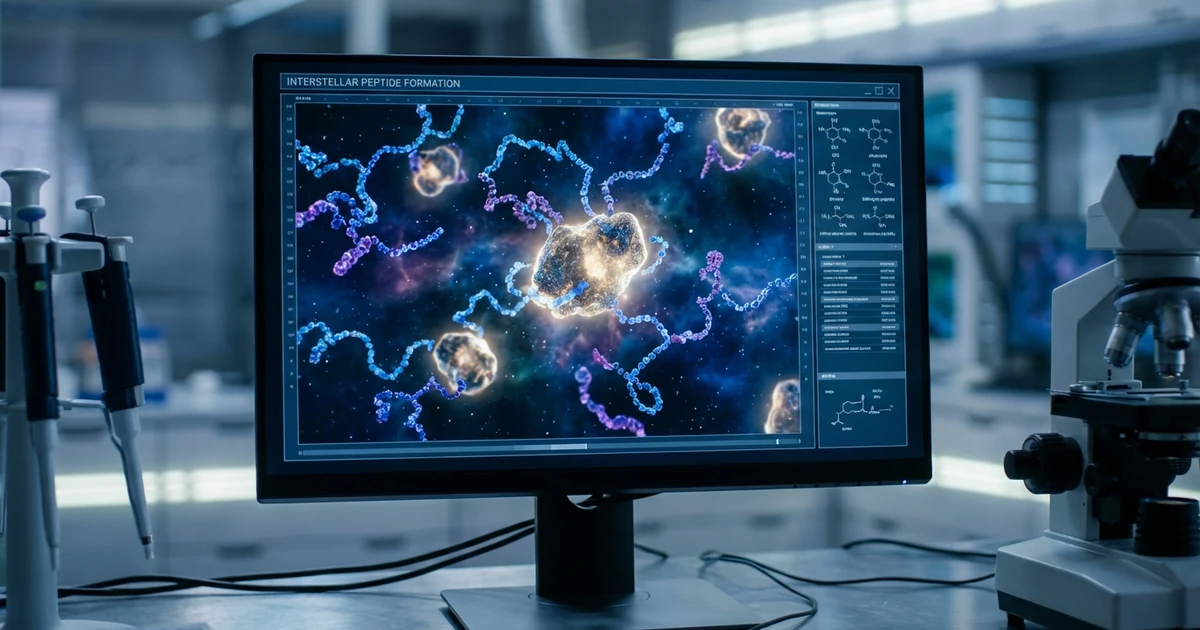
Scientists have uncovered compelling evidence that peptides, the essential molecules that form proteins and drive biological processes, can spontaneously assemble on interstellar dust grains. This breakthrough sheds new light on the possible origins of life beyond Earth and suggests that the seeds of biology may be far more widespread in the cosmos than previously believed.
Peptides: Essential Ingredients for Life
Peptides are short chains of amino acids that serve as the building blocks for proteins, which in turn are critical for all known life forms. On Earth, these molecules drive everything from cellular structure to metabolism. Understanding how peptides could arise in environments outside our planet is a central challenge in astrobiology and the study of life's origins.
Spontaneous Formation in Space
Recent research, as highlighted by Avi Loeb on Medium, reports that complex peptides can form spontaneously on the surfaces of interstellar dust—tiny particles floating between stars. This finding is significant because interstellar dust is abundant throughout the galaxy, and these grains often host simple molecules such as water, ammonia, and carbon compounds. If peptides can assemble under these conditions, it raises the possibility that the raw materials for life are sprinkled across the universe.
- Peptides are formed from amino acids, which have already been detected in space and in meteorites that have landed on Earth.
- Interstellar dust grains provide a surface for chemical reactions, even in the extreme cold and vacuum of space.
- Laboratory simulations suggest these reactions can occur without the need for liquid water or high temperatures, making them feasible on cosmic dust grains.
Implications for Life Beyond Earth
The spontaneous formation of peptides on interstellar dust has profound implications for our understanding of how life might arise elsewhere in the universe. If peptides can form before planets even exist, they could be delivered to young worlds during their formation, providing a starter kit for biochemistry. This idea aligns with the theory of panspermia, which proposes that life’s ingredients are distributed throughout space and may seed planets under the right conditions.
Key Insights from the Study
- This research demonstrates that complex organic molecules are not unique to Earth or even to planets, but can form in the vastness of interstellar space.
- Peptide formation may be a common process on dust grains, which are present in molecular clouds that eventually form stars and planetary systems.
- These findings support the notion that the building blocks of life are universal and not a cosmic rarity.
What’s Next for Astrobiology?
While the research offers tantalizing evidence, scientists emphasize the need for further studies and direct measurements. Missions that collect and analyze space dust, such as those conducted by NASA and the European Space Agency, could search for these peptides in situ. Additionally, telescopes like the James Webb Space Telescope are capable of detecting complex organic molecules in distant star-forming regions, potentially confirming these findings on a galactic scale.
Conclusion: A Universal Recipe for Life?
This discovery marks a significant step in unraveling the mystery of life’s origins. The spontaneous assembly of peptides on interstellar dust suggests that the chemistry leading to life is not confined to Earth or even to planets but is a natural consequence of the universe’s physical laws. As scientists continue to explore the cosmos, they may find that the building blocks of life are as common as the stars themselves—raising the possibility that life, in some form, could be widespread across the galaxy.