Science
Bumblebees Show Surprising Problem-Solving Skills
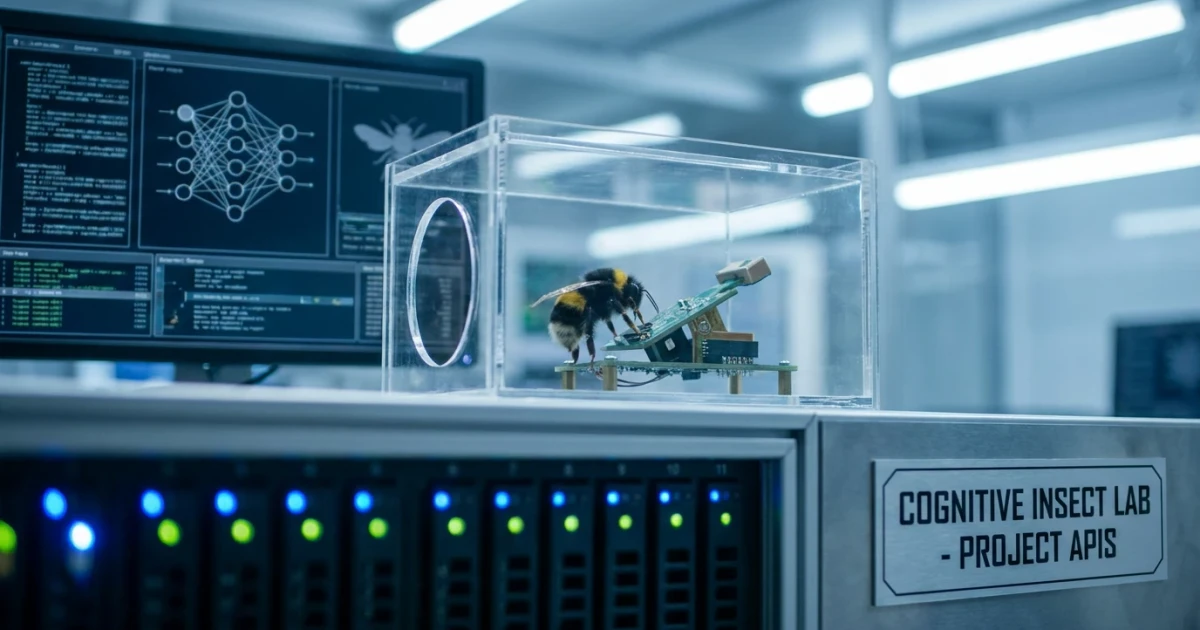
Bumblebees, long admired for their role in pollination, are now capturing scientific attention for a different reason: their surprising cognitive abilities. Recent experimental findings indicate that, despite their tiny brains, bumblebees can solve problems traditionally associated with much larger and more complex animals like chimpanzees and elephants.
Complex Problem-Solving in Small Brains
According to NPR, new research has demonstrated that bumblebees are capable of navigating intricate challenges that require flexible thinking and learning — abilities once believed to be exclusive to large mammals and birds. In controlled laboratory settings, bumblebees were tasked with solving a series of visual discrimination puzzles, some of which required them to switch strategies or learn new rules based on changing conditions.
These experiments build on a growing body of research showing that insects can possess remarkable cognitive skills. Studies have shown bumblebees can switch between visual discrimination tasks, demonstrating what's known as cognitive flexibility — an indicator of advanced intelligence. NPR highlights that, in some cases, the bees’ performance in these tasks matched that of animals with brains millions of times larger, such as chimpanzees and elephants.
Learning and Memory: More Than Simple Reflexes
While bumblebees have brains no bigger than a grass seed, their neural architecture appears highly efficient. NPR and supporting research suggest bees can categorize objects and learn logical sequences—for example, understanding concepts like "same" and "different" or using sequential logic to solve tasks. Such abilities point to a sophisticated capacity for learning and memory, challenging the notion that insects are limited to simple reflexive behaviors.
- Bumblebees have been shown to remember rewarding flower colors and patterns over several days.
- They can adjust strategies if a previously rewarding option no longer yields results, indicating adaptive learning.
Comparative research suggests that, although bumblebee brains are minuscule, their structure supports impressive cognitive performance when compared to other animals, including primates and large mammals.
Comparisons With Larger Animals
NPR notes that some cognitive scientists are re-examining the relationship between brain size and intelligence. While chimpanzees and elephants have long been studied for their ability to solve problems, use tools, and learn complex tasks, bumblebees are now emerging as a compelling counterexample from the insect world. This research suggests that intelligence may arise not just from brain size, but from the efficiency and organization of neural circuits.
The Bombus genus—which includes bumblebees—shows a range of behaviors that highlight their adaptability, from foraging strategies to nest defense. These behavioral observations, combined with experimental data, underscore that cognitive sophistication can evolve in diverse animal lineages, regardless of absolute brain volume.
What This Means for Animal Intelligence Research
The findings reported by NPR have significant implications for how scientists define and measure intelligence across species. They support a growing consensus that animal cognition should be evaluated on the basis of problem-solving and learning abilities, rather than brain size alone. Increasingly, researchers are using bumblebees as a model to understand the neural basis of intelligence — and to explore how evolution shapes cognitive skills in both insects and mammals.
As scientists continue to uncover the extent of bumblebee cognition, these discoveries may influence not only how we study animal minds, but also how we appreciate the complexity of the natural world — even in its smallest inhabitants.