Politics
Burnham calls for face-to-face interviews to help young jobseekers shine

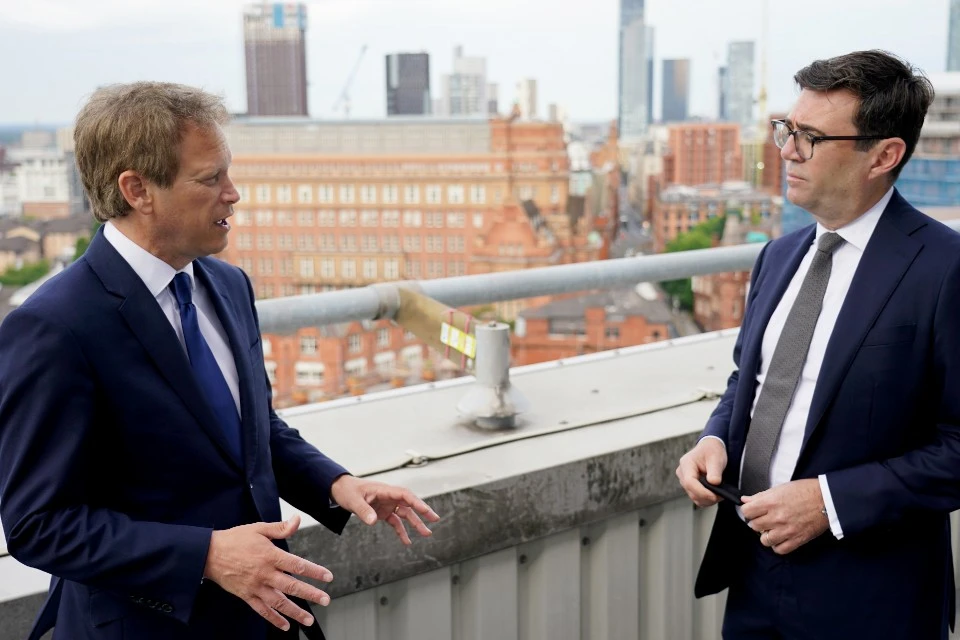
Greater Manchester mayor Andy Burnham urged employers to ditch video calls and bring back face-to-face job interviews, arguing that online hiring can favour candidates who give "formulaic answers" and fail to let young people "shine." He said he was concerned that post-pandemic recruitment practices were not becoming "fairer."
The intervention sits inside a broader push on youth work. Burnham has also used interviews and speeches to set out a wider agenda on social care, youth unemployment and devolution, while BBC Sounds carries a programme titled "Can Burnham get young people into work?" That places his remarks in a live debate over whether hiring should prize convenience and standardisation or give first-time applicants a better chance to make an impression.

Burnham's argument is not without evidence behind it. A 2021 Sussex policy brief on automated job interviews found that asynchronous video interviews can make candidates behave in a rigid way and create depersonalisation. A 2022 study on employers' and applicants' fairness perceptions found that video-conference and telephone interviews scored lower on fairness perceptions than face-to-face interviews. Those findings support Burnham's concern that a screen can flatten personality, even if it also makes recruitment easier to organise.
The access question cuts both ways, though. A survey of 448 computer science students found that young jobseekers' perceptions of fairness and their willingness to be evaluated by automated employment tools changed with the level of automation involved. For disabled candidates, a 2026 ACM study found that people with disabilities perceived and experienced discrimination by AI hiring interviews that center normative characteristics. That is a warning that moving hiring online does not automatically widen opportunity.
For rural applicants, the barrier can be more basic: connectivity. Nebraska Public Media noted that in 2019 more than 20 percent of Nebraska households lacked a broadband subscription, at a time when online applications and video-call interviews were already shaping the job hunt. BBC Bitesize keeps separate guidance pages for preparing for interviews and online interviews, a sign that school-leavers and first-time applicants are already expected to navigate both formats. Burnham is betting that an in-person meeting still gives young people the best chance to be judged on more than a webcam and a weak signal.
Sources
- [1]bbc.co.uk
- [2]birminghammail.co.uk
- [3]lbc.co.uk
- [4]devonlive.com
- [5]telegraph.co.uk