Politics
Burnham's Manchester model could reshape power across the UK
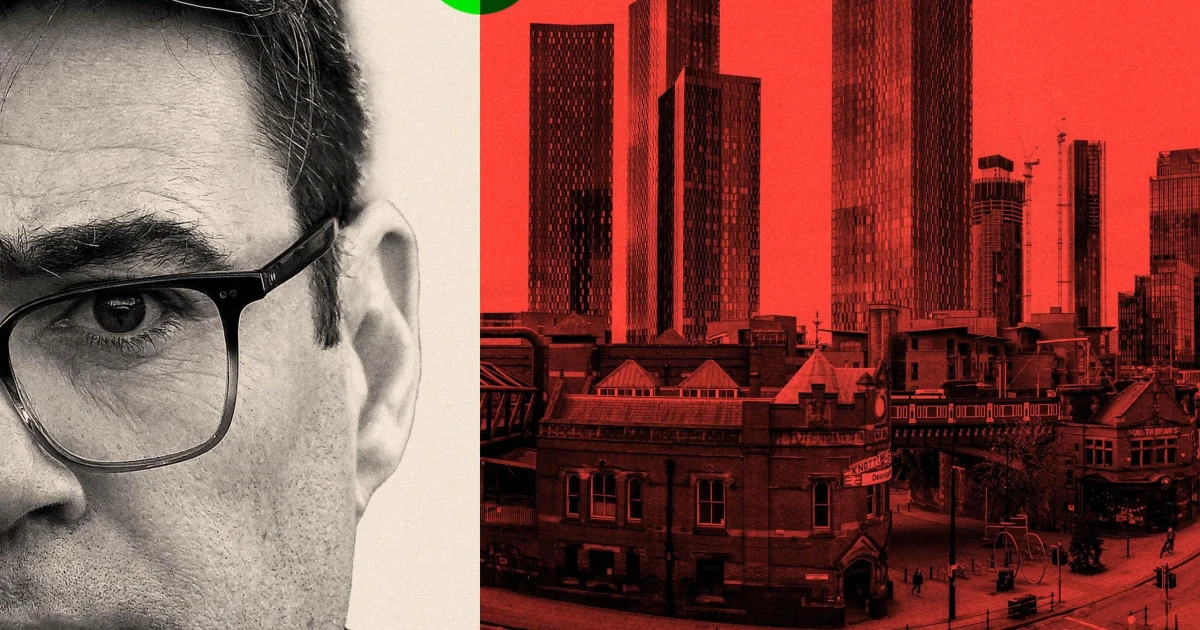
In Manchester, Andy Burnham said, “True to the motto of this city, I am going to do things differently,” a line that nodded to 24 Hour Party People and framed his case for shifting power away from Westminster. Burnham is trying to turn Greater Manchester from a successful city-region into a national governing idea. The pitch amounts to a kind of “No 10 North” in Manchester and promises a deeper rebalancing of the state, but it still has to prove it can work beyond the north-west.
What Manchesterism claims to do
Burnham has cast Manchesterism as a rejection of trickle-down economics and a commitment to “good growth in every postcode.” In the same speech, he said the Manchester-based team would “oversee the biggest rebalancing of power our country has ever seen,” while also backing the biggest council house building programme since the post-war period and a “complete rethink” of education.
The broader idea is straightforward: move parts of the Downing Street operation out of Westminster, give regions more control, and use that shift to make policy more responsive to local conditions. Burnham has also said the new system should extend devolution across Scotland, Wales and Northern Ireland, as well as England’s regions and metro mayors.
Why Greater Manchester is the proving ground
The reason Burnham can make this argument at all is that Greater Manchester has spent years building the machinery behind it. The area’s councils have a long history of working together, and the city-region led the way on devolution with a statutory city-region pilot in 2009. The 2014 Devolution Agreement then helped establish the Greater Manchester Combined Authority, the framework that gave the region a clearer voice over local growth and governance.
Burnham became Mayor of Greater Manchester in 2017, and the role made him the directly elected leader of the GMCA. Burnham left the mayoralty after being elected MP for Makerfield on 18 June 2026, leaving the post vacant.
Which parts look portable
The most portable part of Burnham’s record is devolution itself. Greater Manchester shows that councils with a long habit of collaboration can assemble a shared platform, then use it to push for more control over growth, housing and the wider policy levers that shape everyday life.
Burnham has also linked the model to social mobility in a series of public forums. Centre for Cities hosted a keynote by him on 10 March 2026 about Manchesterism and devolution, and the Social Mobility Commission held a March 2026 discussion titled “Manchesterism: Building the UK’s Leading Engine of Social Mobility.”
The transport and housing logic also has national appeal, even if the details vary. A metro mayor with real powers can align planning, housing supply and economic development more tightly than a distant department in Westminster often can. Burnham’s council-house pledge gives that argument political force.
Where the model runs into limits
Manchesterism is not yet a full economic plan, and that is the central weakness. The details on funding and implementation remain unclear, which leaves the project more like a governing philosophy than a costed programme. Promising a “No 10 North” is one thing; specifying which budgets, staff and powers move north is another.
There are also geographic limits. Greater Manchester is a dense urban region with a long-running institutional setup, a combined authority and a political culture that has been building for years. That makes it easier to coordinate transport, housing and investment than it would be in a more scattered part of the country, where local government boundaries, travel patterns and economic centres are less aligned. The question is already being tested in places such as the West Country, where leaders are weighing whether the Manchester model can be adapted outside the north-west.
That is why Burnham’s call to extend devolution across Scotland, Wales and Northern Ireland is so ambitious. It treats local power as a national settlement, not a regional exception, but it also exposes the problem at the heart of the plan: the further you move from a single city-region, the harder it is to make one template fit. The Greater Manchester story was built on years of negotiation, a statutory pilot in 2009, the 2014 Devolution Agreement and a directly elected mayor from 2017 onward. Not every part of the UK starts from that point.
What to watch next
In a GMCA statement on “Place First: A Unifying Path for a United Kingdom,” Burnham called for a “wholesale change in the architecture and culture of the British state” to unite the country and drive economic growth.