Politics
Can Andy Burnham revive Labour as Starmer falters?
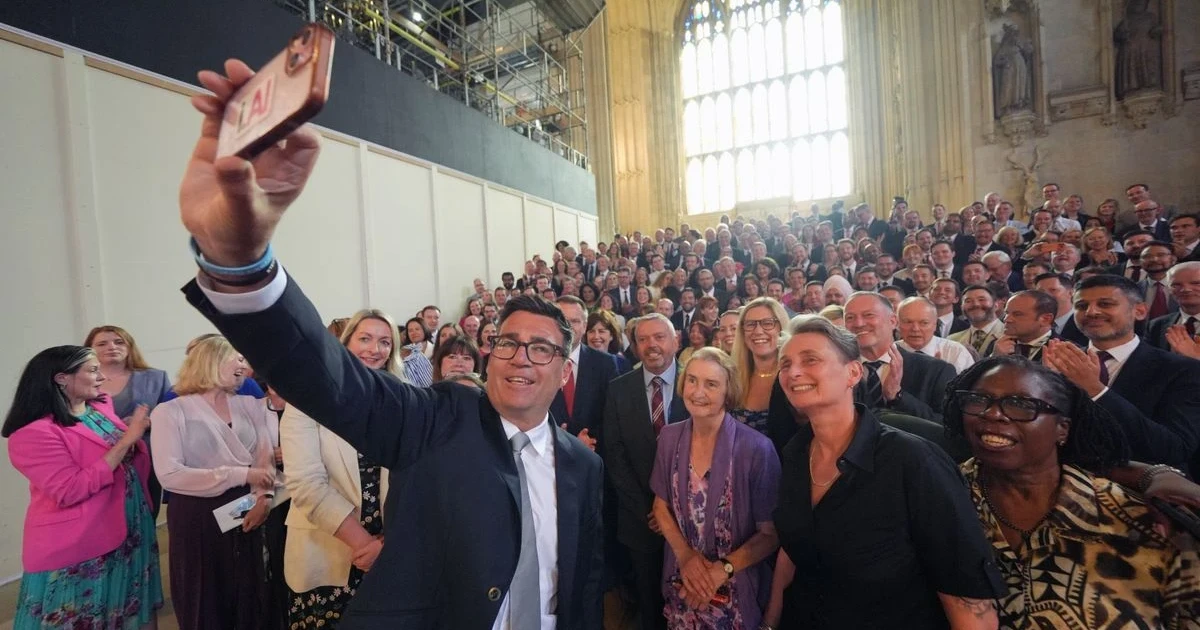
Andy Burnham's return to Westminster has reopened a question Labour hoped it could postpone, who can persuade a frustrated electorate that the party still knows how to deliver change? Keir Starmer governs with a majority of 174, but his standing has fallen sharply as Reform UK has moved ahead in the polls and the economy remains stuck in low gear. That makes Burnham less a personality story than a test of whether center-left politics can still win trust in a country crowded by stagnation and anger.
The numbers behind Burnham's opening
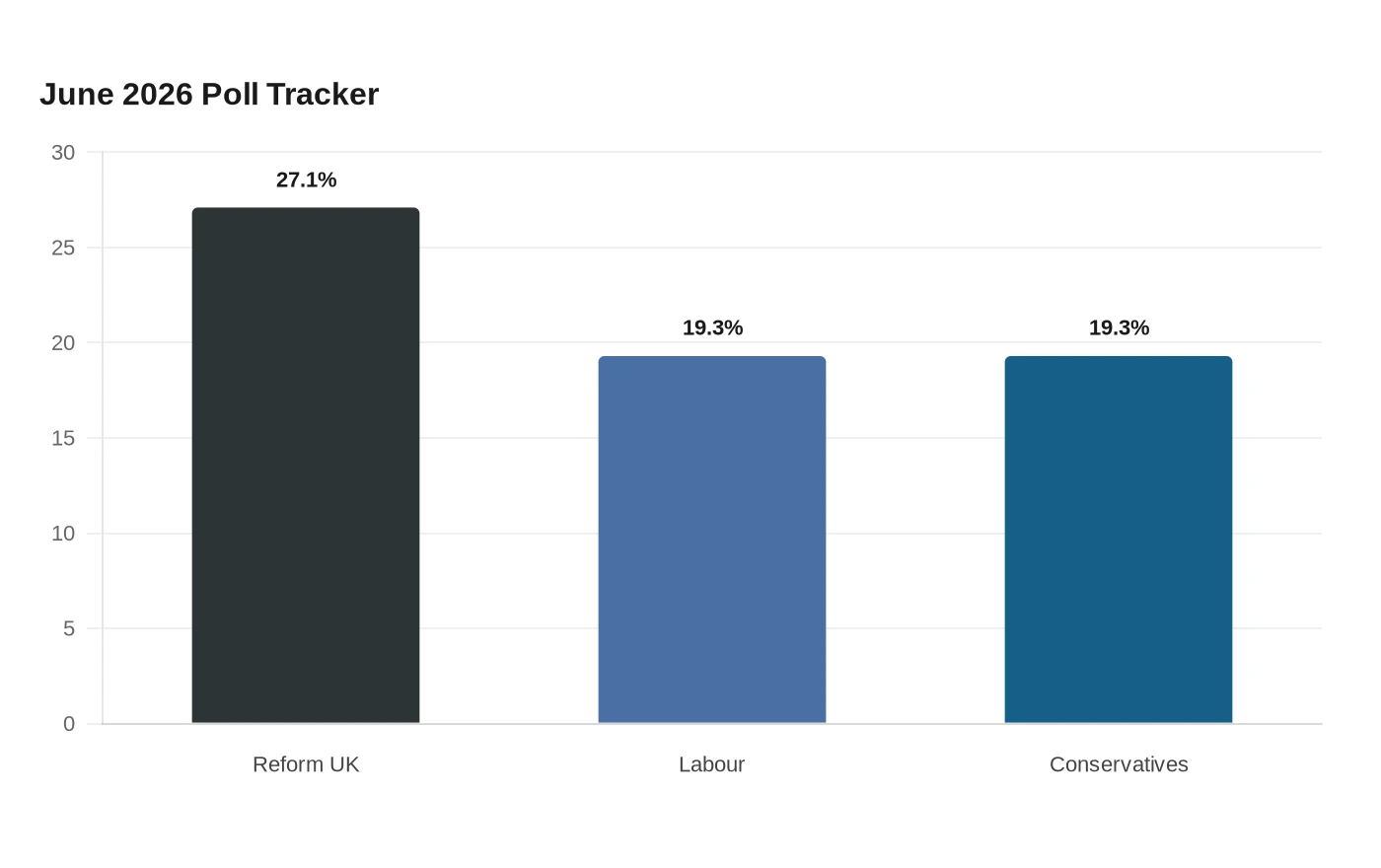
The political arithmetic is harsh. Labour won power in July 2024, yet by June 2026 PollCheck's tracker had Reform UK on 27.1%, Labour on 19.3% and the Conservatives also on 19.3%. Starmer's net approval sat at minus 44.7%, a level that signals not just disappointment but deep erosion in the prime minister's authority.
The economic backdrop makes that slide harder to reverse. The Office for National Statistics estimated that UK real GDP rose 0.6% in the first quarter of 2026, after revised growth of just 0.2% in the final quarter of 2025. Independent forecasts in mid-June put full-year growth for 2026 at about 0.9%, a figure that points to sluggish momentum rather than a broad recovery. Any Labour successor would inherit not a clean slate, but a government trying to govern through a thin and fragile expansion.
That matters because the rise of Reform UK under Nigel Farage is not simply a polling curiosity. It is a sign that Labour is losing ground among voters who expected a post-election reset and instead see the same pressures that defined the years before it returned to office. The governing challenge is no longer only about competence. It is about whether Labour can persuade voters that the state still has the capacity to change their lives.
Why Burnham looks different

Burnham's appeal comes from the political model he has spent years building outside Westminster. He has been mayor of Greater Manchester since first winning the role in the inaugural 2017 election, then being re-elected in 2021 and 2024. That record gives him repeated democratic mandates and a governing identity rooted in place, not in the internal machinery of Parliament.
His return to Westminster through the Makerfield by-election in June 2026 changed the calculation. It brought him back into the parliamentary arena and immediately intensified speculation that he could challenge Starmer for the Labour leadership. Before that victory, he had been blocked from using a Westminster comeback as a route back into the national contest. Now, he has a platform from which to argue that Labour needs a different story about power, delivery and national renewal.
That story is built around place-based growth, devolution and a stronger northern identity. Burnham has used Greater Manchester as proof that local institutions can move faster than Whitehall, especially when funding and responsibility are aligned. In a country where many voters feel that national politics speaks about them rather than for them, that pitch has obvious force.
What his governing pitch would have to change
If Burnham were to seek the top job, he would need to show that his pitch is more than a regional brand. The most concrete difference from Starmer would be a government that treats local delivery as central, not secondary, to national strategy. That means more authority for city-regions, more direct control over spending tied to housing, transport, skills and employment support, and a clearer insistence that local leaders should be judged on outcomes they can actually influence.
Greater Manchester already offers the clearest example of how Burnham would argue the state should work. Under its trailblazer devolution deal, the region received a £630 million integrated funding settlement for 2025/26. That settlement gives the Greater Manchester Combined Authority more flexibility over housing, transport, employment support and skills, along with other local growth spending. For Burnham, the political lesson is simple: when decisions are closer to the people affected by them, government can become more responsive and more credible.
That is also the place where he would have to distinguish himself from Starmer's shortcomings. The current leadership has struggled to convert electoral power into visible momentum, leaving the government exposed to criticism that it is managing decline rather than setting a direction. Burnham's answer would have to be concrete and legible to voters: show improvement in transport, show housing delivery, show skills support that leads to work, and show that national government is willing to hand real power to places that can use it.
Why the contest matters beyond Labour
For Burnham's supporters, his strongest argument is that he speaks to disgruntled voters in post-industrial Britain in a way that feels grounded rather than managerial. They see a mayor who has governed a large urban region, won repeatedly, and built a political identity around public services, local pride and economic renewal. In that reading, he offers Labour a route back to legitimacy that is based on visible delivery rather than abstract reassurance.
But the constraints are severe. A popular northern mayor is not automatically a national saviour, and the conditions that weakened Starmer would still confront anyone else in Downing Street. The economy is still growing slowly, Reform UK is still leading in the polls, and Labour's internal pressure would intensify rather than disappear if a leadership challenge opened up. A divided party would only make the wider argument about competence harder to sustain.
That is why Burnham is best understood as a test case for center-left politics itself. If Labour can show that devolution, investment and local control produce faster and more visible change, it has a route to recover trust. If it cannot, then even a mayor with strong regional mandates and a clear governing language may find that the public mood has moved faster than the party can. In that sense, Burnham's challenge is not simply to replace Starmer. It is to prove that Labour can still govern as a force for change in a country that has stopped believing easy promises.
Sources
- [1]nytimes.com
- [2]pollcheck.co.uk
- [3]ons.gov.uk
- [4]bcis.co.uk
- [5]reuters.com
- [6]greatermanchester-ca.gov.uk
- [7]gov.uk
- [8]independent.co.uk