World
Canada’s remote wildfires test response as smoke spreads across borders
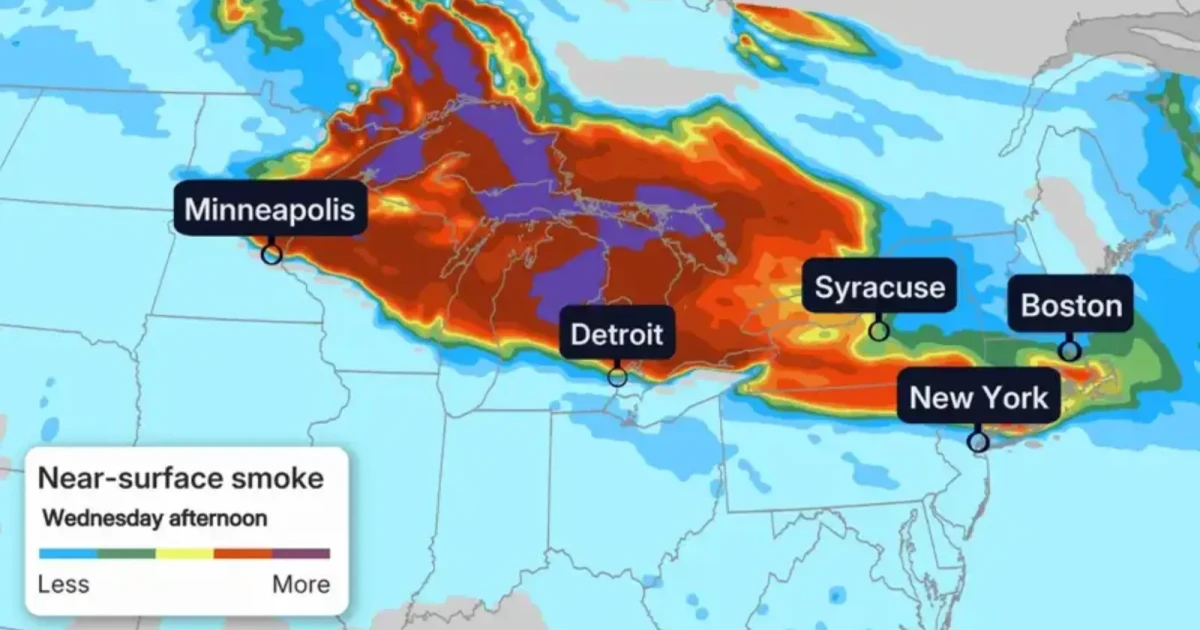
About half of Canada’s wildfires burn in remote areas with no road access, which means some blazes are left to burn while agencies focus on protecting people, buildings, and critical corridors that can still be reached.
Smoke from Canadian fires has driven air-quality alerts in Canada and the United States, turning remote ignition points into a continental health issue. Fire season is defined less by the idea of extinguishing every blaze and more by deciding where crews can save lives, where they can hold a line, and where the safest option is to manage the fire’s path.
How wildfire response is organized
Canada’s emergency system is built in layers. Response starts locally, then moves to provincial or territorial authorities, who can ask the federal government for more resources if they need them. The most intense fire years can quickly overwhelm any one jurisdiction, especially when multiple regions are burning at the same time.
The Canadian Forest Service, part of Natural Resources Canada, provides wildland fire intelligence and predictive services and leads national strategic programs and initiatives. The Canadian Interagency Forest Fire Centre coordinates wildfire assistance between Canadian jurisdictions, including support that crosses provincial and territorial boundaries. Canada’s response is also a logistics system for moving crews, aircraft, equipment, and information to where they can still make a difference.
Why remote fires are so hard to beat
Remote northern communities face a different fire problem than towns with highways, fire breaks, and nearby suppression resources. Limited road access means crews may never get close enough to attack a fire directly, and homes can still be lost when embers travel ahead of the main flame front. In those settings, the line between “fighting” and “managing” a fire becomes blurrier, because suppression may be impossible even when the threat is immediate.
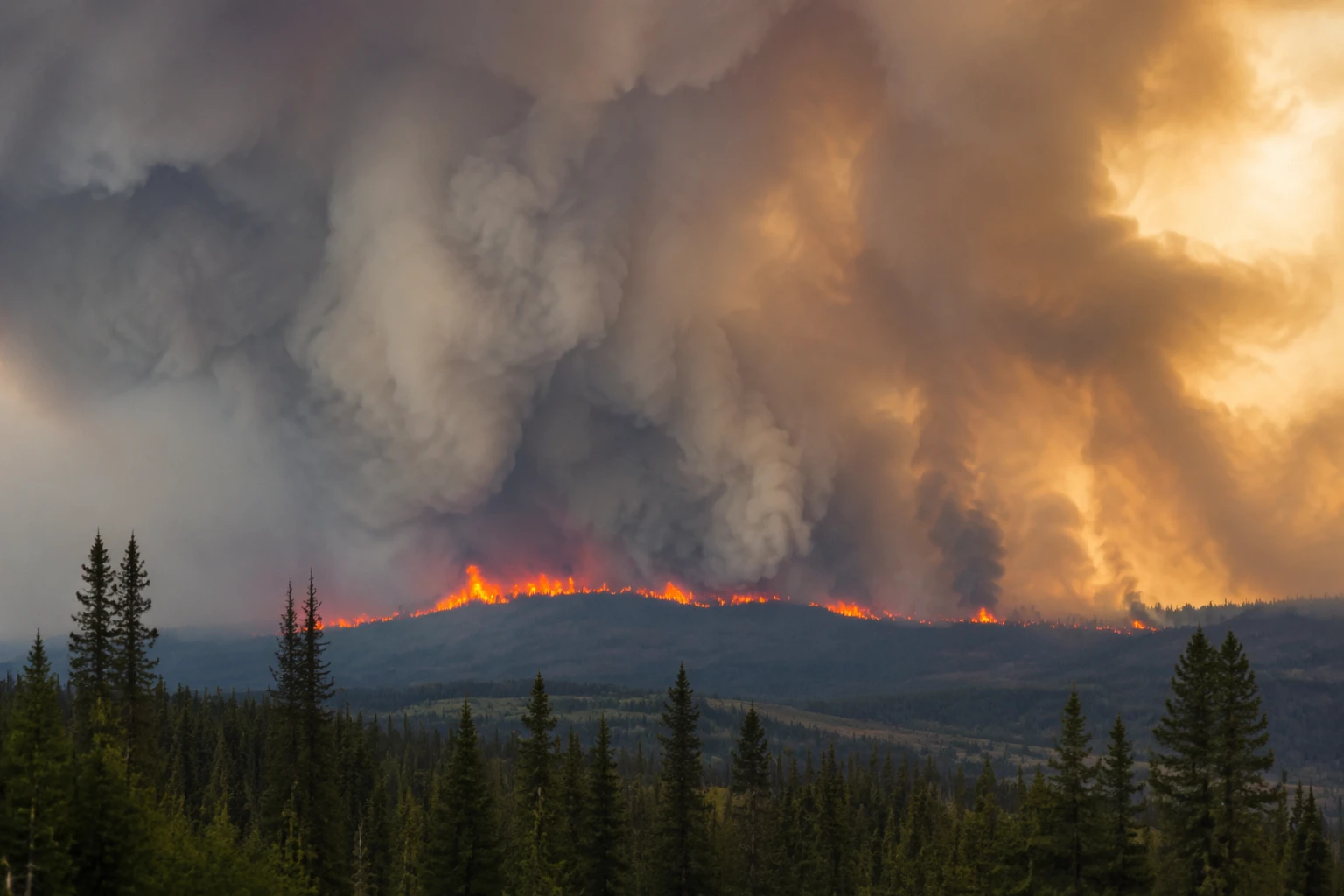
Mitigation can matter more than an all-out attempt to stop every ignition. Clearing hazards around homes, planning evacuation routes, hardening buildings, and protecting the most vulnerable structures can be more effective than sending crews into terrain they cannot safely reach. For small and northern communities, the question is often not whether fire will arrive, but whether the community is prepared enough to reduce the damage when it does.
Smoke makes a local fire a continental event
The public-health footprint of these fires extends far beyond the burn zone. Wildfire smoke can travel across provinces and across the U.S. border, where it has triggered air-quality warnings and made hazardous air a shared North American problem.
The Government of Canada’s public-health wildfire toolkit, updated in July 2024, gives health authorities background on wildfire smoke, health hazards, and risk, reflecting how much the smoke issue has grown alongside more frequent and more intense wildland fires. Climate change is driving that trend, and the federal materials put annual national wildland-fire costs at more than $1 billion, with additional costs averaging around $500 million or higher.
Wildfire response now includes more than suppression planning. It also includes air-quality advisories, respiratory risk communication, and preparation for spikes in emergency visits when smoke settles over urban areas far from the flames.
Indigenous communities and the limits of response

The burden is especially sharp in First Nations communities. Wildfire response services are led by provincial and territorial emergency management organizations, while the federal government provides annual funding to help First Nations prepare for, mitigate and respond to wildfires across the country.
Communities that are already remote, under-resourced, or geographically isolated often face the highest risk and the slowest access to suppression help. When embers can jump into homes that are far from a road network, and when evacuation or repair resources are limited, the gap between emergency plans and actual protection widens.
What a different fire policy would look like
Canada has endured record-breaking fire years, and the scale of demand has strained firefighting resources across provinces and territories. A policy centered only on total suppression is too narrow for the geography and the climate now in play.
A more realistic approach would prioritize triage, resilience, and community protection. That means deciding in advance which fires can be attacked, which should be monitored, which communities need hardening first, and how to protect people from smoke even when the flame front is hundreds of kilometers away.
Sources
- [1]nytimes.com
- [2]canada.ca
- [3]natural-resources.canada.ca
- [4]ciffc.ca
- [5]sac-isc.gc.ca
- [6]wildlandfirecanada.com
- [7]cbc.ca