Science
Cape Cod Bay Meteor Likely Iron, NASA Reports
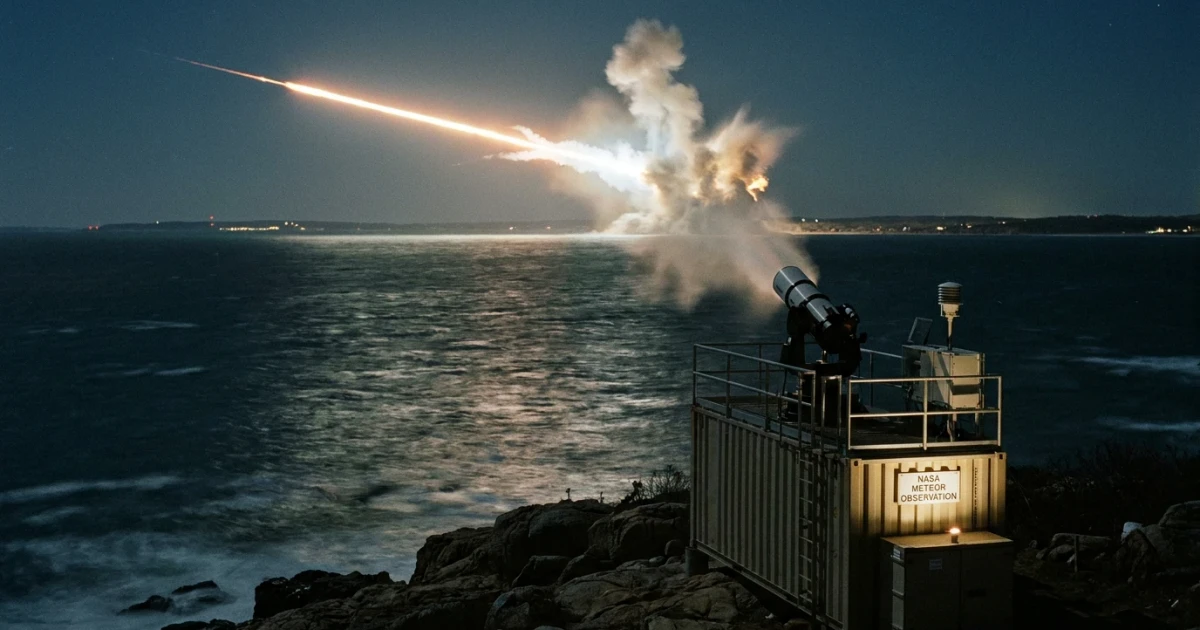
NASA has confirmed that a meteor which exploded off the coast of Massachusetts, landing in Cape Cod Bay, was likely composed of iron and possessed an unusually high density. The event, which occurred recently, startled residents and drew swift attention from scientific agencies, according to reporting from The Boston Globe and CBS.
Explosion and Immediate Impact
The meteor entered the Earth’s atmosphere and detonated over Cape Cod Bay, producing a loud boom that was heard across the region. Witnesses described a sudden, sharp noise, prompting concerns and speculation about the cause. NASA’s analysis, as reported in The Boston Globe, indicated the explosion was powerful enough to be detected by government sensors designed to monitor fireball and bolide events.
- The loud boom was felt by residents along the Massachusetts coastline
- NASA sensors registered the meteor’s energy and trajectory
- The explosion’s force was consistent with a dense, metallic object
NASA’s Findings: Iron Composition and Density
NASA scientists concluded that the meteor was likely made of iron, a finding supported by the object's unusual density. Iron meteorites are known for their robust physical properties, with densities often exceeding 7.8 g/cm³, which is significantly higher than stony meteorites. The Boston Globe highlighted that NASA’s initial assessment pointed towards iron due to the meteor’s resistance to atmospheric fragmentation and its ability to generate a pronounced shockwave.
Iron meteorites are relatively rare among meteor falls, accounting for about 5.7% of observed finds. Their high density allows them to survive longer during atmospheric entry, often resulting in dramatic explosions and sonic booms, as seen in this event.
Scientific Context and Public Response
The meteor’s characteristics have sparked interest among scientists and the public alike. Iron meteorites provide valuable insight into the formation and evolution of planetary bodies, as outlined in peer-reviewed research. Their composition often links them to the core material of differentiated asteroids, making such events scientifically significant.
NASA’s fireball and bolide reporting system captured the Cape Cod Bay event, adding it to the growing database of meteor encounters. The American Meteor Society also invites public reports of such fireballs, which help researchers triangulate trajectories and refine estimates of meteor size and composition.
- Iron meteorites often create larger explosions than stony types
- Public reports assist scientists in tracking and analyzing meteor events
Potential for Recovery and Ongoing Analysis
While most of the meteor likely vaporized in the explosion, experts have not ruled out the possibility of small fragments reaching Cape Cod Bay. Recovery efforts, if attempted, would focus on identifying metal-rich debris, which could confirm NASA’s assessment of the iron composition. Such finds would be catalogued in the Lunar and Planetary Institute Meteorite Database.
Looking Ahead: Monitoring and Research
NASA and other agencies continue to monitor meteor activity and analyze the Cape Cod Bay event for further details. The incident highlights the importance of global sensor networks and public engagement in understanding meteor impacts. For those interested in the science and statistics behind such events, NASA’s fireball database and related resources offer extensive data.
As research advances, scientists hope to glean more insights from iron meteorite falls, contributing to our knowledge of planetary science and the dynamic nature of Earth's atmosphere.