Science
Cape leopards prove genetically distinct after 20,000 years of isolation
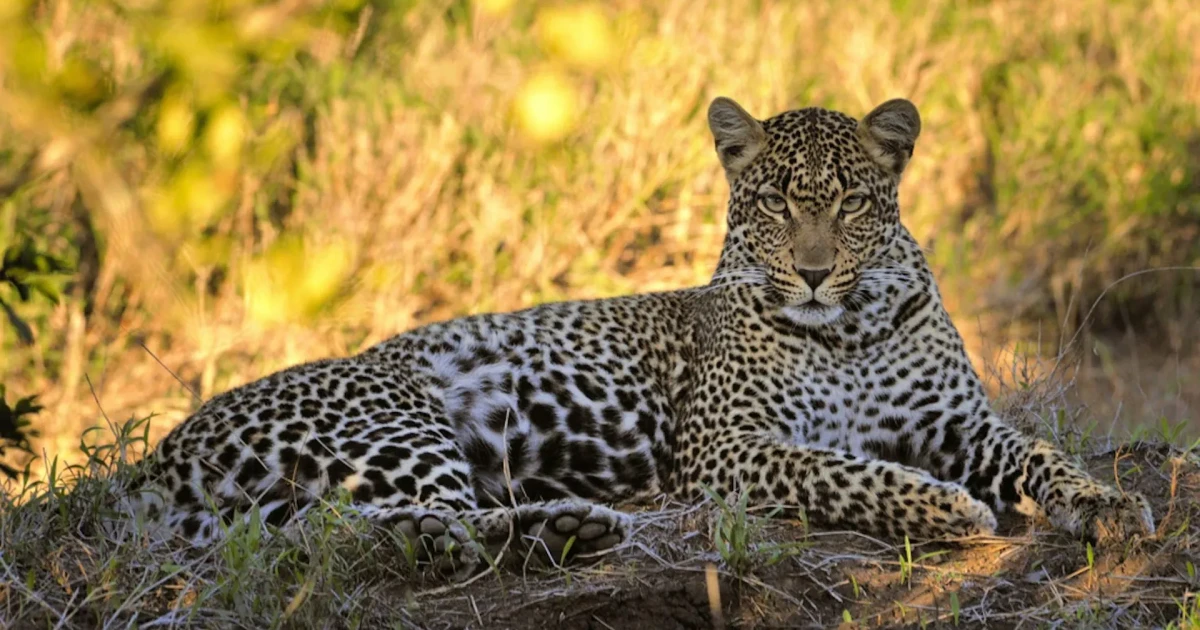
Cape leopards have been separated long enough for the Western Cape population to stand apart from the rest of Africa’s leopards, but the surprise is how much genetic breadth they still carry. Whole-genome resequencing of 43 leopards, including 10 from the Western Cape, places that split at roughly 20,000 to 24,000 years ago while showing no obvious signs of genetic drift. The result turns a narrow wildlife question into a broader lesson about how isolation, prey pressure and habitat squeeze can reshape a top predator without erasing its evolutionary identity.
A lineage carved out by the Cape Floristic Region
The clearest signal in the genome is geography. Leopards from the Western Cape are distinct from other African leopards, and the study’s authors argue they can be treated as an evolutionary significant unit, or ESU, a conservation category that matters when one population has followed its own path for thousands of years. That matters here because the Cape population is small, numbering fewer than 1,000 animals, and because its range sits inside the Cape Floristic Region, where terrain and habitat can sharply limit movement and mixing with neighboring populations.
The size difference is part of the story too. Cape leopards are notably smaller than many other African leopards, and in some cases their body mass is only half that of their counterparts elsewhere on the continent. That physical shift is exactly the kind of trait conservation biologists watch for when a predator is forced to live with less space, different prey and persistent human pressure. The study does not reduce that change to a single cause; it leaves open whether local environmental pressures, sexual selection or slower random divergence after isolation did the most to shape the animals now living in the western edge of South Africa.
Why the genome changed the question
Older marker-based studies could not fully resolve the Cape population’s status. The newer work used the full leopard genome, about 2.57 billion base pairs and roughly 19,000 genes, which gave researchers a far sharper view of how the Western Cape leopards relate to the rest of Africa’s populations. That scale matters because isolated groups often lose diversity over time, especially when inbreeding or environmental stress starts to narrow the gene pool.
Here, the result was more nuanced. The paper finds no obvious signs of genetic drift in the Western Cape population, which suggests that the leopards have retained more of their genetic diversity than conservationists might expect after such a long period of separation. In practical terms, that means small does not automatically equal genetically depleted. The population is still vulnerable because of its size and isolation, but it is not a simple cautionary tale about collapse.
The researchers built the dataset from whole-genome resequencing and compared the Western Cape animals with leopards from other parts of Africa. That comparison shows the Western Cape line diverged from northern South Africa leopards about 20,000 to 24,000 years ago, a long enough span to create a recognizable evolutionary branch without turning the population into a biological dead end. For conservation planning, that distinction is crucial: a lineage can be small, fragmented and still genetically important.
Evolution under pressure, not a novelty act
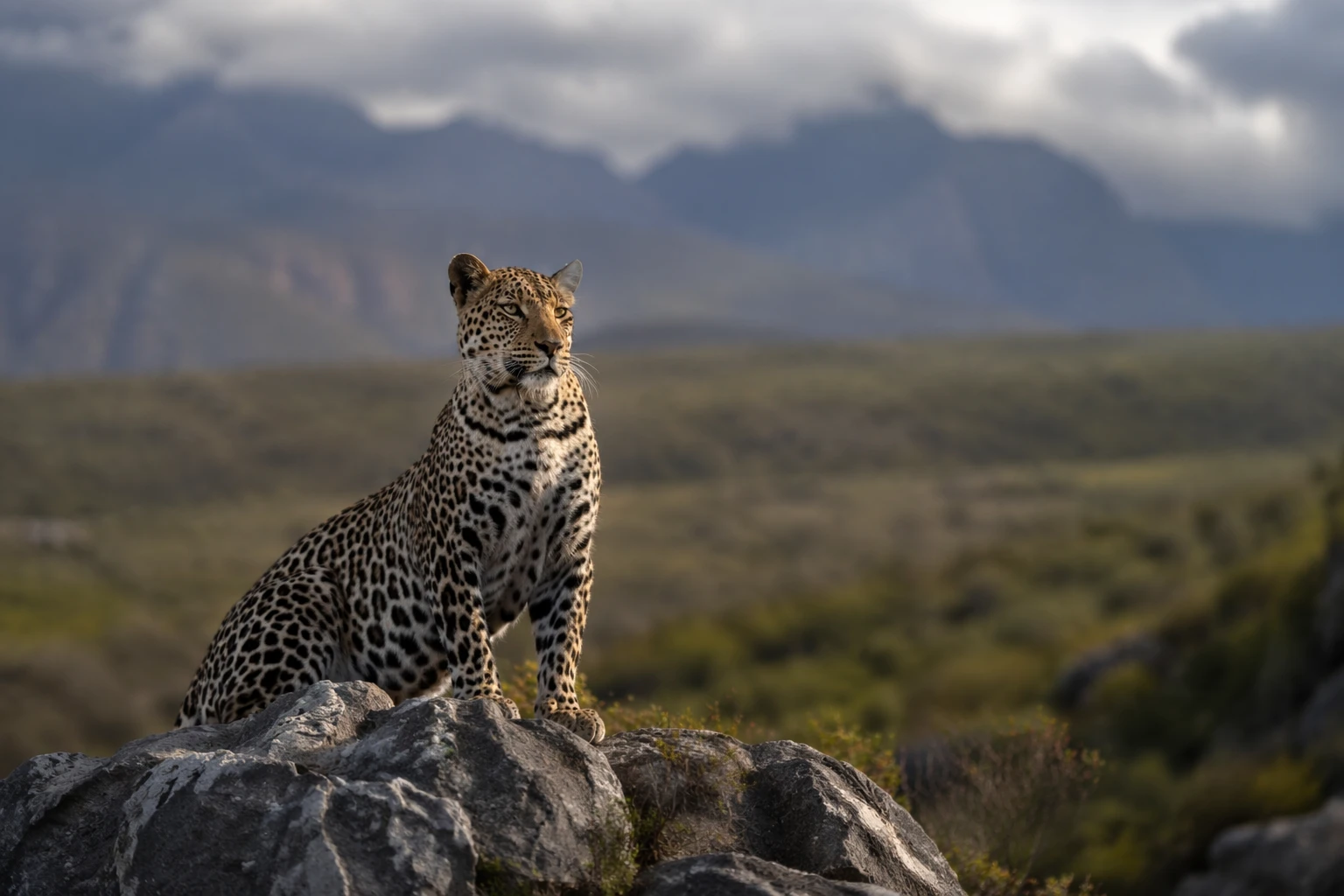
The broader ecological setting explains why this population is so revealing. The Cape leopards live in a landscape marked by variable prey availability, changing vegetation structure and a rapidly growing human population. Those are not abstract threats. They are the daily conditions that determine whether a predator can hunt efficiently, move safely and find enough room to reproduce without crowding its neighbors.
That is where the body-size change becomes more than a curiosity. When prey is less predictable and habitat is constrained, selection can favor animals that move differently, feed differently or survive on a tighter energy budget. Human encroachment can reinforce those pressures by breaking up corridors, compressing habitat and making contact with people more frequent. The result is evolution under pressure: a top predator adapting physically to a landscape that has been reshaped by both natural constraints and human land use.
Leopards sit high in the food web, where they help regulate prey and mesopredators. That makes the Cape case relevant beyond one subspecies or one province, because any change in a top predator can ripple through the wider ecosystem. In a fragmented landscape, managing the leopard is not only about protecting one animal, but about preserving the balance of the system it helps hold together.
What conservation policy has to do next
The policy implications are immediate. If the Western Cape leopards are an ESU, then they deserve management as a distinct conservation unit rather than as a generic slice of a larger southern African population. That means habitat protection, corridor planning and long-term monitoring have to account for the fact that this lineage has been isolated for tens of thousands of years and may not be easily replaced if lost.
The Cape Leopard Trust, founded in 2004 and based in the Western Cape, has framed its work around exactly that idea: protecting leopards and leopard landscapes while supporting coexistence between people and wildlife through collaborative research, conservation, education and strategic communications. Its approach fits the science. A population that is genetically distinct, small and ecologically compressed needs more than sympathy; it needs space, connectivity and management that treats landscape fragmentation as a biological threat.
The national backdrop is just as important. The Endangered Wildlife Trust says suitable leopard habitat in South Africa is fragmented into four core areas, and its systematic estimate puts the country’s leopards at 2,813 to 11,632 individuals, or 1,688 to 6,979 mature individuals. Most subpopulations are fewer than 1,000 mature animals, which means the Cape group is not an outlier but part of a wider pattern of isolation and decline. In that context, the Western Cape population is valuable not because it is odd, but because it shows how a predator can remain genetically robust while still becoming ecologically fragile, a reminder that conservation now has to manage both the genome and the landscape at the same time.
Sources
- [1]sciencedaily.com
- [2]pmc.ncbi.nlm.nih.gov
- [3]phys.org
- [4]capeleopard.org.za
- [5]speciesstatus.sanbi.org
- [6]ewt.org