Entertainment
Carol Bove’s monumental steel sculptures fill Guggenheim retrospective
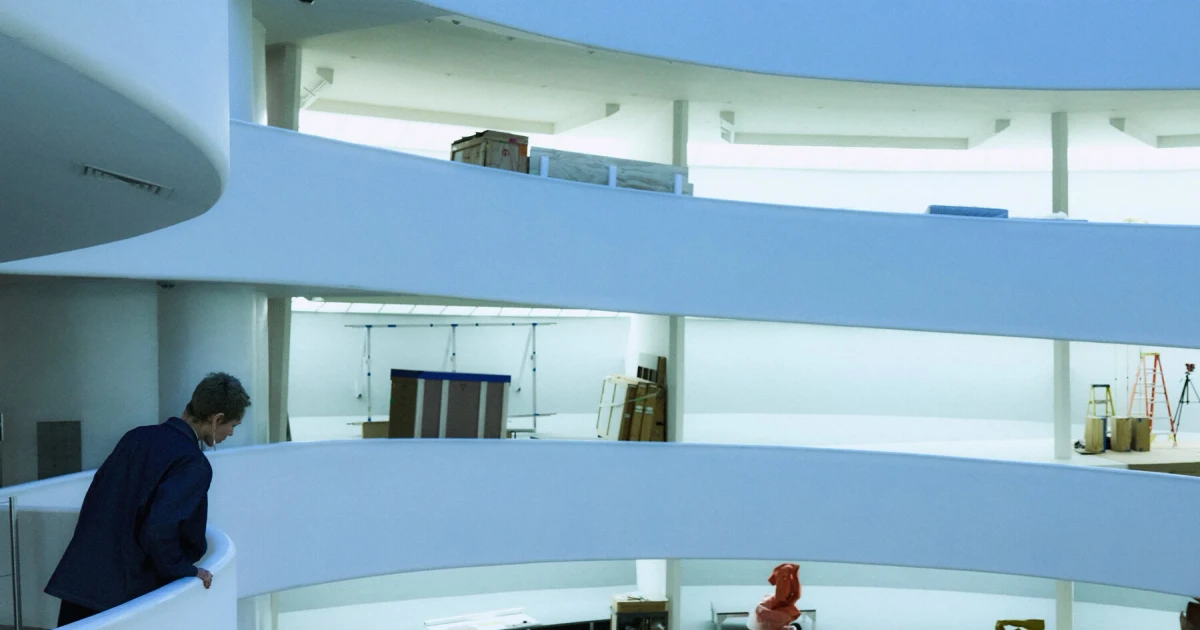
Carol Bove’s bent and twisted steel works rise through the Guggenheim Rotunda with a force that changes how the building feels underfoot. The artist’s first museum survey is also her largest exhibition to date, and the result is not a hushed, distant encounter with sculpture but a museum experience shaped by movement, sightlines, and physical proximity.
A survey built around space, not just objects
The Guggenheim has installed the exhibition in the Rotunda at Guggenheim New York, 1071 Fifth Avenue, where Frank Lloyd Wright’s architecture is part of the display itself. Bove’s work is not confined to plinths or walls; the museum’s spiral and open vertical volume become the setting for monumental forms that push visitors to look up, step around, and recalibrate their path through the room.
The show runs from March 5 to August 2, 2026, and brings together monumental sculptures, works on paper, and installations. It also debuts major new bodies of work, giving the retrospective a forward edge even as it surveys Bove’s career.
How the steel changes the room
The visual grammar of the installation starts with mass. Bove’s steel sculptures are monumental and twisted, forms that do not sit quietly in the background but dominate the field of vision. That scale is part of the experience, yet the works are not simply about bulk. They are also made to be read in the round, which means the visitor has to circle, pause, and reassess each piece from shifting angles.
That rotational encounter gives the exhibition an unusually direct physicality. Instead of separating sculpture from viewer, the works occupy the same air as the audience, creating a sense of closeness even when the forms are industrial in material and oversized in reach. In practical terms, the sculptures invite a slower kind of looking: one that depends on walking, turning, and noticing how a metal curve catches the light or blocks a view into the next section of the gallery.
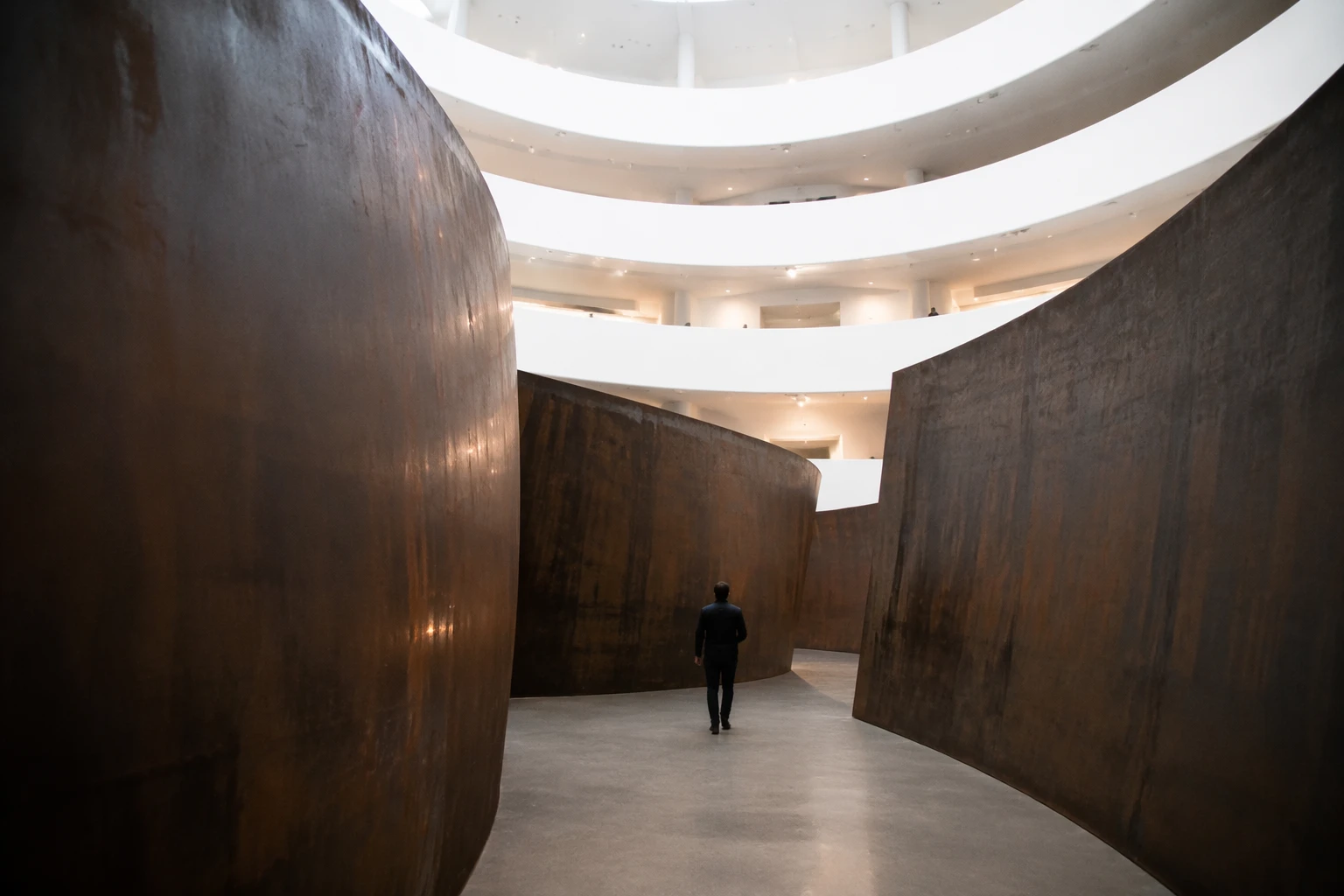
Bove presents the work as an environment of curiosity and playfulness, and the installation supports that reading by making the visitor an active participant in how the pieces are seen.
Bove’s method and the materials she bends
Bove was born in Geneva in 1971, raised in Berkeley, California, and earned a BS from the New York University School of Education in 2000. Her practice combines sculpture and conceptual assemblage, transforming disparate materials into arrangements that articulate a minimalist aesthetic.
Bove sculpts at scale and in the round without preparatory drawings, a method that helps explain why the pieces can feel both improvised in spirit and exact in their placement. The absence of preparatory drawings also helps account for the sense of risk in the work: the forms look discovered in space rather than simply executed from a fixed plan.
The materials are industrial, but the experience is not cold. The metal bends and warps in ways that soften the confrontation with size, and the pieces often read less like barriers than like invitations to move around them.
Why the Guggenheim setting matters
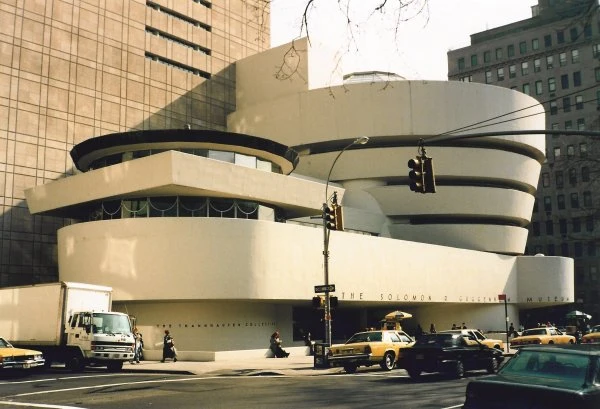
The Guggenheim is presenting the retrospective in dialogue with Frank Lloyd Wright’s architecture, which means the building is not a neutral container. Bove’s forms meet the curve of the Rotunda, and the museum’s spiral becomes part of how the sculptures are understood. The effect is architectural as much as sculptural: the pieces do not just fill space, they argue with it, echo it, and interrupt it.
Institutions are under pressure to widen their audience, and access is no longer only about admissions policies or digital outreach. It is also about how a museum makes visitors feel once they are inside. Bove’s work, with its emphasis on scale, circulation, and bodily orientation, offers a model of engagement that does not depend on art-world fluency. It asks people to look, move, and navigate.
A retrospective with room for debate
The show has also drawn critical scrutiny over its size, with criticism that a smaller survey might have allowed for something more meaningful than presenting everything Bove has been doing over recent decades. That criticism lands because size is not a neutral choice at the Guggenheim, where a large exhibition can easily become overwhelming in the museum’s own dramatic architecture.
By assembling monumental sculptures, works on paper, and installations in the Rotunda, the museum is making a case for Bove as an artist whose work can hold a major institutional space and change how that space is read. The exhibition’s breadth, including the debut of new bodies of work, also signals that the retrospective is meant to be more than an inventory.
Sources
- [1]cbsnews.com
- [2]guggenheim.org
- [3]artsy.net
- [4]hyperallergic.com
- [5]vogue.com