Business
CBS Mornings Deals spotlights everyday lifestyle products and big savings
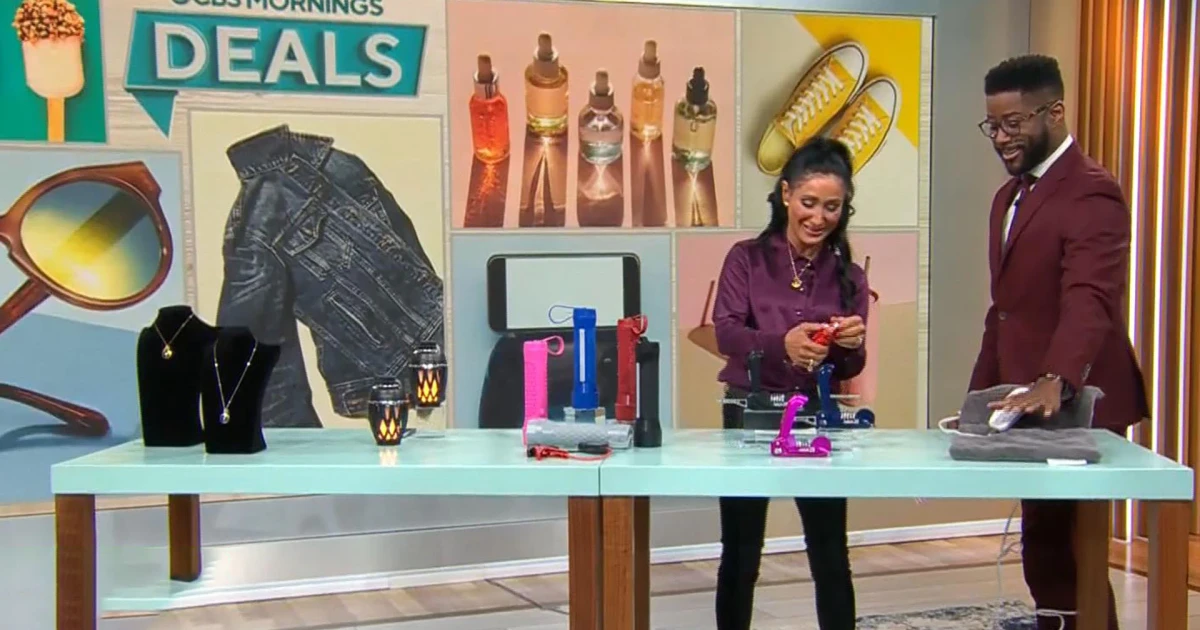
CBS Mornings Deals packages everyday lifestyle products as quick-hit bargains, but the value is more nuanced than the marketing suggests. The segment leans on household usefulness, with items meant to simplify routine tasks, while also relying on urgency, limited-time pricing, and a retail platform that pays CBS commissions when shoppers buy through cbsdeals.com.
What CBS Mornings Deals is trying to sell
The pitch is straightforward: useful products at lower prices, presented through a familiar morning-show format. CBS Deals says it carries items from small businesses across the United States, a framing that gives the promotion a more local, maker-driven feel than a standard flash sale. The site also says offers are often limited-time, which means the practical question is not just whether an item is discounted, but whether it is discounted enough to justify acting fast.
That distinction matters because the franchise has long operated as a recurring branded shopping segment rather than a one-off stunt. In a CBS Mornings Deals segment dated September 12, 2023, lifestyle host Elizabeth Werner promoted a three-day savings event with products offered at least 40% off retail price. Recent CBS and CBS-affiliated postings continue using the same language, which suggests the format is still active and periodically refreshed with new products and offers.
How the business model works
CBS Deals says the store is operated by Knocking under different terms and privacy policies than CBS. That detail is important because it means the shopping experience is not simply an extension of the broadcast brand, even though it carries CBS labeling and is promoted on-air. CBS also states that it receives commission payments when shoppers take advantage of deals through cbsdeals.com, so the network has a direct financial stake in purchases made through the program.
For consumers, that does not automatically make the offers bad. It does, however, explain why the segment is built around urgency, savings language, and a curated product mix that is designed to be easy to understand quickly. The practical takeaway is to treat each featured item like a retail offer, not a recommendation detached from the economics of the sale.
A useful way to evaluate the segment is to ask three questions:

• What was the original retail price, and is the discount meaningful against it? • Is the item genuinely solving a routine problem in the home, or does it just sound exclusive on TV? • Does the shopping timeline, shipping estimate, and return policy work for you?
Those questions matter because the difference between a real deal and a manufactured sense of scarcity often comes down to the fine print.
The fine print shoppers should not skip
CBS Deals’ shipping and returns policy says returns or exchanges are generally available only within 30 days of receipt, and original shipping costs are excluded. That is a relatively standard online-shopping structure, but it limits flexibility if the product does not fit your needs or arrives after the impulse to buy has passed. It also means the best consumer protection is upfront comparison shopping, not post-purchase damage control.
The site also signals that some items may be available only for a brief window and may ship on specific timelines. One listing, for example, is marked “Ships by Jun 24,” which shows that the offer can have a defined fulfillment date as well as a discounted price. That kind of shipping detail matters because a deal is less useful if the item arrives too late to solve the problem you bought it for.
In other words, the real calculus is not just percent off. It is whether the product is useful, the price beats ordinary retail, and the timing fits your household. A product that is 40% off can still be a mediocre buy if the base price was inflated or if the return process is too restrictive to offer much cushion.
A seller example that shows the small-business angle

Campanelli is one of the sellers featured through CBS Deals, and its own history illustrates how the franchise markets its inventory. The company says it has been family-owned and operated since 1955, when “Big Joe” Campanelli Sr. opened its first vacuum shop in Orange, New Jersey. That origin story gives the sale a small-business narrative and ties the product pitch to a specific American retail history rather than a generic warehouse model.
That kind of seller profile is part of the appeal. CBS Deals is not presenting itself as a pure closeout warehouse; it is offering a mix of independent brands, some with long operating histories, and packaging them as lifestyle solutions for the home. For viewers, that can make the sale feel more credible, especially when a company can point to decades in business and a real local origin point.
Still, the seller story should not substitute for the price check. A family-owned history can be meaningful, but it does not guarantee that a featured price is the lowest available or that the product is the best fit for the job.
What the segment means for shoppers
CBS Mornings Deals works best for people who already need a category of product and are willing to compare the TV price with ordinary retail before buying. The strongest offers are likely to be the ones with clear utility, a visible discount, and straightforward fulfillment. The weakest are the ones that rely mostly on urgency, branding, and a narrow return window.
That is why the smartest reading of the segment is skeptical but not cynical. CBS Deals is built to convert attention into sales, and CBS earns from those purchases through commissions. The value for shoppers comes only when the product solves a real everyday need at a genuinely better price, not when the on-air excitement creates pressure to buy first and evaluate later.
Sources
- [1]cbsnews.com
- [2]cbs.com
- [3]cbsdeals.com