Entertainment
CBS News Sunday Morning explores Japan health, America’s time capsule

CBS News Sunday Morning keeps proving that a broad, carefully paced Sunday magazine can still work in a fractured media landscape. Jane Pauley hosts a 90-minute broadcast on CBS that begins at 9:00 a.m. ET and streams on the CBS News app at 11:00 a.m. ET, giving the show a rare combination of live appointment viewing and delayed access. The June 14 episode, listed as Season 2026, Episode 24, uses that format to move from public health and national history to sports, art, politics, and reflection without losing its center.
A lineup built for the broad middle
The strongest sign of the show’s durability is the range of stories CBS is still confident can hold a national audience in one sitting. The cover story turns to Japan, where correspondent Adam Yamaguchi examines healthy eating and why obesity rates are far lower than in the United States, while also looking at school lunches and workplace health tracking. That is classic Sunday Morning strategy: take a complicated social issue and make it legible through everyday institutions, not jargon.
The segment also carries a clear statistical hook. CBS says the percentage of obese adults in the United States is about ten times what it is in Japan, a comparison that gives the report immediate relevance for readers thinking about public health, diet policy, and long-term costs. By placing that number beside school meals and employer wellness practices, the episode suggests a larger lesson: national health outcomes are shaped less by one-off advice than by the systems people move through every day.
That approach is exactly why the format still endures. Streaming has made nearly everything available on demand, but it has also made shared pacing rare. A Sunday newsmagazine survives by offering a curated sequence, where a serious health story can sit next to a lighter cultural profile and still feel coherent.
Why history still draws viewers
The history segment on “America’s Time Capsule” leans into the same instinct. CBS says the official national time capsule will be buried in Philadelphia’s Independence National Historical Park on July 4, 2026, then sealed until July 4, 2276, as part of the nation’s 250th anniversary celebrations. That kind of story works because it turns a commemorative act into a suspenseful national gesture: a message to people who will never meet the people writing it.
Faith Salie’s “Moment in Time” expands that idea by looking at time capsules as historical artifacts. Together, the two segments give the episode a strong architectural spine, using the past and the far future to frame the present. In a media environment full of instant reaction, the show is betting that viewers still want stories with scale, ritual, and a date on the calendar that feels bigger than a news cycle.
The time capsule also fits the moment politically. America250 is already shaping how institutions think about the country’s 250th anniversary, and a ceremonial burial in Philadelphia turns commemoration into a public event rather than an abstract milestone. The result is a story that is both symbolic and concrete, the sort of national-history feature that Sunday morning television has always handled well.
Sports, art, and the long memory of spectacle
The episode’s art and sports segments show how the program keeps sports culture from feeling disposable. At the Los Angeles County Museum of Art, CBS visits “Fútbol Is Life: Animated Sportraits,” by Lyndon J. Barrois Sr., whose work uses chewing gum wrappers to depict nearly 100 years of World Cup moments. That is the kind of visually inventive feature that translates instantly on television, while still carrying a deeper point about memory, fandom, and the global reach of soccer.
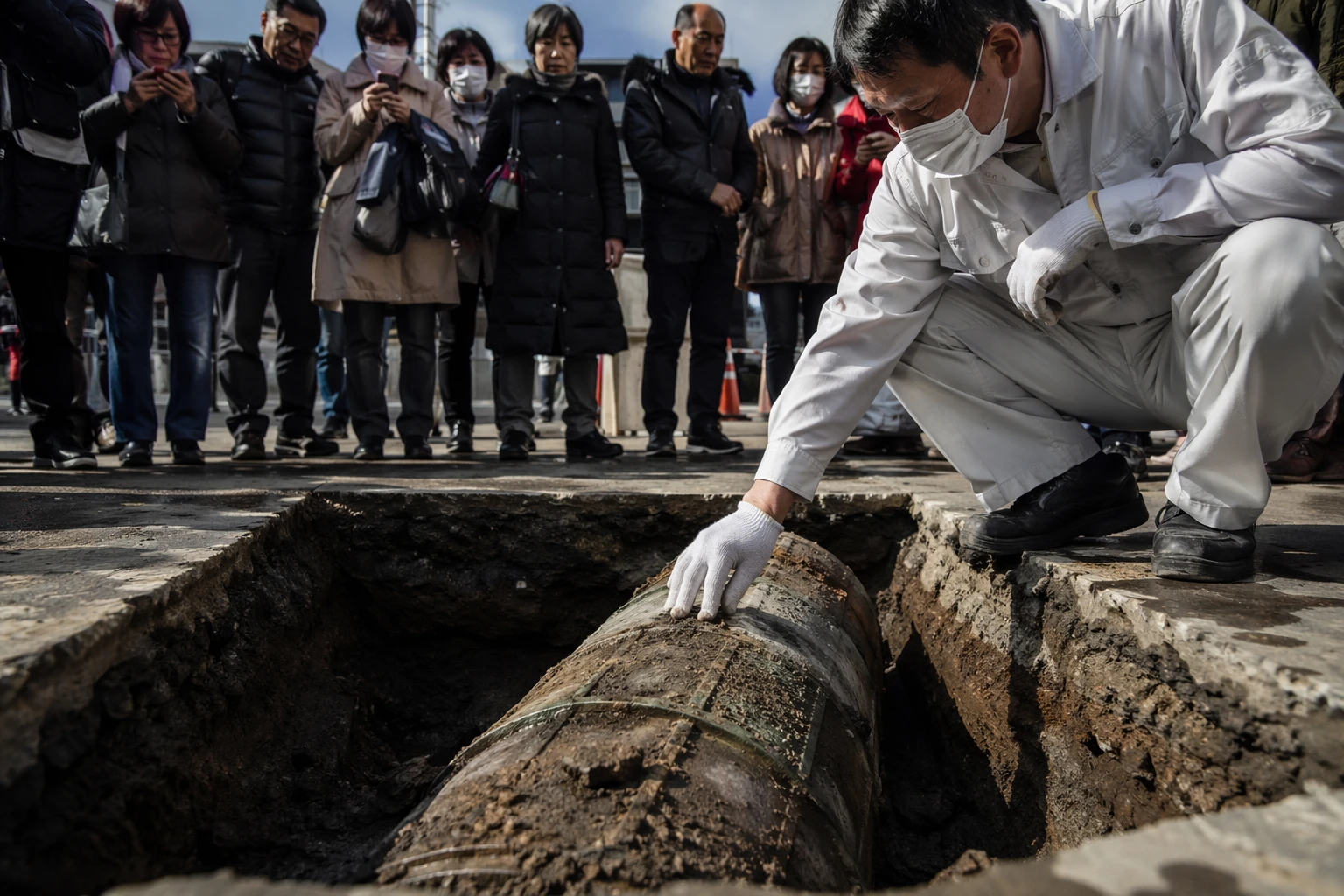
Another segment turns to the Houston Astrodome, which CBS describes as the world’s first multi-purpose domed sports stadium. Opened in 1965, the venue is linked in the broadcast to the current World Cup in North America, giving a midcentury engineering landmark new relevance. The piece works because it connects a famous building to a still-unfolding sports story, showing how television can tie the past to the present without forcing the connection.
Together, those stories reveal an old but resilient producer’s instinct: give viewers one image they have seen before, then show them why it still matters. A museum exhibit made from chewing gum wrappers and a domed stadium from 1965 are different subjects, but both reward the same kind of viewing, a slower, more contextual attention than social platforms usually demand.
Familiar faces, personal stakes
The human-interest side of the broadcast leans on recognizable names. Bill Mumy, now 72, talks about his career then and now, drawing on childhood roles in “The Twilight Zone” and “Lost in Space.” That kind of interview gives the show an intergenerational appeal, because it invites older viewers to revisit formative television memories while introducing younger ones to a performer whose career spans decades of American screen culture.
Ted Danson’s opinion segment on growing old serves a similar purpose, but from a more reflective angle. Rather than treating aging as a medical or demographic chart, the broadcast uses a familiar actor to give the subject personality and warmth. That is a key part of Sunday Morning’s formula: serious enough to feel substantive, but conversational enough to feel accessible.
The political interview closes the circle. Vice President JD Vance and Usha Vance sit down with Robert Costa for a wide-ranging conversation about faith, family, and Vance’s book, “Communion: Finding My Way Back to Faith.” CBS says the couple are expecting their fourth child, which adds another layer of personal context to a discussion that could otherwise stay purely political. On a show that still depends on breadth, that blend of policy, biography, and domestic life is exactly the kind of material that can hold attention across a national audience.
By the end of the broadcast, the pattern is clear. CBS News Sunday Morning is not trying to compete with the speed of the feed; it is offering something steadier, a shared hour and a half where health policy, national memory, sports heritage, and personal reflection can coexist. That is why the format still endures.
Sources
- [1]cbsnews.com
- [2]paramountpressexpress.com
- [3]wghn.com
- [4]america250.org
- [5]nrgpark.com
- [6]tshaonline.org
- [7]data.worldobesity.org
- [8]oecd.org