Health
CDC Restricts Reentry for Green Card Holders From Ebola-Affected Nations
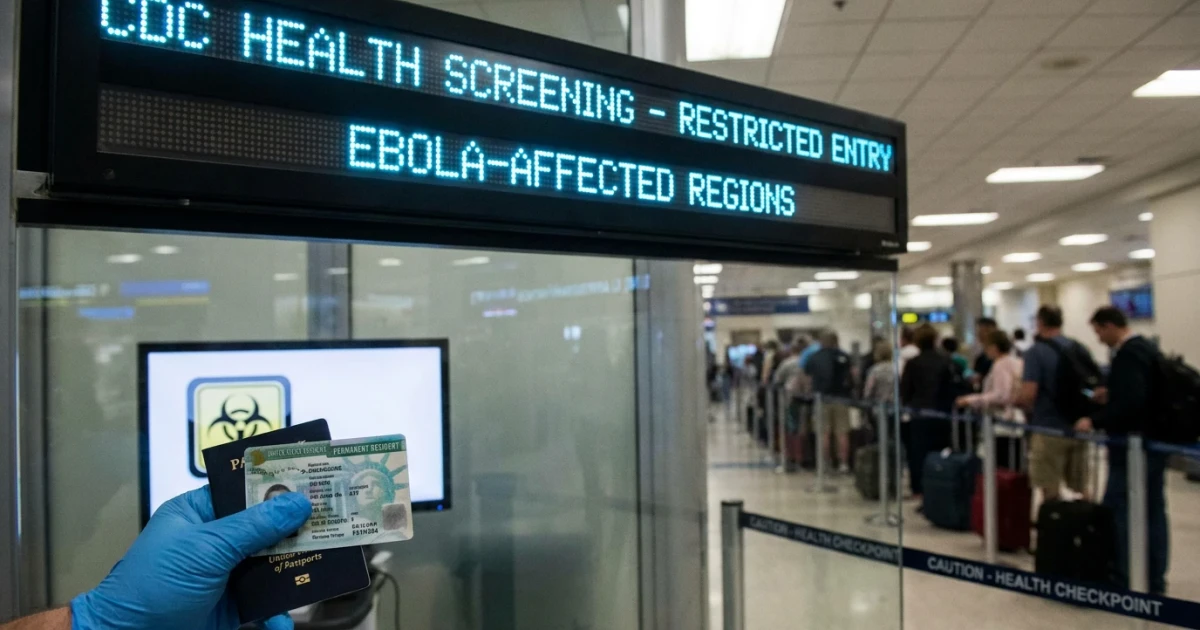
The Centers for Disease Control and Prevention (CDC) has announced that U.S. green card holders who have recently traveled to countries currently experiencing Ebola outbreaks will not be allowed to reenter the United States. This measure, reported by Politico, marks a significant tightening of U.S. entry policies as health officials work to prevent the spread of the virus domestically.
New Restrictions Target Recent Travelers
According to the latest policy, lawful permanent residents—commonly known as green card holders—who have spent time in nations where Ebola transmission is ongoing will be barred from reentering the U.S. The CDC’s order builds on previous travel advisories and goes further by explicitly including residents who typically enjoy unimpeded reentry rights. The official directive is detailed in the Federal Register’s CDC order on suspending entry from Ebola-affected countries.
- The CDC’s policy applies to individuals who have been in affected areas within a defined period prior to arrival in the U.S.
- The restriction is part of broader efforts to contain imported cases of Ebola and limit exposure risk among the American public.
Expanded Airport Screening and Entry Points
In tandem with the new travel restrictions, the CDC is coordinating with the Department of Homeland Security to expand airport screening protocols. Politico notes that Atlanta and Houston have joined the list of designated airports authorized to receive passengers from the three primary Ebola-affected countries. These airports will implement enhanced screening and monitoring procedures for all arriving travelers, in line with U.S. Customs and Border Protection guidance.
- Screening includes temperature checks, health questionnaires, and additional observation for symptoms consistent with Ebola virus disease.
- Designated airports are equipped with isolation protocols and trained staff to manage potential cases.
Background: Ebola Outbreaks and U.S. Response
The CDC’s latest move comes amid ongoing outbreaks in West Africa, which have prompted international concern and widespread health interventions. According to CDC outbreak data, previous waves led to thousands of cases and a global response, informing today’s containment measures. The CDC’s interim guidance for monitoring potentially exposed individuals includes movement restrictions, daily health checks, and quarantine as warranted.
Entry restrictions are also supported by legislative proposals, such as H.R.5686, which aimed to formalize the process for barring entry from Ebola-affected regions. These measures are primarily designed to prevent imported cases and ensure robust public health surveillance.
Key Points for Travelers and Residents
- Green card holders with recent travel history to affected countries face temporary reentry bans.
- Travelers arriving from these regions are funneled through specific airports with enhanced screening.
- Health and border officials are implementing strict protocols to reduce the risk of Ebola introductions.
Looking Ahead
As Ebola outbreaks continue to pose public health risks, the CDC’s evolving entry restrictions reflect an ongoing balancing act between individual rights and national safety. With the inclusion of green card holders and the expansion of designated entry airports, U.S. authorities are tightening the net on potential disease importation. Ongoing monitoring of case counts and adherence to CDC statistics and maps will inform future adjustments to these policies.