Science
Centipede Ancestors Paved Early Paths Across Land
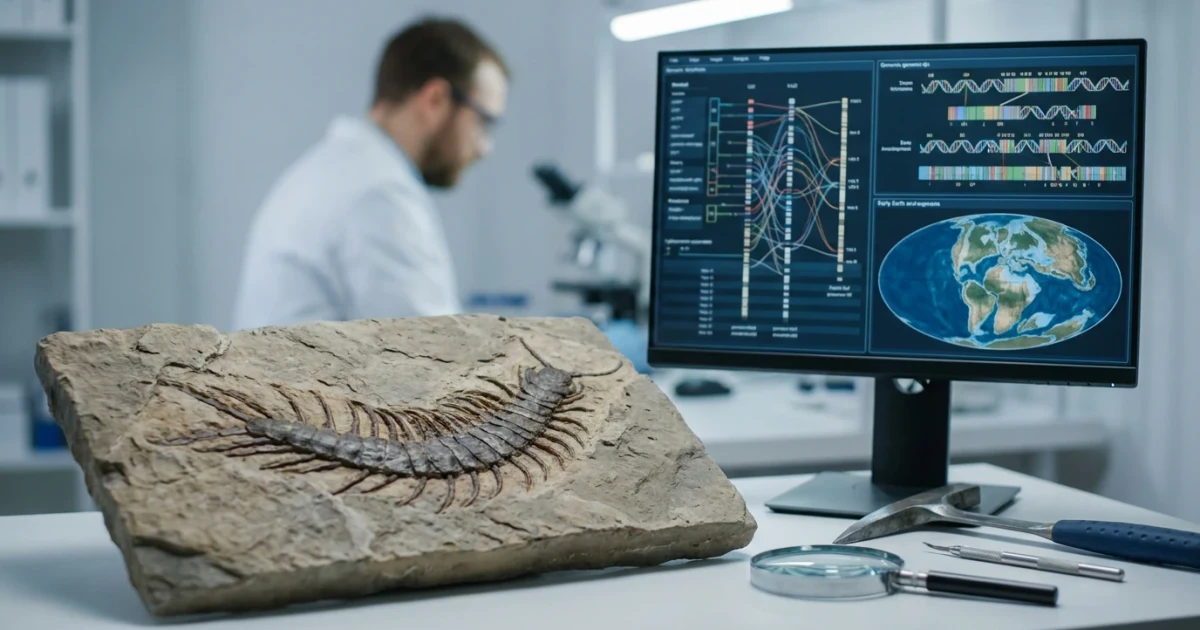
Centipede ancestors played a pivotal role in the early colonization of Earth's landmasses, with fossil records and scientific studies revealing that these ancient arthropods were among the first animals to transition from aquatic environments to terrestrial habitats. Recent analysis, highlighted by The Seattle Times, underscores the significance of these early myriapods in shaping ecosystems and evolutionary pathways.
Early Terrestrial Pioneers
Ancient centipede ancestors, part of the Myriapoda class, are believed to have ventured onto land during the Silurian period, over 400 million years ago. Fossil evidence compiled in the Paleobiology Database provides a taxonomic hierarchy and occurrence data for these early myriapods, illustrating their wide distribution across ancient continents.
- Earliest terrestrial myriapod fossils date back roughly 428 million years.
- These fossils have been found in regions that were once part of ancient supercontinents.
- Fossilized centipede ancestors exhibit adaptations for breathing air and moving on land.
Peer-reviewed research, such as the Nature study on Silurian myriapods, confirms the early land-dwelling status of centipede ancestors. These findings suggest that myriapods were among the first to establish a foothold on terrestrial environments, predating the arrival of many other arthropods.
Evolutionary Adaptations
To thrive on land, centipede ancestors developed several key adaptations. According to the Encyclopaedia Britannica explainer, these included:
- Segmented bodies with flexible exoskeletons
- Specialized respiratory systems, such as tracheae
- Robust legs designed for terrestrial locomotion
Genomic and phylogenetic analysis, detailed in recent research, shows that terrestrialization in myriapods occurred independently multiple times. This indicates centipede ancestors were not only innovative but also resilient, adapting to various environmental challenges as they spread across Earth's landmasses.
Global Distribution and Fossil Records
Centipedes, or Chilopoda, have a broad global distribution, as demonstrated by GBIF occurrence data. Modern centipedes are found on every continent except Antarctica, a testament to the evolutionary success of their ancient ancestors. Fossil records document their presence across Europe, North America, and Asia, with varying species adapted to different ecological niches.
- Centipede fossils provide insight into the progression of terrestrial adaptation.
- Occurrence data reveals migration patterns linked to continental drift.
- Modern centipedes retain many traits established by their ancestors.
Impact on Terrestrial Ecosystems
The colonization of land by centipede ancestors had profound effects on terrestrial ecosystems. As some of the earliest land-dwelling predators, they helped shape the food web, influencing the evolution of other arthropods, plants, and vertebrates.
By pioneering terrestrial habitats, centipede ancestors laid the groundwork for the diversity of life seen today. Their successful adaptation to land environments showcases the dynamic nature of evolutionary processes and highlights the importance of fossil and genomic research in understanding Earth's history.
Conclusion
Fossil records, genetic studies, and global biodiversity databases collectively illustrate how ancient centipede ancestors conquered land and drove the evolution of terrestrial ecosystems. As research continues, these arthropods remain a key focus for understanding the origins of complex life on Earth. Curious readers can explore their fossil records, distribution data, and evolutionary history for deeper insights.