Politics
CFTC sues nine states over regulation of prediction markets
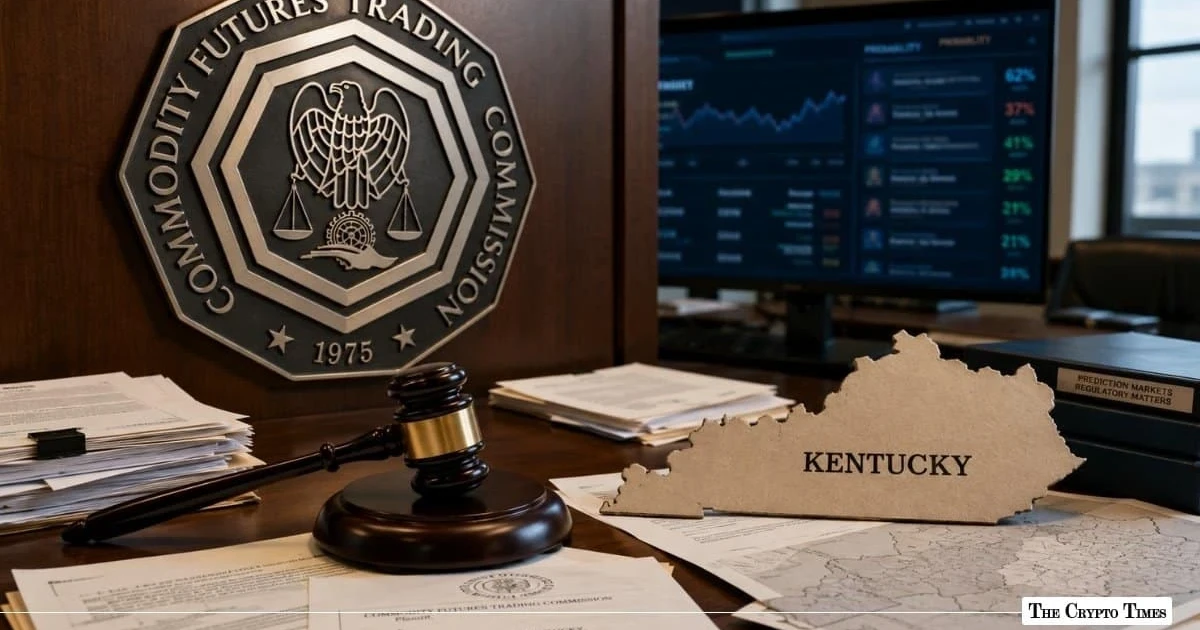
The Commodity Futures Trading Commission widened its fight with Kentucky on June 23, suing to stop the state from using gambling laws against CFTC-registered contract markets. The agency has now sued nine states over prediction markets, pushing a federalism battle from Arizona to New Mexico over who gets to police event contracts.
Congress settled the classification long ago. In 1992, the commission allowed the Iowa Electronic Markets at the University of Iowa to operate, and Congress expanded that power after the 2008 financial crisis. The commission treats prediction markets as commodity derivatives that help businesses hedge event risk and give investors information about future outcomes, not products that should be left to a state-by-state gambling regime.
The CFTC sued Arizona, Connecticut and Illinois on April 2, then added New York, Minnesota, Rhode Island, Wisconsin, New Mexico and Kentucky; it also filed amicus briefs in the Ninth Circuit, the Sixth Circuit and the Massachusetts Supreme Judicial Court to defend its preemption theory. In Arizona, a federal court issued a temporary restraining order blocking state criminal charges against a CFTC-regulated company.

Kalshi and Polymarket sit at the center of that clash. The CFTC ordered Polymarket in 2022 to pay a $1.4 million civil penalty, wind down noncompliant markets and stop violating agency rules after finding it had offered off-exchange event-based binary options without proper registration. Kentucky Attorney General Russell Coleman filed three lawsuits on June 17 against prediction-market companies, and CNBC counted 16 states involved in legal proceedings against prediction-market platforms, while one state had moved to ban them outright. The CFTC’s June 10 proposed rulemaking seeks comment on event contracts involving enumerated activities and possible public-interest limits.
Sources
- [1]cbsnews.com
- [2]cftc.gov
- [3]cnbc.com
- [4]kentucky.gov