Entertainment
Charles Kuralt’s July 4 tribute captures America’s quirkiest traditions
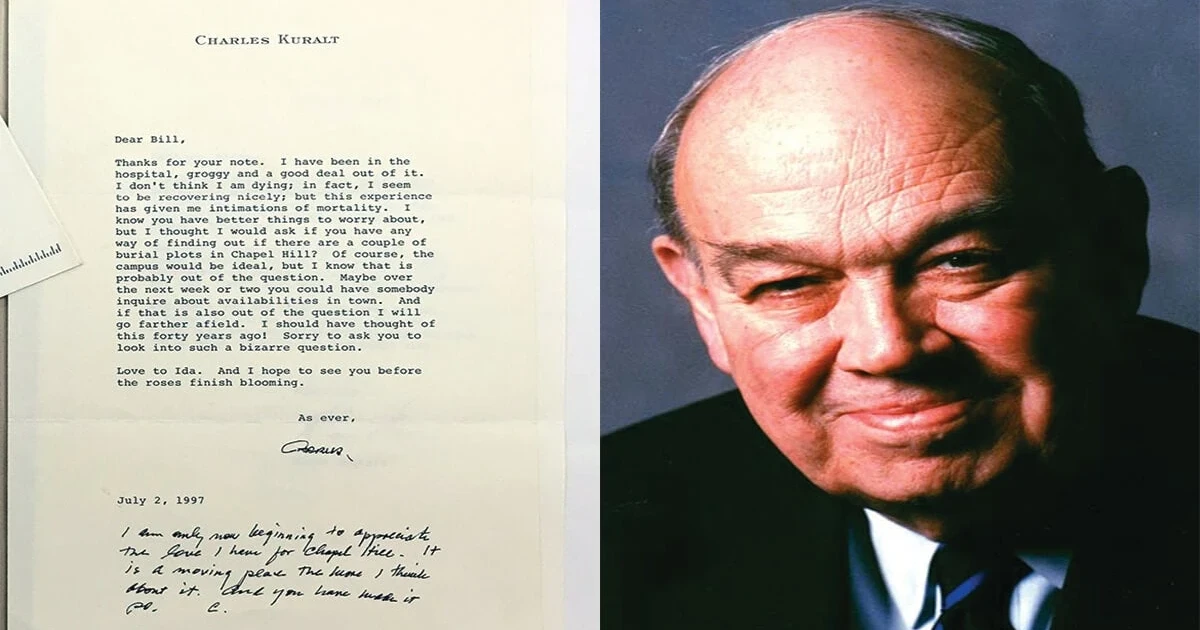
Charles Kuralt turned the Fourth of July into a national scrapbook in his 1990 CBS primetime special, On the Fourth of July with Charles Kuralt, a tour through parades, tubing down lazy rivers, axe throws, and greased pig contests. When CBS rebroadcast the excerpt on Sunday Morning on July 1, 2007, the piece felt less like a sentimental replay than a map of how Americans perform belonging in public.
Kuralt’s patriotic lens
Kuralt was already the network’s most recognizable chronicler of ordinary American life. His On the Road segments began on CBS in 1967, and he went on to serve as the original host of CBS News Sunday Morning when it premiered on January 28, 1979. He held that post for 15 years, shaping the program around gentle, often offbeat stories that found national character in local detail.
That background matters because the July 4 special was not a hard-news exercise. It reflected the same editorial instinct that made Kuralt a trusted guide through county fairs, roadside oddities, and small rituals that rarely made headlines but helped define the country’s self-image. In that sense, the broadcast was a compact version of his larger career: a portrait of America told through its habits, not its slogans.
The Adams connection
The holiday’s public theater was already part of the nation’s founding language. On July 3, 1776, John Adams wrote to Abigail Adams that Independence Day should be commemorated as “the Day of Deliverance,” and that it ought to be marked with “pomp and parade” and with “shows, games, sports, guns, bells, bonfires and illuminations.” That language matches Kuralt’s instinct almost perfectly: celebration in the open, noisy, communal, and deliberately varied.
CBS News noted in 2007 that Kuralt liked to quote Adams on the holiday, and the archive segment shows why. Adams imagined a republic that would celebrate itself not with uniform ceremony, but with a mix of spectacle and local custom. Kuralt picked up that idea and let it breathe across the country, where July 4 could mean a march down Main Street in one town and a river float in another.

Why the odd traditions matter
The details in Kuralt’s special are the point. Parades suggest civic order, but tubing down lazy rivers, axe throws, and greased pig contests point to something looser and more playful, a holiday held together by participation rather than ideology. The range runs “from sea to shining sea,” but the strength of the piece is how unselfconsciously it treats that variety as the country’s common language.
That is why the rebroadcast on Sunday Morning still lands. In a more polarized era, American identity is often argued through politics, symbols, and competing claims of who belongs. Kuralt’s July 4 montage offers a different model: patriotism as repeated ritual, enacted in towns, fairgrounds, and public squares by people who may disagree on everything else. The holiday survives because it leaves room for regional difference while preserving a shared script of bells, bonfires, pageantry, and games.
A tribute folded into memory
The 2007 remembrance gave the segment another layer of meaning. CBS News said Kuralt died on the Fourth of July in 1997, at age 62, from complications of lupus, turning the holiday piece into both a tribute and a reminder of how closely he had linked his own public identity to the rhythms of American life. The 1990 special was described in that remembrance as a scrapbook of some of his favorite July 4 memories, which is exactly what it feels like: selective, affectionate, and built from scenes that ordinary viewers instantly recognize.
That is the enduring value of the archive. Kuralt did not try to prove that Americans are unified in some abstract sense. He showed that they keep returning to the same kinds of public rituals, even when the country itself feels fractured. The parades continue, the bonfires still burn, and the holiday still makes room for spectacle, silliness, and civic memory in the same long summer day.
Sources
- [1]cbsnews.com
- [2]masshist.org
- [3]ncpedia.org