Business
Chevron expands into data-center power deals as AI boom reshapes energy economics
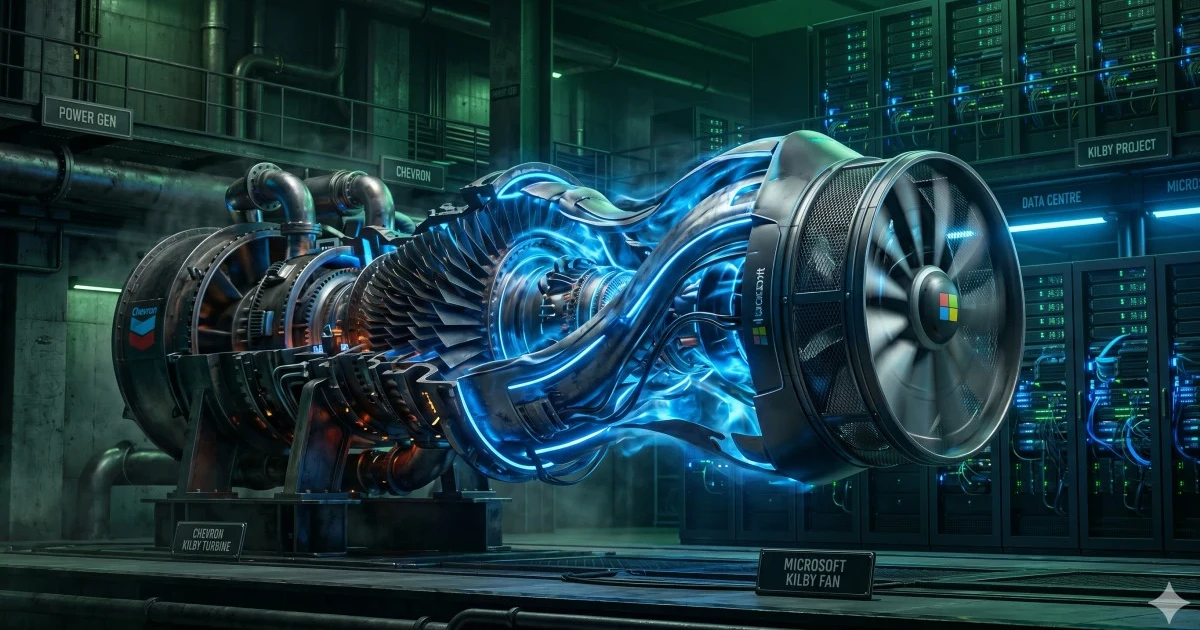
Chevron’s 20-year power deal with Microsoft for Project Kilby in West Texas marked a sharp turn for an oil company that now sees data centers as a long-term energy market. Chevron said the project, developed through Energy Forge One LLC with Engine No. 1, will deliver about 2.67 gigawatts of capacity and is slated for first power delivery in 2028.
The company said it is targeting a final investment decision by the end of 2026. It also said the project could generate more than $10 billion in state and local tax revenue and support almost 2,000 jobs. Chevron plans to build the facility in phases using large GE Vernova turbines and additional capacity from Solar Turbines, the Caterpillar subsidiary. The site is in West Texas, near Pecos in Reeves County.
Chevron is not treating Project Kilby as a one-off. The company is exploring additional data-center power deals across the United States, including in the Midwest, the Rockies and the Gulf Coast, as it looks for ways to monetize natural gas, existing infrastructure and its ability to supply power around the clock. That push reflects a broader shift in the energy business: the companies that once sold fuel into the grid are increasingly trying to sell electricity itself, or the backup generation that keeps servers online when demand spikes.
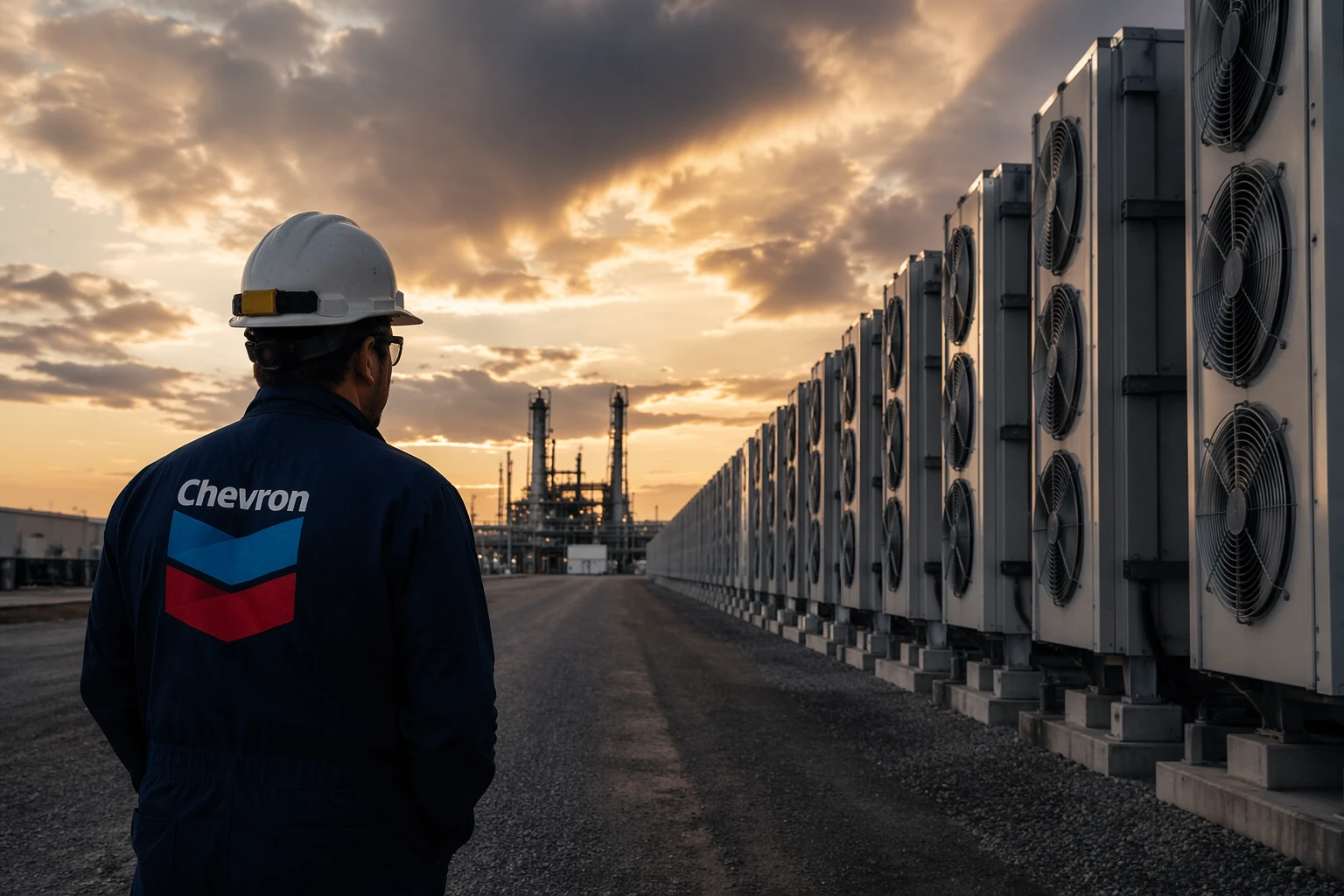
The timing is no accident. The U.S. Energy Information Administration said on January 13, 2026, that U.S. electricity use is expected to rise 1% in 2026 and 3% in 2027, which would mark the strongest four-year stretch of demand growth since 2000 and the first such run since 2007. The Department of Energy has also said the country is returning to a period of rising electricity demand and has pointed to data-center load growth as a major reliability issue.
That strain is why the sector is drawing in companies such as Exxon Mobil as well. ExxonMobil has said AI and data centers are driving higher energy demand, and that it wants to help power low-carbon data centers with natural gas generation paired with carbon capture and sequestration. The company says it operates the largest integrated CCS system in the U.S., with more than 1,000 miles of pipeline along the Gulf Coast.
The scale of the gap helps explain the rush. Boston Consulting Group estimated in March 2026 that the United States could face a 50- to 80-gigawatt shortfall in reliable power for data centers by 2030, and said gas-fired plants with carbon capture score well on speed, cost, scalability and low-carbon credentials. For Chevron, that opens a new source of steadier revenue beyond oil and gas prices. For tech companies, it offers a faster path to power in places where the grid is tight and new capacity is slow to arrive.
Sources
- [1]money.usnews.com
- [2]chevron.com
- [3]eia.gov
- [4]corporate.exxonmobil.com
- [5]bcg.com
- [6]energy.gov