Business
China holds key loan rates steady for 13th straight month
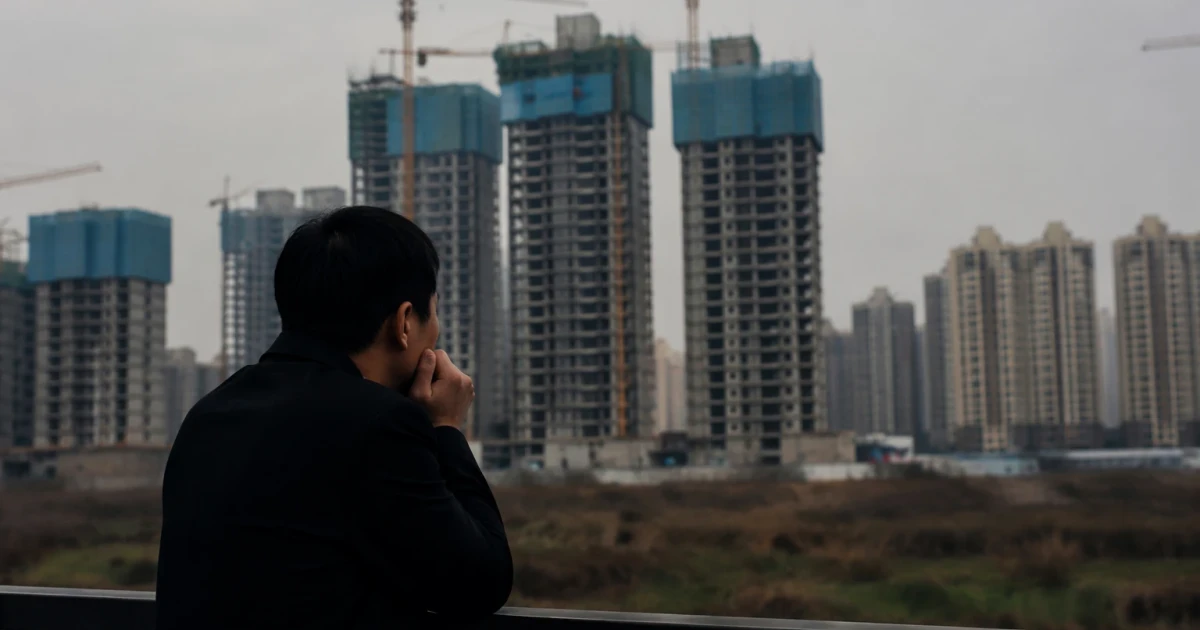
China kept its benchmark loan prime rates unchanged in June, leaving the one-year rate at 3.00% and the five-year rate at 3.50% for the 13th straight month. The move matched the expectations of all 30 market participants surveyed and showed how carefully policymakers are balancing support for growth against the risk of admitting deeper weakness in the property market, credit demand and household confidence.
The pause followed another soft reading in lending. New yuan loans rose to 520 billion yuan in May 2026, recovering from a 10 billion yuan contraction in April, but still missing analysts’ forecasts. That pattern reinforced the view that China’s domestic engine remains uneven: exports have held up relatively well, while borrowing from households and businesses has stayed subdued under the weight of a long property downturn.
Pan Gongsheng, the governor of the People’s Bank of China, sharpened that message at the Shanghai Lujiazui Forum on June 17. He said China’s previous pace of credit growth is difficult and unnecessary to sustain, a comment that fit a broader structural shift in the financial system. Reports on his remarks said direct financing surpassed bank lending for the first time in 2025, underscoring how Beijing is pushing the economy away from property- and loan-led expansion.
That shift helps explain why broad rate cuts look unlikely in the second half of the year. Jing Sima of BCA Research said the main problem is not a shortage of liquidity but weak demand for credit, while Ho Woei Chen of UOB said policy responses are likely to remain incremental unless activity slows below China’s official target range. Keeping rates steady also gives Beijing room to avoid extra pressure on the currency and limits the risk of flooding an already fragile property sector with cheaper money.
For U.S. readers, the stakes are larger than China’s monthly lending figures. A slower Chinese recovery can temper demand for commodities, industrial inputs and consumer goods, affecting American exporters and multinational companies with heavy exposure to Chinese spending. The latest pause suggests Beijing is still searching for a way to stabilize growth without reigniting the leverage and property excesses it now wants to leave behind.