World
China Imposes Export Controls on Major Japanese Firms
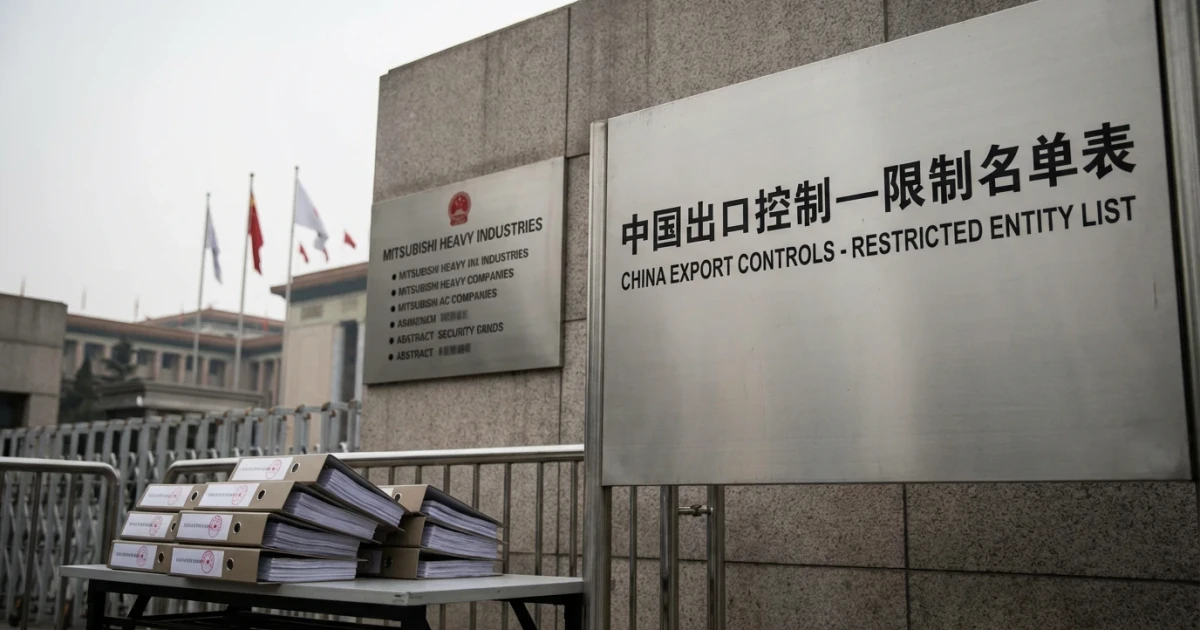
China has imposed new export controls on 20 Japanese companies, including industrial giant Mitsubishi Heavy Industries, in an escalation of technology and security tensions between the two major economies. The move, announced by Chinese authorities and reported by Bloomberg, targets Japanese entities allegedly linked to military activities, marking a significant step in ongoing trade and diplomatic friction.
Background to the Export Controls
The Chinese government’s decision to add Japanese firms to its export control list follows heightened scrutiny over technology flows, especially in sectors with dual civilian and military uses. The new measures restrict exports of certain goods and technologies to the listed companies, with the official rationale being national security concerns and the prevention of military proliferation.
According to Bloomberg, Mitsubishi Heavy Industries is among the most prominent Japanese enterprises affected. The company is a core supplier in aerospace, defense, and industrial manufacturing, and it plays a key role in Japan’s industrial exports.
Impacted Companies and Sectors
- 20 Japanese entities have been added to the Chinese export control list.
- Many of the targeted firms are involved in advanced manufacturing, aerospace, electronics, and defense.
- Mitsubishi Heavy is especially notable due to its size and strategic importance.
The Wall Street Journal and Bloomberg both indicate that these measures are largely aimed at companies with direct or indirect connections to Japan’s defense establishment or advanced technology sectors.
Trade and Economic Implications
Japan and China are two of Asia’s largest trading partners, with bilateral trade totaling hundreds of billions of dollars each year. According to China Customs Monthly Statistics, Japanese firms are significant contributors to China’s supply chain, particularly in high-value components and industrial machinery.
The new controls could disrupt supply chains, affect exports of specialized machinery, and create uncertainty for Japanese firms operating in China or relying on Chinese components. The move also comes as Japan has joined international efforts to restrict the export of sensitive technologies to China, especially those with potential military uses—a backdrop that may have contributed to this latest escalation.
Potential Effects on Japanese Industry
- Japanese companies could face delays, additional compliance checks, and even outright bans on certain exports to China.
- Japanese export statistics from the Ministry of Finance show that machinery and electronics are among Japan’s top exports to China, representing a significant portion of bilateral trade.
- The controls could impact sectors with high exposure to Chinese markets, such as semiconductors, precision tools, and industrial equipment.
Broader Strategic Context
The decision to target Japanese firms follows a pattern of tightening export controls by China in response to similar restrictions from the United States, the European Union, and Japan. Recent years have seen an increase in tit-for-tat technology restrictions, as major economies seek to protect their strategic industries.
Bloomberg notes that the Chinese measures are grounded in the country’s Export Control Law, which grants authorities broad powers to restrict exports deemed a risk to national security.
International Reactions and Outlook
While Japanese officials have yet to issue a formal response as of publication, the move is likely to prompt diplomatic protests and calls for clarification. The escalation underscores the growing complexity of international trade, where security and economic interests are increasingly intertwined.
Analysts suggest that continued friction over export controls could have ripple effects across global supply chains, further complicating business for multinational firms and raising costs for high-tech industries.
Looking ahead, both governments face mounting pressure to balance national security with economic integration, as ongoing disputes over technology and trade show few signs of abating.