World
China targets AI chatbot relationships amid falling birthrates
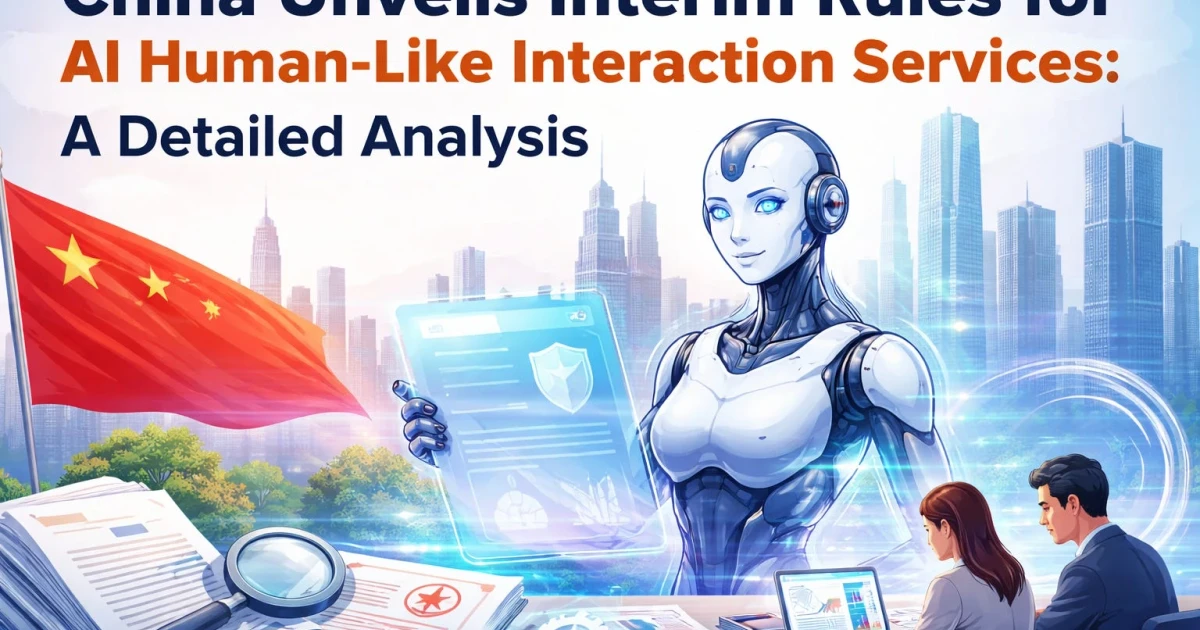
China’s Cyberspace Administration released draft rules in December 2025 aimed at “human-like interactive AI services,” a category that covers systems designed to simulate personality and engage users emotionally through text, images, or voice. The proposal put AI chatbot intimacy inside the country’s broader internet-control apparatus, while also tying it to concerns about suicide risk, minors and social behavior.
The draft would require platforms to monitor suicide risk, protect minors, restrict harmful content and trigger human intervention when a user is in distress. CNBC said the crackdown would also reach chatbots linked to suicide and gambling, and The Wall Street Journal reported that regulators were worried the systems could pull people out of the marriage market. Matt Sheehan, a senior fellow at the Carnegie Endowment for International Peace, has said Chinese officials see addictive behavior and psychological harm as part of the problem, not just a software failure.

That regulatory push landed against a worsening demographic backdrop. China’s population declined for a fourth straight year in 2025, with 7.9 million births, down from 9.5 million in 2024, while deaths reached 11.3 million. The numbers sharpen the political stakes in Beijing, where falling births, delayed marriage and rising loneliness have become linked in official thinking rather than treated as separate social trends.
Sheehan, who studies Chinese AI policy, has said Beijing is also working on technical standards for “anthropomorphic AI” and AI companions that maintain emotional interactions with users. Latham & Watkins described the measures as rules for AI companion and emotional interaction services, underscoring how China has moved beyond general content moderation toward explicit regulation of machine-based attachment.

The result is a policy that treats chatbot romance as a governance problem with demographic consequences. Beijing is not only trying to police a fast-growing class of AI services; it is also signaling concern that virtual relationships could weaken family formation in a country already struggling with a shrinking population and fewer births.
Sources
- [1]cbsnews.com
- [2]theprint.in
- [3]techpolicy.press
- [4]sixthtone.com
- [5]cnbc.com
- [6]carnegieendowment.org
- [7]lw.com
- [8]mattsheehan.substack.com