Technology
China Targets Global Leadership in Embodied AI Robotics
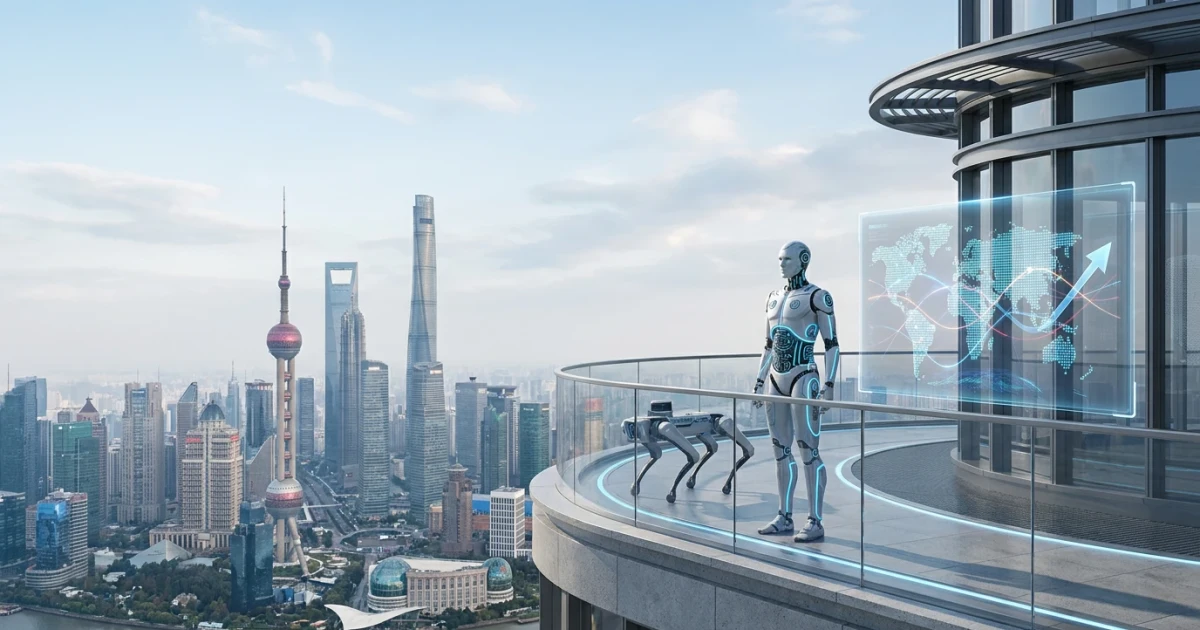
China is intensifying efforts to become a global leader in embodied AI – the integration of artificial intelligence into physical robots – as part of a sweeping campaign to transform its robotics industry. According to recent analysis from the Mercator Institute for China Studies (MERICS), the country’s strategy combines state-driven investment, regulatory support, and technological innovation to position Chinese robotics firms at the forefront of international competition.
Ambitious Policy Framework and Investment
The Chinese government has made robotics and embodied AI a national priority, issuing ambitious targets through the MIIT Robotics Industry Development Plan (2021-2025). This plan outlines goals to expand domestic production, increase robot density in manufacturing, and foster breakthroughs in embodied AI technologies. MERICS notes that government funding has flowed to both state-owned and private firms, with support for R&D, pilot projects, and commercialization of advanced robots.
- Robot density: China aims to raise the number of industrial robots per 10,000 manufacturing workers to match or surpass global leaders.
- Innovation targets: The plan calls for greater autonomy, adaptability, and intelligence in robots, emphasizing embodied AI as key to future competitiveness.
- Funding mechanisms: Direct subsidies, tax incentives, and project grants are helping accelerate technology transfer from lab to factory floor.
Industry Growth and Market Dynamics
China’s robotics sector has grown rapidly, driven by demand from automotive, electronics, logistics, and healthcare industries. MERICS highlights that Chinese firms are increasingly able to produce complex robots and integrate AI for applications such as automated guided vehicles, collaborative robots (cobots), and service robots. In 2023, China accounted for a significant share of global robot installations, according to the International Federation of Robotics (IFR).
- China is the world’s largest market for industrial robots, with annual data showing consistent double-digit growth in robot production.
- Domestic brands are challenging international competitors, especially in price-sensitive and customized applications.
- Embodied AI is powering new use cases, from warehouse automation to elderly care, positioning Chinese firms as innovators beyond traditional manufacturing.
Technological Challenges and Global Competition
Despite progress, MERICS points to several challenges facing China’s robotics industry. While the country leads in production volume, it still lags behind advanced economies in core components such as high-precision sensors, actuators, and AI algorithms. Intellectual property concerns, talent shortages, and dependency on imported technologies remain barriers to full autonomy.
To address these gaps, China is investing in university-industry partnerships, international collaboration, and efforts to build a more robust domestic supply chain. The government’s support for embodied AI research reflects the belief that advances in this field can help leapfrog existing limitations and create new competitive advantages.
Global Implications and Strategic Outlook
MERICS analysis suggests that China’s push into embodied AI robotics is reshaping the global landscape. As Chinese firms scale up production and innovate in AI-driven applications, they are capturing market share in emerging economies and increasingly challenging Western incumbents. The strategic focus on embodied intelligence – robots that can sense, learn, and adapt – is likely to drive further investment and policy support in coming years.
- China’s rise in robotics is spurring international responses, including tighter export controls and increased R&D spending in the US, EU, and Japan.
- Competition is shifting from hardware to integrated AI solutions, with embodied AI as a key battleground.
- Global supply chains and standards may be influenced by Chinese approaches to regulation and innovation.
Conclusion: The Road Ahead for Embodied AI
China’s efforts to transform its robotics industry through embodied AI reflect a broader strategy to lead in advanced manufacturing and digital technologies. While significant technical and geopolitical challenges remain, the combination of policy ambition, investment, and emerging expertise is positioning China as a formidable force in the global robotics race. As embodied AI matures, the outcomes will shape not only industrial productivity but also the future of labor, healthcare, and society worldwide.