Science
China Tests Artificial Embryos in Space for Reproduction Research
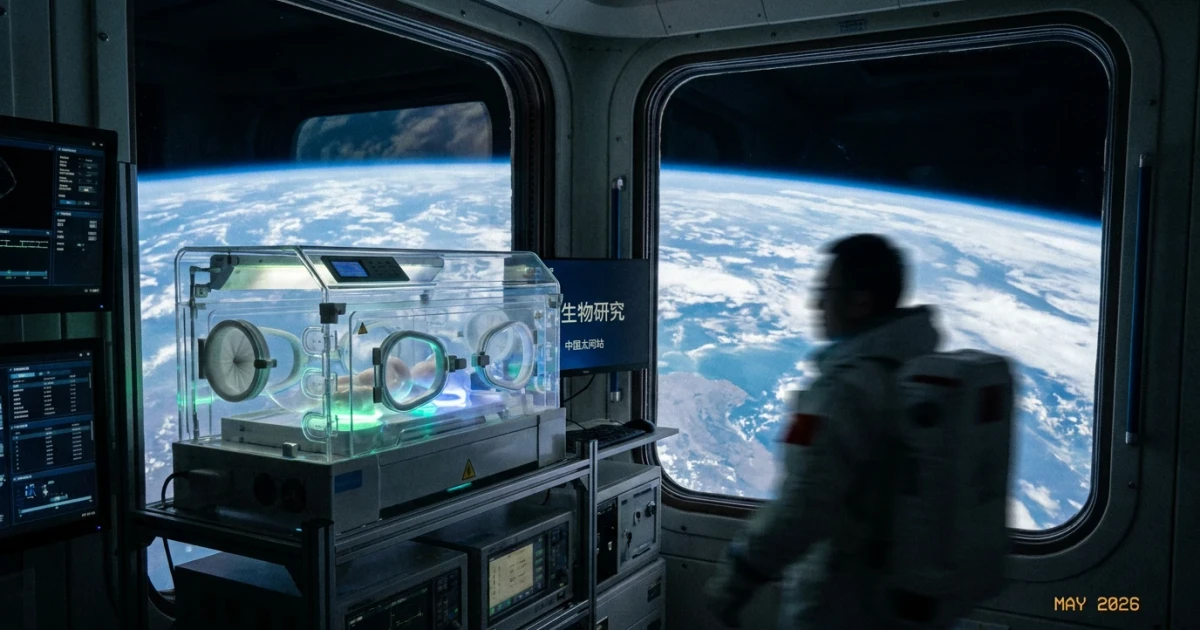
China has launched artificial embryo models into orbit in a pioneering experiment to investigate whether mammals—and ultimately humans—could successfully reproduce in space. The mission, which has drawn global scientific interest, seeks to address one of the biggest biological challenges for human life beyond Earth: the effects of microgravity on embryonic development.
Understanding the Experiment
The Chinese mission sent artificial embryos aboard their space station to test how mammalian embryos develop in microgravity. According to Gizmodo and NDTV, the embryos were created using advanced microfluidic techniques, allowing for precise control over development and observation during their time in orbit. This marks a significant step forward from previous experiments that largely relied on observing cellular or plant growth in space, bringing the prospect of human reproduction in orbit closer to reality.
Why Space Reproduction Research Matters
Human reproduction in space remains one of the most significant hurdles for long-term missions, such as those envisioned for Mars or deep-space travel. Microgravity is known to affect cellular processes, including the earliest stages of embryonic development. Past research, including NASA's mouse embryo experiments on the International Space Station, has shown that microgravity can disrupt normal cell division and differentiation, leading to lower rates of embryo survival and abnormal development.
- Previous experiments found that mammalian embryos in space often had a lower survival rate compared to those developed on Earth.
- Studies reviewed in Frontiers in Cell and Developmental Biology indicate that microgravity can impact the cytoskeleton, gene expression, and nutrient exchange in early embryos.
China's Broader Space Science Ambitions
This experiment is part of a wider set of scientific investigations being conducted aboard the Tiangong Space Station, which has become a platform for cutting-edge biological and medical research. China’s focus on reproductive biology in space signals its ambitions not only for lunar and planetary exploration but also for establishing the technological basis for sustained human presence in orbit.
The outcomes of these experiments could inform protocols for supporting human health and reproduction during lengthy spaceflights or future settlements on the Moon and Mars. As highlighted in the European Parliament’s briefing on human reproduction in space, successful mammalian reproduction would be essential for any multi-generational space mission or off-Earth colony.
Next Steps and International Context
While China’s artificial embryo launch represents a major advance, experts caution that much remains unknown. The viability of mammalian embryos under prolonged microgravity, the potential for healthy gestation and birth, and the effects of cosmic radiation all require further research. Internationally, agencies like NASA and ESA are also studying the effects of microgravity on embryonic development, with collaborative projects planned in the coming years.
- China’s experiment is among the first to use artificial, lab-grown embryos specifically designed for space research.
- Official records from the China National Space Administration outline ongoing plans for more advanced reproductive biology studies on Tiangong.
Looking Ahead
As space agencies race to solve the challenges of living beyond Earth, research into space-based reproduction is poised to become a central focus. China’s artificial embryo experiment could provide the first clues to whether “space babies” are a real possibility—or whether entirely new technologies and medical strategies will be needed for humanity to thrive in the final frontier.