Science
China tests sea platform net to recover reusable rocket boosters

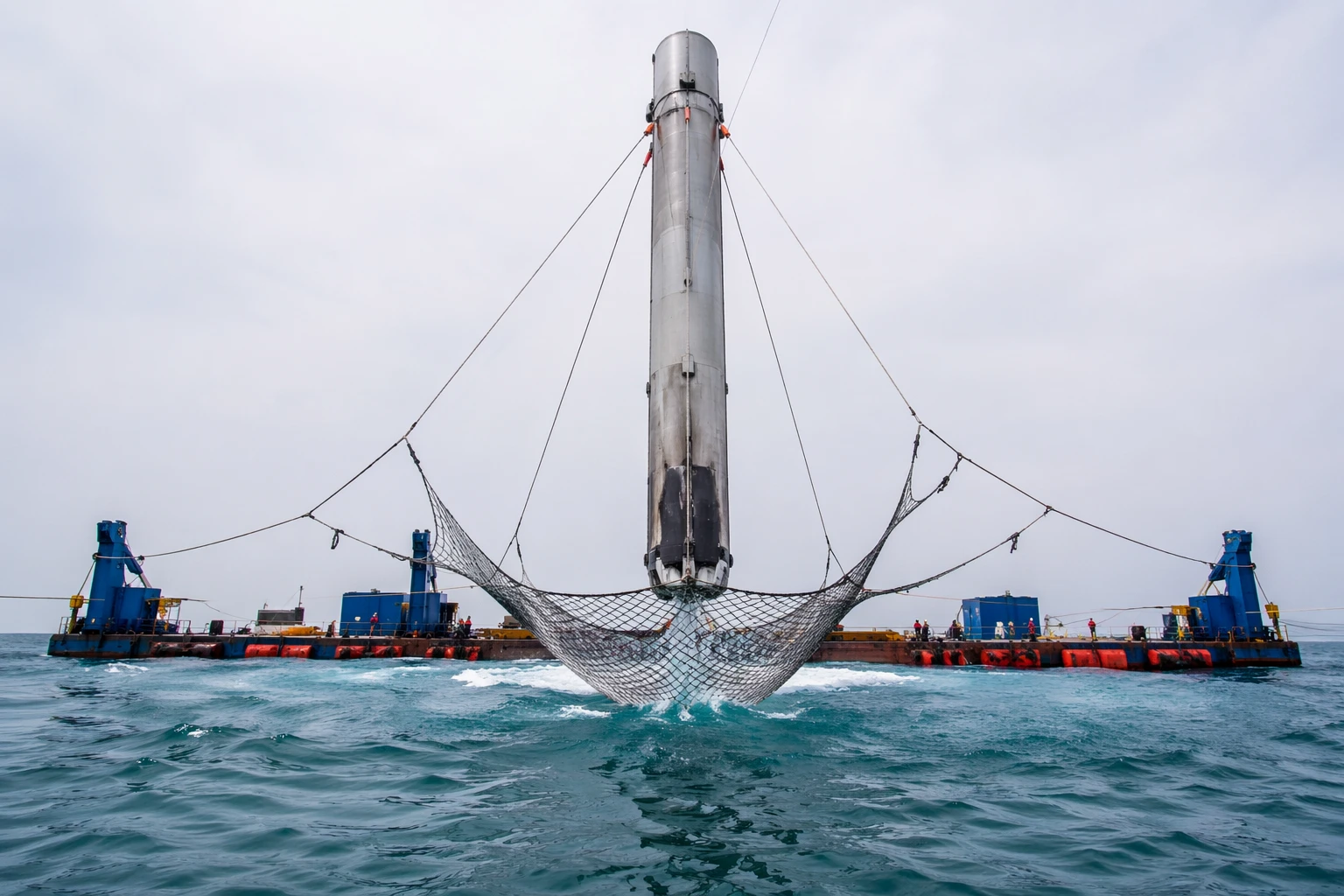
A Long March 10B booster dropped vertically into a net on a seaborne platform in the South China Sea, giving China its first successful recovery of an orbital-class rocket booster. The rocket lifted off from the Hainan commercial spacecraft launch site in Wenchang, Hainan Province, at 12:15 p.m. local time, 0415 GMT, on July 10, 2026, and the booster was recovered about six minutes after it separated from the upper stage.
Chinese state media said the payload reached its planned orbit, and the test moved China into a very small club. Only the United States had previously demonstrated controlled recovery of an orbital-class booster. Unlike the propulsive landings used by U.S. boosters, including recoveries onto land pads and drone ships, China used a dedicated offshore platform and a net-capture system to bring the first stage down after a controlled vertical descent.
That recovery method matters because reusable boosters are one of the biggest cost-saving shifts in modern launch operations. If a first stage can be recovered, inspected and flown again, launch providers can lower costs, raise cadence and put satellite constellations into orbit faster. For China, that has immediate value in a market where commercial launch activity, civil space missions and strategic space capacity are all expanding at once.
The test also followed a long development path. Chinese programs have spent nearly a decade working on reusable-rocket technology, starting with lower-altitude hover trials before reaching this orbital-class milestone. Private and state-linked Chinese recovery attempts in 2025 reportedly failed at the final landing or recovery stage, making the successful net capture a visible step forward rather than a routine landing.
The Long March 10B is part of the Long March 10 family being developed for future crewed lunar missions before 2030. State media said China plans to reuse the booster on another launch by the end of 2026, which would be an important test of whether this recovery can move from demonstration to repeatable operations. If that happens, the result would matter not just for launch costs, but for how quickly China can build out civilian and dual-use space capability.
Sources
- [1]usnews.com
- [2]english.scio.gov.cn
- [3]chinaview.cn
- [4]spacenews.com
- [5]globaltimes.cn
- [6]straitstimes.com