Technology
China’s AI avatars move from novelty into classrooms and hospitals
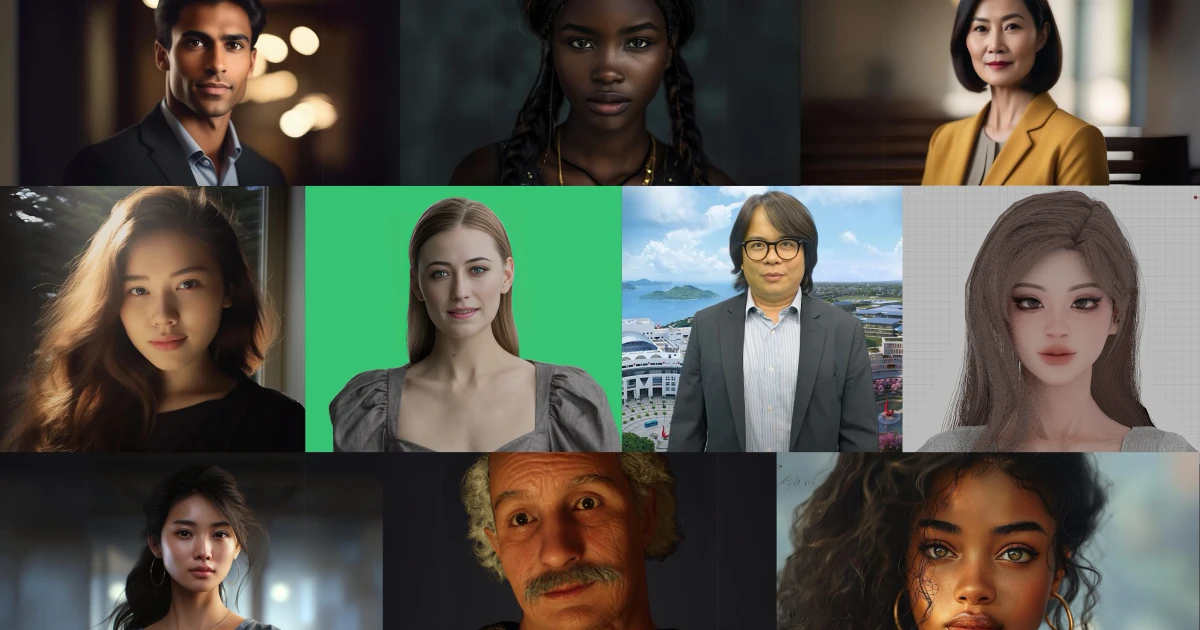
AI avatars in China are no longer confined to marketing clips or entertainment feeds. At the Hong Kong University of Science and Technology campus in Guangzhou, students can already hear lectures delivered by avatars modeled on Albert Einstein and the mathematician John Nash, a sign that synthetic personalities are moving into everyday institutional life. That shift is forcing a harder question than whether the technology is impressive: it is asking who is accountable when digital humans teach, persuade, impersonate, or mislead.
From campus experiment to institutional tool
HKUST said in spring 2024 that it had introduced 10 AI lecturers and set aside HKD 10 million for an Education and Generative AI fund to encourage faculty to use AI in teaching. That puts the university among the earliest public examples in Asia of synthetic instructors being folded into a real academic setting rather than a demo lab. The point is not only efficiency. It is the promise of scaling expertise, standardizing lessons, and extending instruction to more students without matching human staffing increases.
The broader pattern is already visible beyond one university. Nature described digital people taking roles in hospitals, lectures and companionship, which means the technology is crossing into places where trust, authority and emotional judgment matter. In a classroom, an avatar can repeat prepared material with consistency. In a clinic or care setting, the same format can affect how people understand risk, comply with instructions, or decide whether they are speaking with a machine or a person.
Why the legal questions are sharper than the novelty
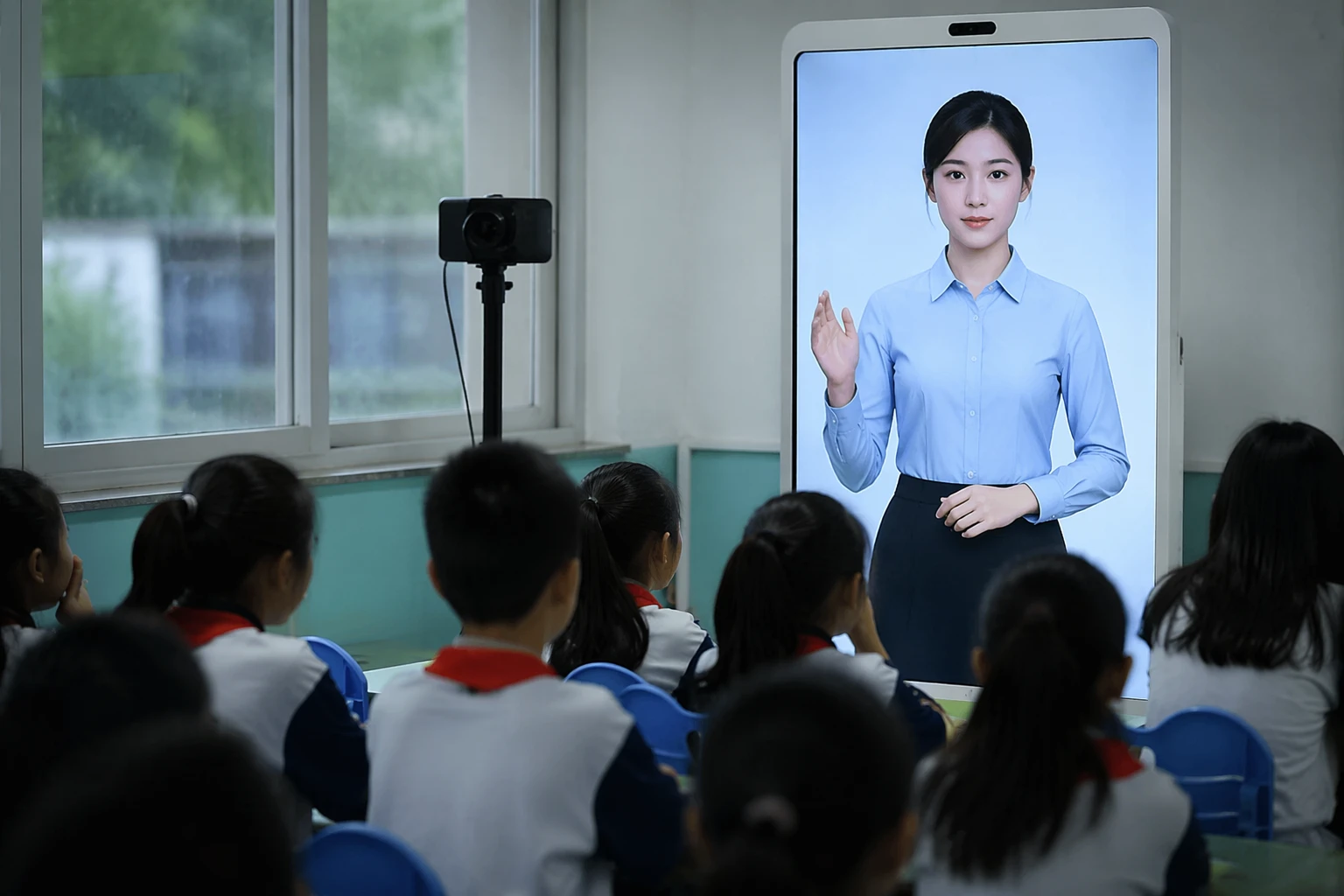
The most consequential issues are not aesthetic. AI-generated humans raise questions about consent, identity, intellectual property, misleading speech and emotional manipulation, and each of those problems becomes more serious when avatars resemble real people or speak with an expert’s authority. A synthetic lecturer can borrow a famous face, a credible voice, or a trusted manner without the subject’s permission, while users may not realize the difference between a real professional and a digital stand-in.
That is why the social risk is larger than a simple deepfake problem. When avatars become routine in education, customer service, or companionship, they can normalize interactions in which the human on the other side is absent. The result is a governance problem as much as a technological one: institutions must decide who may be represented, what must be disclosed, and how much of a person’s likeness or reputation can be turned into a product.
China’s first response: labels, disclosure and anti-tampering rules
China has already moved on one front. The final Measures for the Identification of AI-Generated Synthetic Content were issued on March 14, 2025 and took effect on September 1, 2025, creating mandatory labeling requirements for AI-generated text, images, audio, video and virtual scenes. The rules require both explicit and implicit labels, and they also prohibit tampering with those labels. That matters because the country’s regulators are not only trying to tell people that synthetic content exists, but also trying to preserve the signal once it has been attached.

The official rationale was grounded in fraud. Chinese authorities pointed to a case in which AI-generated images of a famous Chinese actor were used to defraud fans, a reminder that synthetic media can be weaponized when a recognizable face is enough to trigger trust. The example captures the core weakness of mass avatar adoption: the more believable the image, the easier it is to launder deception through familiarity. Labeling rules can slow that abuse, but only if platforms enforce them and users are trained to look for them.
The next regulatory front is human-like interaction itself
The government’s focus has already widened beyond content labels. On December 27, 2025, the Cyberspace Administration of China released draft measures for AI human-like interaction services, with comments due January 25, 2026. That signals a shift from regulating the output of synthetic media to scrutinizing the experience of interacting with emotionally engaging digital agents themselves.
That step is important because avatars are no longer just images or clips. They are conversational systems designed to keep attention, mirror emotion, and hold a user in the exchange. Once the service is built to simulate rapport, the policy concerns expand from authentication and watermarking to manipulation, dependency and consent. A machine that can maintain a human-like exchange in a classroom, clinic, or counseling setting is not merely generating content; it is shaping behavior in real time.
The market is large enough to outpace policy mistakes
The economic backdrop makes the regulatory lag more dangerous. One 2025 industry report projected China’s digital-human market at 478.53 billion yuan in 2024 and 1,046.86 billion yuan by 2030. A separate report in China Daily said the wider AI digital human market could surpass 25 billion yuan by 2029. Those numbers suggest a sector moving far beyond novelty spending into a market with real industrial weight.
That scale changes the incentives. When digital humans can lower labor costs, extend teaching capacity, or provide round-the-clock front-line service, companies and institutions will keep adopting them even if the rules are still incomplete. The practical result is a policy race in which the fastest-moving systems are the ones most likely to touch education, healthcare and public-facing communications first.
China’s AI avatar boom now sits at the point where institutional convenience collides with public trust. The technology can widen access to teaching and services, but it can also amplify fraud, blur identity, and exploit people who think they are engaging with a real person. The central question is no longer whether synthetic humans will enter daily life, but whether the rules for consent, disclosure and accountability can arrive before they become invisible.
Sources
- [1]nature.com
- [2]hkust.edu.hk
- [3]cac.gov.cn
- [4]english.scio.gov.cn
- [5]en.chinagate.cn
- [6]iimedia.cn
- [7]globaltimes.cn