Technology
China's EV supply chain gives robotaxis a global headstart
Apollo Go completed 3.4 million fully driverless rides in the fourth quarter of 2025, underscoring how China’s autonomous-driving companies are moving overseas with the same industrial machinery that powered the country’s EV boom: dense suppliers, lower-cost hardware, city-backed test beds and manufacturing scale. That gives them a head start in robotaxis, where cheaper vehicles and faster deployment can matter as much as software. But the comparison with electric cars breaks at the point where passengers, pedestrians and regulators meet the road.
The EV advantage that does carry over
China’s robotaxi sector is not built around one vertically integrated champion. It rests on a network of suppliers and partners that resembles the ecosystem behind the country’s electric-vehicle rise, and that structure has helped push robotaxi hardware costs below U.S. rivals while they keep falling. In a market where every sensor, compute module and battery component affects the path to profitability, that cost base is a strategic edge.
Goldman Sachs identifies robotaxis as one of the earliest and most visible ways to commercialize autonomous driving, and the timing fits China’s urban reality. Large Tier 1 cities offer dense traffic, broad consumer familiarity with ride-hailing and governments that can create controlled pilot zones. Goldman Sachs has also pointed to a tightening supply of human drivers as fleets mature and older drivers retire, a change that strengthens the case for driverless ride-hailing on economics alone.
That is why the Chinese playbook travels well abroad in some respects and not others. Battery supply chains, manufacturing scale and supplier depth can be exported through partnerships and localized assembly. City-level subsidies and domestic test beds, by contrast, are much harder to replicate outside China, where local governments may be more cautious and where no national industrial policy can simply be copied and pasted.
How scale is turning into a commercial product
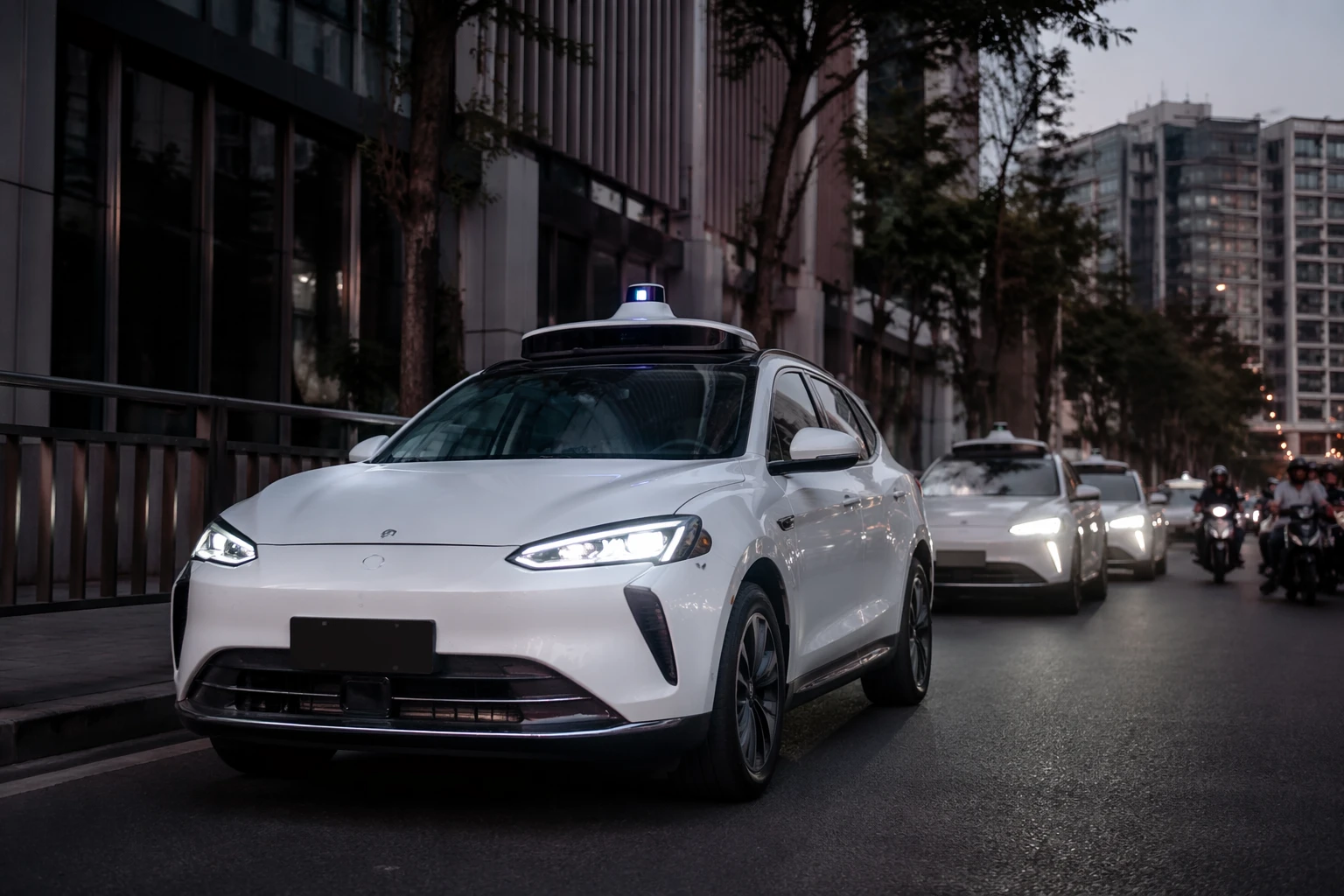
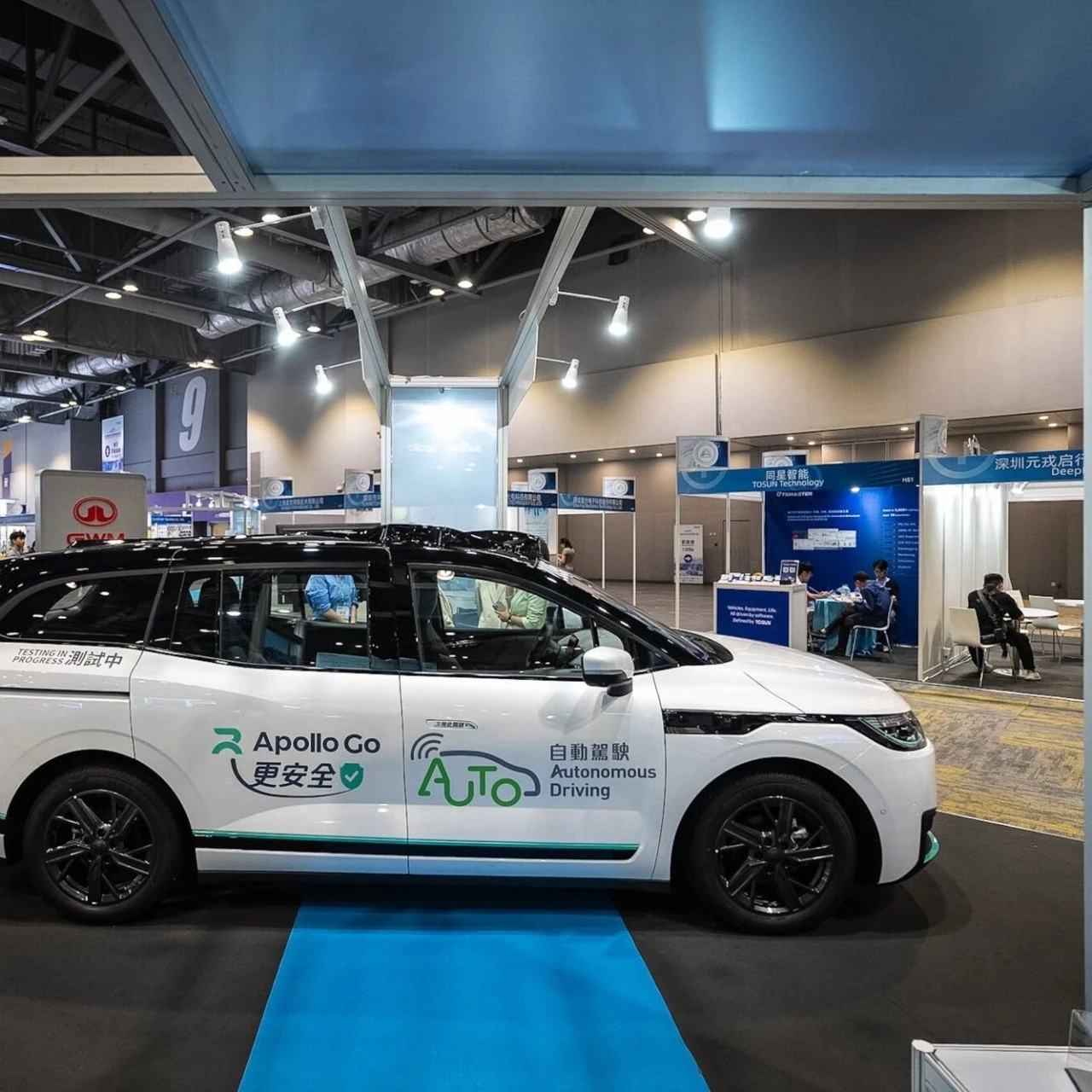
Baidu’s Apollo Go is the clearest sign that the model is already reaching meaningful scale. Apollo Go operates in 15 cities and has more than 1,000 fully driverless vehicles globally, according to Baidu. Baidu says weekly rides peaked above 300,000 in the fourth quarter of 2025, and the company reached per-vehicle profitability in Wuhan, its largest deployment in China.
Robotaxi economics depend on utilization. Apollo Go topped 11 million rides by late May 2025, and later passed 17 million, with weekly ride volume above 250,000. Taken together with Baidu’s latest quarterly figures, the trajectory shows how quickly a domestic rollout can turn into an operating platform rather than a pilot program.
The foreign expansion is already underway. Baidu and Uber announced a multi-year partnership on July 15, 2025, to deploy thousands of Apollo Go vehicles on Uber’s platform in markets outside the U.S. and mainland China, with initial launches expected in Asia and the Middle East later in 2025. Baidu has also been expanding in Abu Dhabi and other Gulf markets, where governments have shown more willingness to test autonomous mobility than many Western regulators.
The China-to-global bridge is built on partnerships
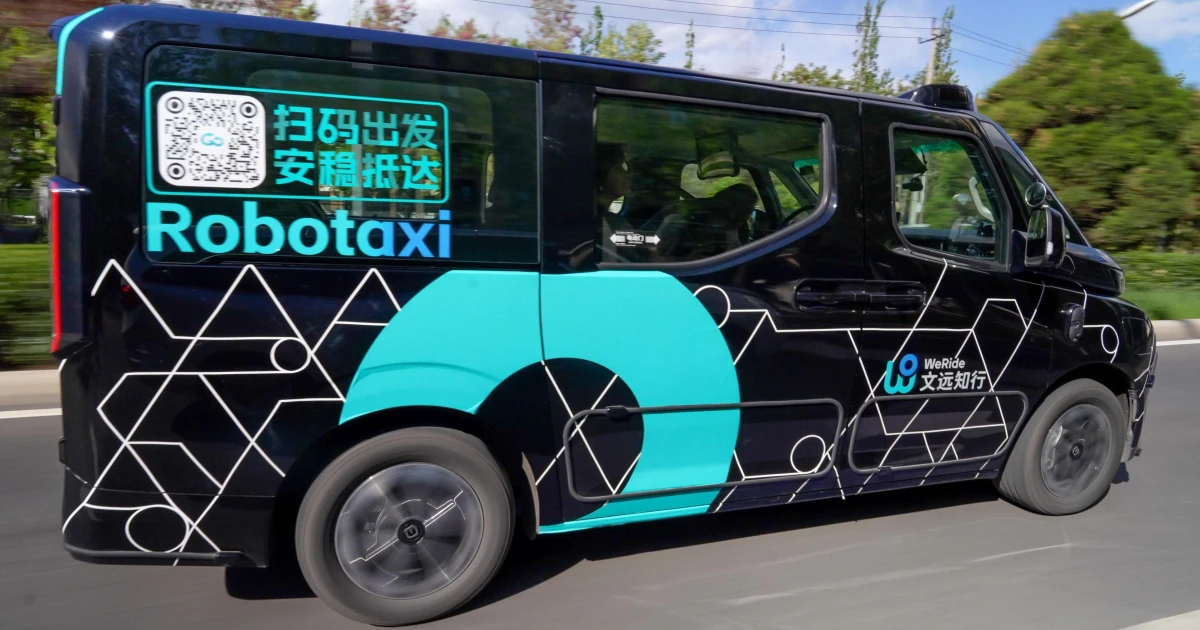
WeRide is following a similar path. WeRide says its autonomous vehicles have been tested or operated in more than 40 cities across 12 countries, and it holds autonomous-driving permits in eight markets. WeRide also says it achieved record-high robotaxi revenue in 2024 and its strongest international revenue since inception, a sign that overseas contracts are beginning to matter as much as domestic deployments.
Pony.ai is pushing on cost as the next frontier. The company says its seventh-generation robotaxi line can cut vehicle costs below RMB300,000 by mid-2025, helped by collaborations with Toyota, BAIC and GAC.
The market case is big, but still speculative
Goldman Sachs identifies robotaxis as an early commercialization pathway, while Morgan Stanley projects the global robotaxi market could reach $1 trillion by 2040 and TrendForce estimates China’s robotaxi market could hit $44.5 billion by 2035.
Why safety regulation is the dividing line
That is where the EV analogy starts to fray. In April 2026, Baidu robotaxis caused crashes in Wuhan after some vehicles stopped mid-traffic, and China later suspended issuing new autonomous-vehicle licences after the incident. A single failure in a live urban environment can slow deployment far faster than a product defect in a private car, because the vehicle is carrying passengers while sharing space with cyclists, pedestrians and other drivers.
A robotaxi program can lower labor costs and improve mobility access, but only if regulators believe the systems can handle edge cases safely and if riders trust them enough to use them. That makes liability rules, emergency procedures and licensing standards central to the business model, not side issues to be solved later.
Sources
- [1]bbc.co.uk
- [2]reuters.com
- [3]investor.uber.com
- [4]ir.baidu.com
- [5]ir.weride.ai
- [6]ir.pony.ai
- [7]cnbc.com
- [8]goldmansachs.com