Business
China’s second-quarter growth slows to weakest pace since 2022
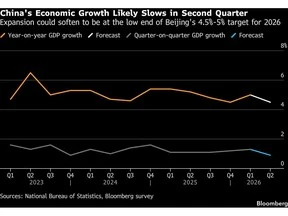
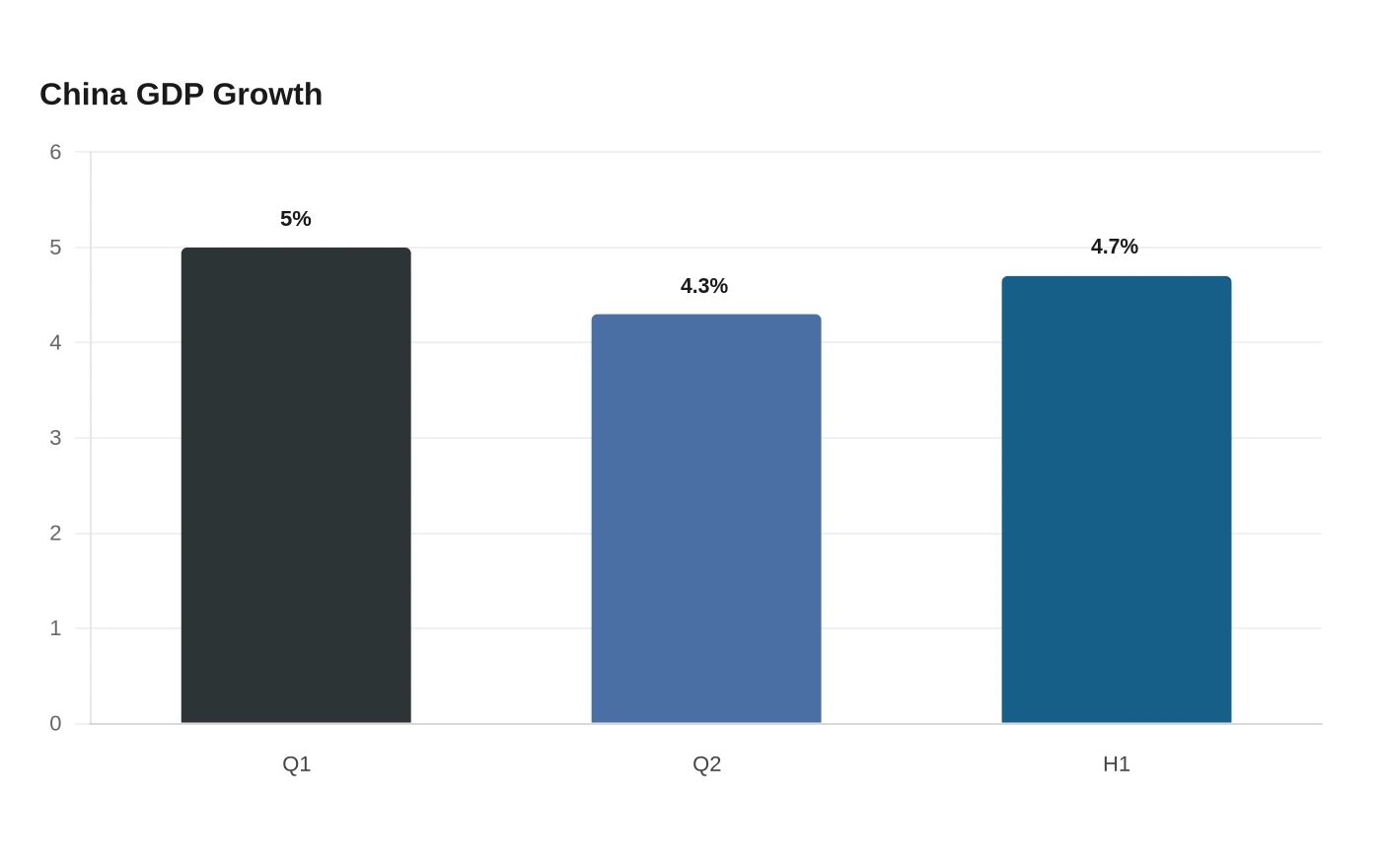
China’s economy grew 4.3% in the second quarter, the weakest pace since the fourth quarter of 2022, as a lift from exports was overshadowed by weak domestic demand and higher energy costs tied to the Iran war. The reading fell short of the 4.5% forecast cited by Reuters and came in below Beijing’s 2026 growth target range of 4.5% to 5%.
The National Bureau of Statistics of China said first-half GDP reached 69,570.4 billion yuan, up 4.7% from a year earlier. Growth slowed from 5.0% in the first quarter to 4.3% in the second, or 0.9% from the previous quarter, underscoring how quickly momentum faded as the year progressed.
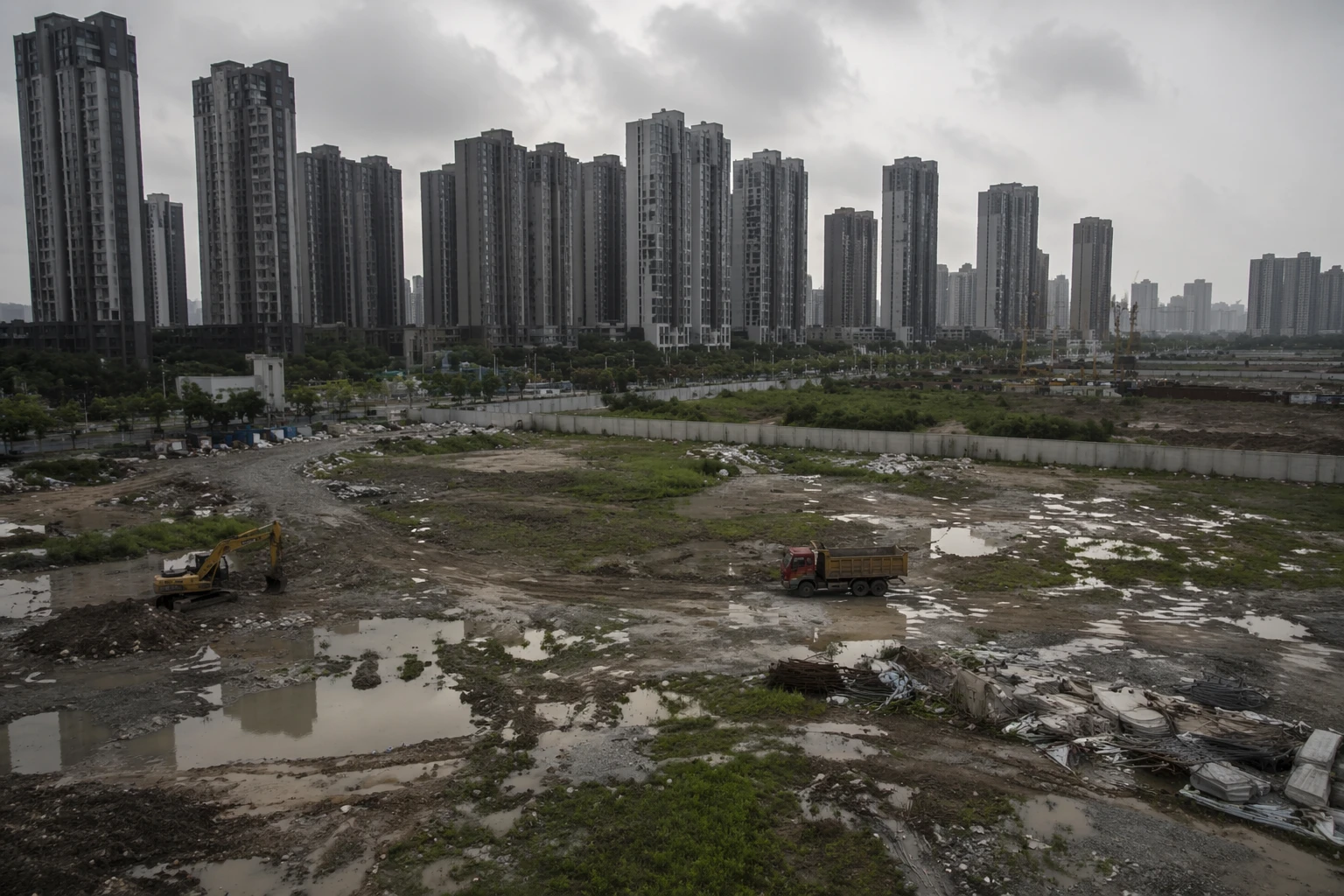
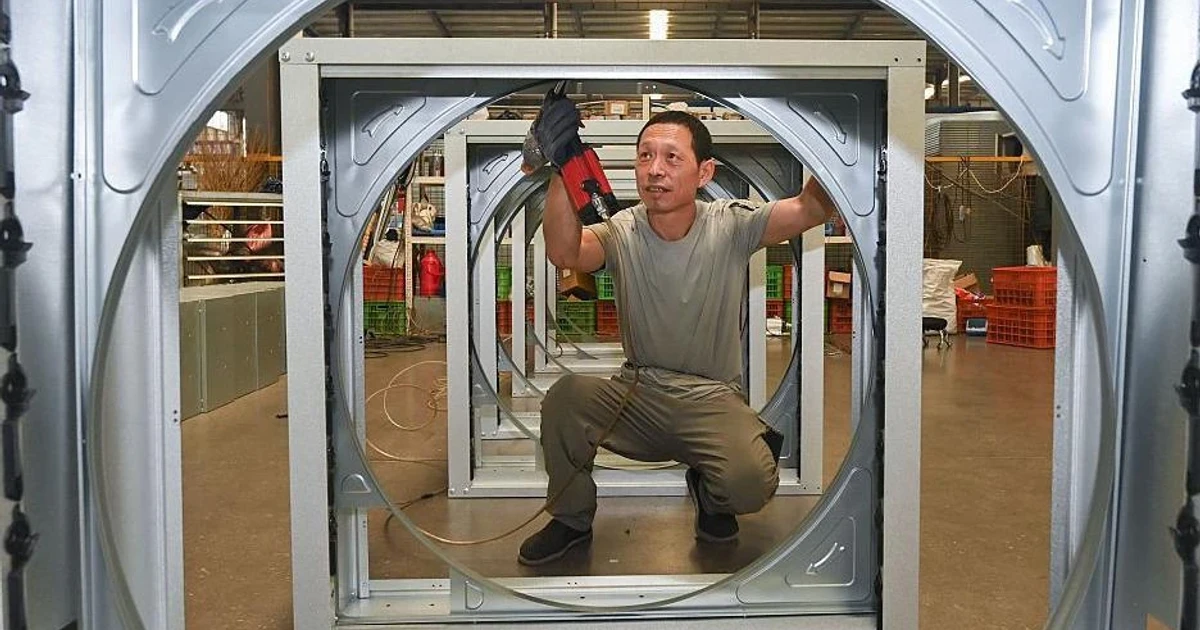
The split inside the economy remained visible in June. Retail sales rose 1% from a year earlier after a 0.6% drop in May, and industrial output increased 5.3%, showing that factories were still producing even as households remained cautious. Urban fixed-asset investment, however, fell 5.7% in the first six months, a sharper decline than economists expected, signaling that private and public capital spending was still under pressure.
The statistics bureau said the economy was operating “against pressure” and pointed to an “acute” imbalance between excess supply and sluggish demand, calling for stronger counter-cyclical policy adjustments. That language suggests Beijing is still weighing additional support, and analysts expect the weaker quarter to intensify pressure for stimulus in the third quarter, including possible rate cuts and more infrastructure spending, even if easing remains measured rather than aggressive.

For the U.S. economy, the imbalance cuts two ways. Slower Chinese domestic demand can soften demand for imports from America and other trading partners, while resilient Chinese production keeps competitive pressure on manufacturers in the U.S., Europe and elsewhere. If higher oil prices continue to filter through shipping, power and industrial costs, they could also add to inflation pressure globally just as central banks are trying to keep it contained.
The World Bank, in a July 7 update, projected China’s growth would slow to 4.4% in 2026 and 4.3% in 2027, saying policy support, high-tech investment and buffers against global energy supply disruptions had partly offset weak domestic demand. On July 13, Premier Li Qiang convened a symposium with experts and entrepreneurs to discuss the economy, a sign that senior leaders are still searching for a firmer second-half policy response.
Sources
- [1]bbc.co.uk
- [2]stats.gov.cn
- [3]cnbc.com
- [4]worldbank.org
- [5]english.scio.gov.cn