World
China’s Tiangong could become the world’s only crewed space station
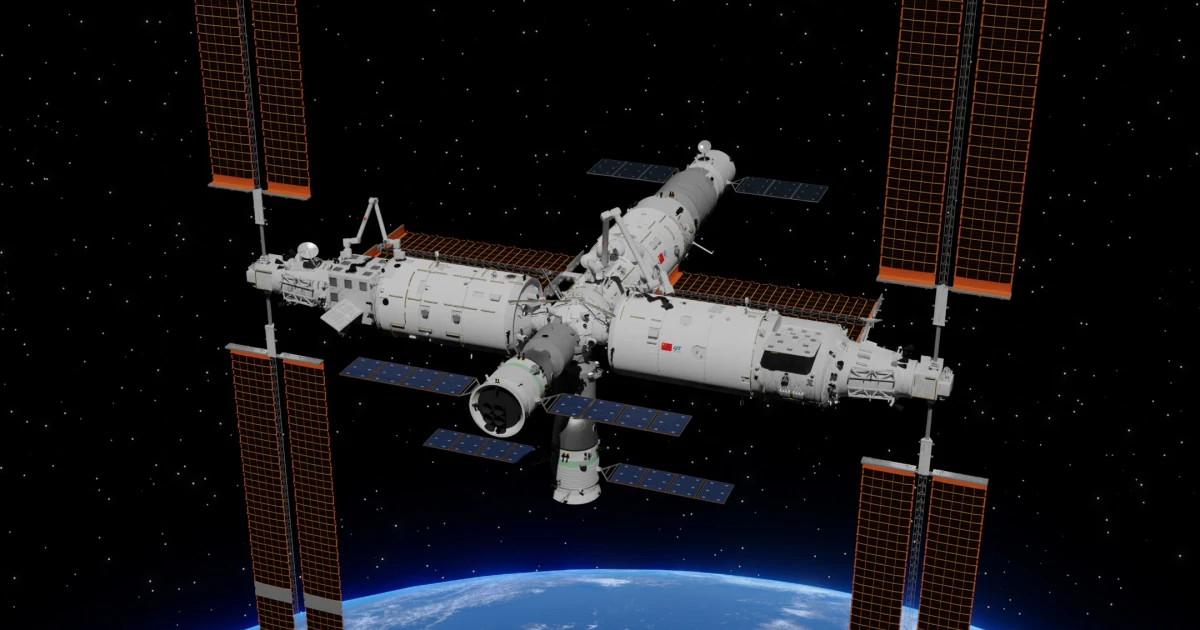
Tiangong reached permanent crewed status in late 2022 and could dominate low Earth orbit if the International Space Station leaves service on schedule and no commercial replacement is ready. It is also a test of whether a U.S. policy meant to limit Beijing in space ended up narrowing Washington’s own options.
How the Wolf Amendment reshaped the orbit race
The turning point came in 2011, when Congress passed the Wolf Amendment, a law that bars NASA from using government funds to partner with Chinese entities without proper authorization. NASA oversight material identifies the restriction as a continuing constraint on bilateral, NASA-funded work with China, and it still shapes what the agency can do with Chinese counterparts today.
That restriction did more than freeze a specific partnership. It created a hard institutional divide between the United States-led station program and China’s human spaceflight effort, leaving Beijing to build, launch, and operate its own orbital infrastructure without access to the ISS partnership structure. The result is a stark policy tradeoff: Washington reduced direct cooperation, but it also gave China a stronger incentive to develop independent capability that could become strategically more durable over time.
Tiangong is now a complete and active station
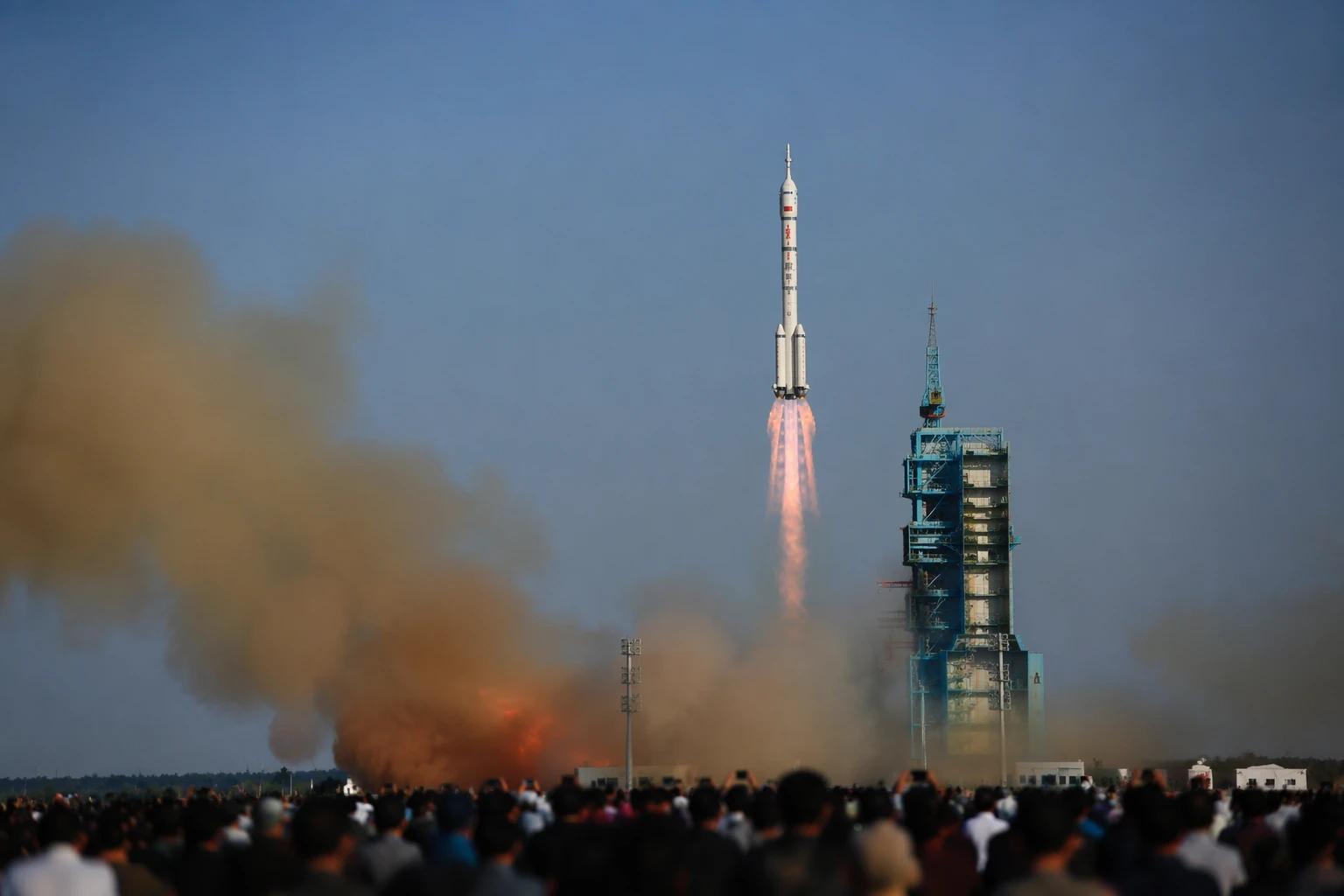
China’s answer became Tiangong, an independently operated space station. Its core module, Tianhe, launched in April 2021, followed by the Wentian laboratory module in July 2022 and Mengtian in October 2022. Together they formed the station’s current T-shape configuration and gave China a fully functioning platform for long-duration human presence in orbit.
The station is not standing still. The China Manned Space Agency continued operations in spring 2026, including the Tianzhou-10 cargo launch on May 11, 2026, and the Shenzhou-21 crew rotation sequence, with the crew completing handover and safely exiting on May 29, 2026 before arriving back in Beijing on May 30, 2026.
China’s space authorities are also signaling another expansion phase. On June 22, 2026, the manned-space program announced a second-phase expansion plan, and on June 24 Tiangong will be upgraded from a T-shape to a cross shape with a new module. If that buildout proceeds, the station will move beyond its original three-module design.
The ISS timeline leaves a narrow opening
The strategic pressure point is the International Space Station’s endgame. Under NASA’s current plan, the ISS is expected to end operations around 2030, and the United States, Japan, Canada, and the participating countries of the European Space Agency have committed to operating it through that point. NASA and the station partners have also studied how to safely deorbit the complex, concluding that a new or modified spacecraft is needed to provide more robust capabilities for deorbit.
NASA has already selected a U.S. Deorbit Vehicle, with a single-award contract carrying a potential total value of $843 million. That is a major step, but it does not eliminate the transition risk: NASA is also planning to shift to commercial low-Earth-orbit destinations as the station nears the end of its life. If those commercial stations lag behind schedule, Tiangong could sit alone as the only permanently crewed government-run outpost in orbit.
Why Tiangong’s next phase carries geopolitical weight
China is already the third nation to independently operate a crewed space station, after the Soviet Union and Russia’s Mir and the multinational ISS program.
For Washington, the key question is no longer whether China could build a station without U.S. help. It already did. The deeper question is whether a policy designed to limit collaboration also helped accelerate a long-term competitor that may now be positioned to become the default government presence in orbit if the ISS retires before commercial replacements are ready.
Sources
- [1]news.google.com
- [2]oig.nasa.gov
- [3]nasa.gov
- [4]cmse.gov.cn
- [5]en.cmse.gov.cn
- [6]english.scio.gov.cn
- [7]cislunarspace.cn