Science
China’s Tianwen-2 begins close-range study of rare quasi-moon
Tianwen-2 reached a point about 20 kilometers from asteroid 2016HO3, also known as Kamooalewa, and began close-range scientific exploration after a journey of roughly 400 days and about 1 billion kilometers. The spacecraft’s arrival put China into an especially narrow club of countries able to send a probe to a tiny, fast-moving body far from Earth and operate around it with precision.
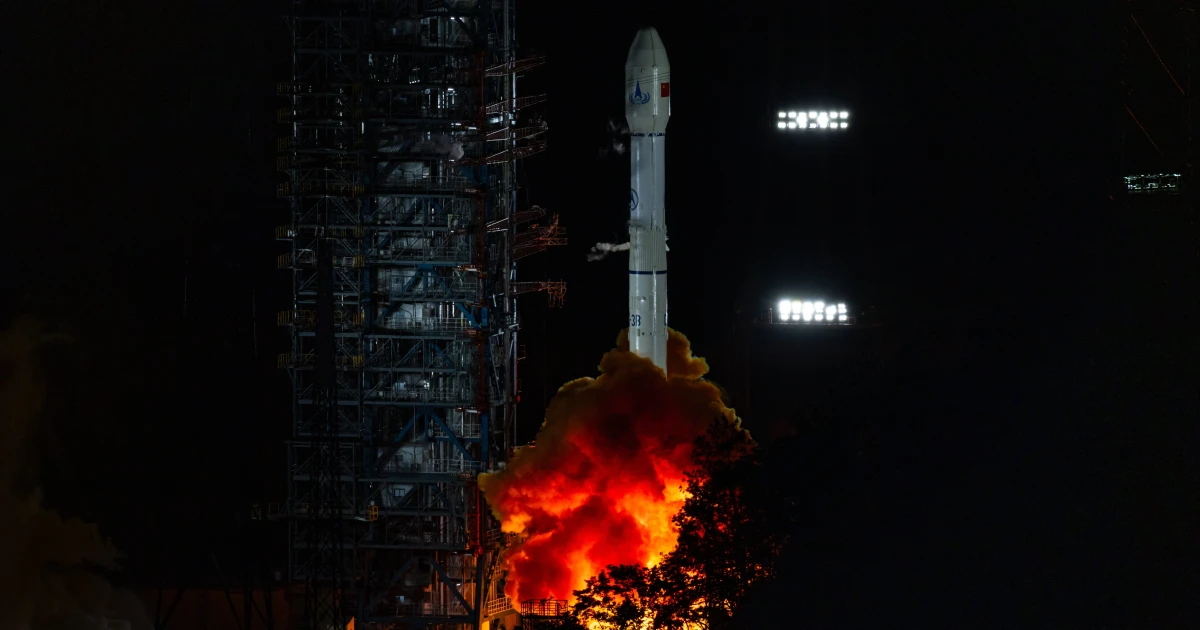
China National Space Administration said Tianwen-2 launched on May 29, 2025 from the Xichang Satellite Launch Center in Sichuan Province aboard a Long March-3B rocket. The agency described it as China’s first asteroid sample-return mission, with a main target of Kamooalewa and a later investigation of the main-belt comet 311P. CNSA said the spacecraft was designed to test weak-gravity surface sampling, high-precision autonomous navigation and control, and low-thrust trajectory design, with sample return expected around 2027.
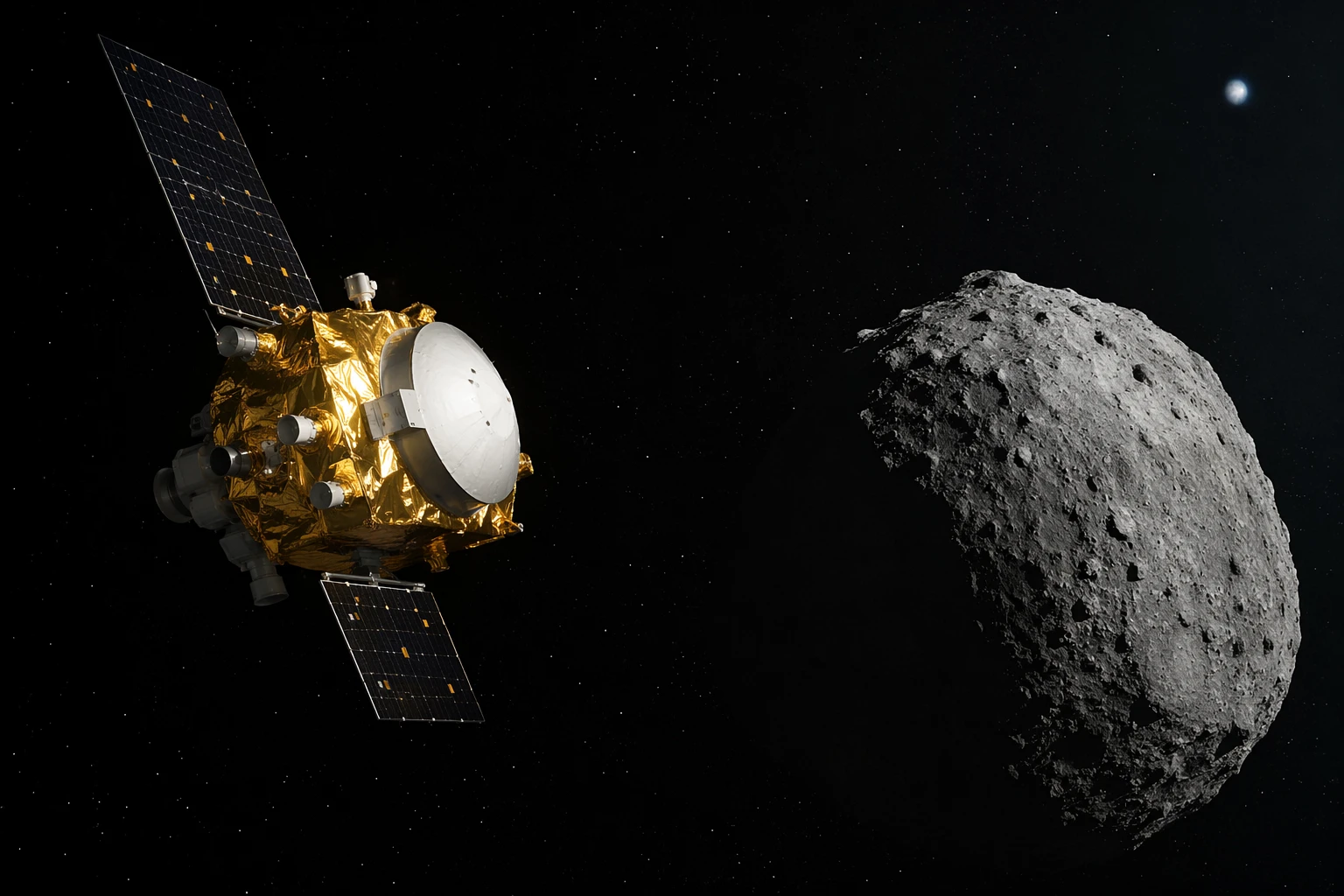
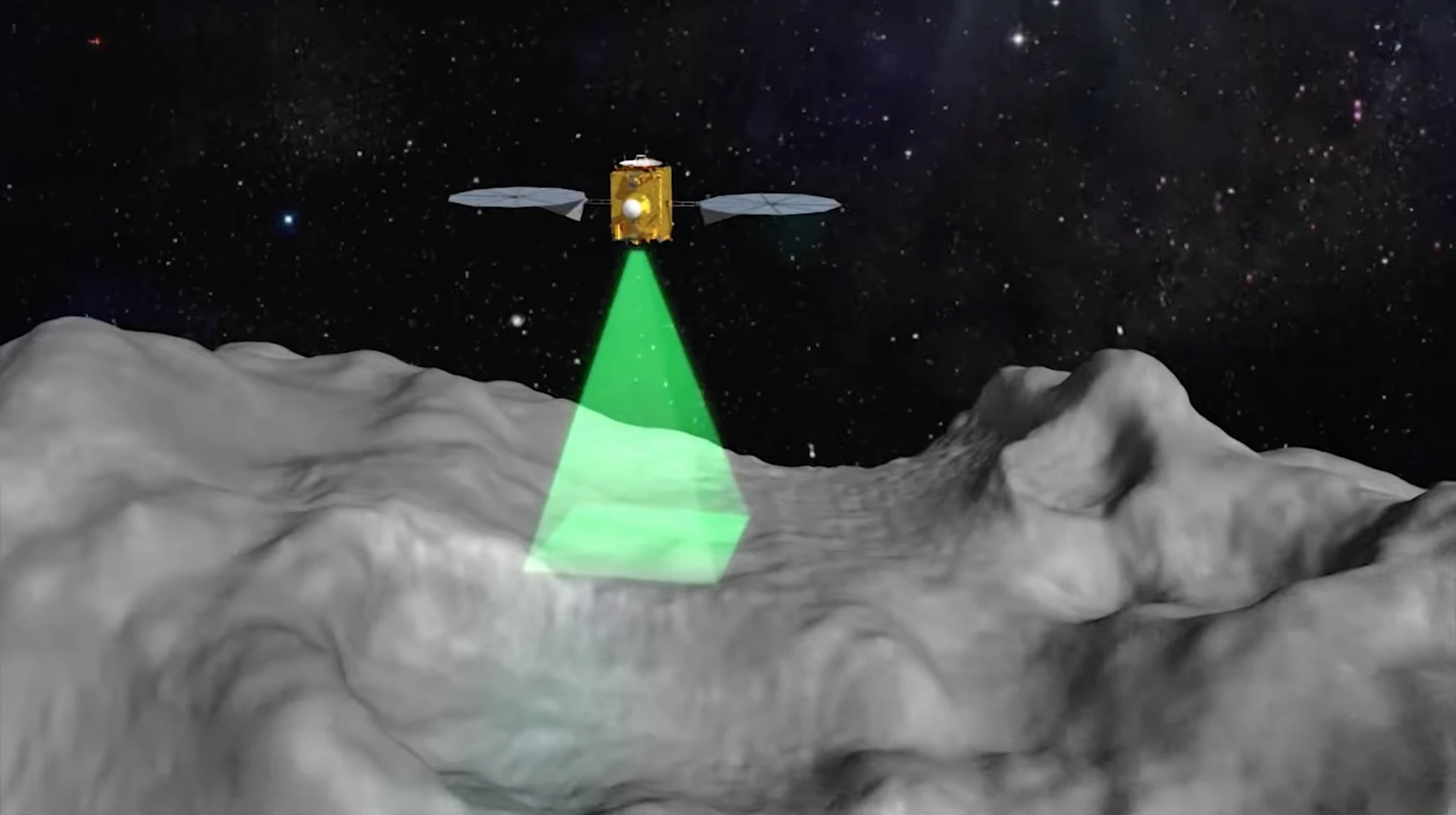
The mission carries weight beyond its science payload. Tianwen-2 extends China’s deep-space program from lunar orbiters and Mars exploration into sample-return work on small bodies, a field that demands autonomous operations, fuel efficiency and exacting guidance around targets that are only tens of meters wide. In practical terms, the flight shows China can now sustain active deep-space missions at a distance and work toward a capability that has strategic value for planetary defense as well as exploration.
Kamooalewa has drawn unusual attention because it is a quasi-moon, an object that appears to loop around Earth while actually orbiting the Sun. NASA’s Jet Propulsion Laboratory has called 2016 HO3 Earth’s most stable known quasi-satellite, describing it as a constant companion for centuries. Earlier studies estimated the asteroid at roughly 10 to 50 meters across, making it difficult to observe from Earth even as its spectrum and orbit kept pointing scientists toward a possible lunar origin.
A 2021 study found Kamooalewa’s reflectance spectrum typical of space-weathered lunar-like silicate material. Nature later reported in 2024 that its physical and orbital properties were compatible with a fragment ejected from the Moon by a crater larger than 10 to 20 kilometers. Chinese scientists added fresh momentum in March 2026, saying new dynamical simulations strengthened the lunar-origin case. Tianwen-2 is now positioned not only to test that hypothesis, but also to sharpen China’s reputation as a serious competitor in deep-space exploration.
Sources
- [1]english.news.cn
- [2]cnsa.gov.cn
- [3]jpl.nasa.gov
- [4]nature.com
- [5]bcas.cas.cn