Health
China’s young nonsmokers push back against secondhand smoke
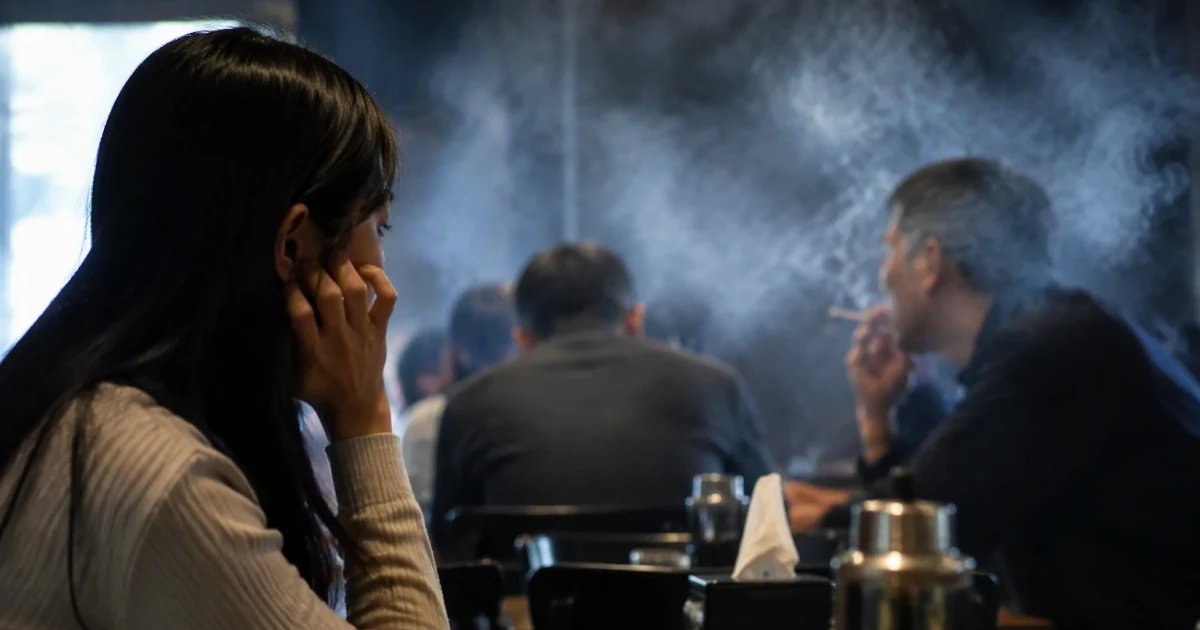
A China CDC Weekly report on secondary school students in China found cigarette use and secondhand smoke exposure remained present in 2023. That backdrop has made restaurants, offices and other indoor spaces into places where younger nonsmokers increasingly confront smokers instead of absorbing the smoke in silence.
WHO says tobacco-related diseases kill about one million people in China every year, and another 100,000 nonsmokers die from secondhand smoke. The agency has also said China had about 315 million smokers in the 2010s, while noncommunicable diseases account for 87% of total deaths and 70% of the country’s disease burden. Beijing legislators passed a comprehensive indoor public smoking ban in 2014, and it took effect on 1 June 2015 after WHO described it as a major step that could influence national action.
WHO China tried to reinforce that shift with the #RUFREE? campaign on 22 April 2015 and, three years later, with #healthismyright on 3 May 2018. The second campaign framed health as a human right and urged people to say no to second-hand smoke, but the message met a stubborn reality. A 2009 study of 8,142 nonsmokers found household second-hand smoke exposure at 48.3%, and 76.5% of respondents said smokers would smoke in front of children.
WHO’s 2018 China Adult Tobacco Survey report said awareness of the harms of smoking rose from 2015 to 2018, but awareness of the harms from secondhand smoke remained unchanged and exposure persisted. A 2017 study described uneven subnational smoke-free laws, and a 2018 study examined how a social media complaint platform helped residents push Beijing’s smoke-free rules. Later work kept the pressure on: a 2022 Scientific Reports paper studied never-smoking adolescents in Wuhan, a 2023 national study examined recent exposure among adolescents across China, and a 2024 China CDC Weekly report tracked cigarette use and secondhand smoke exposure among secondary school students in 2023.
Online attention has also followed confrontations in restaurants and other indoor settings, especially when women and younger nonsmokers challenge smokers in public. In China’s cities, smoke-free expectations have become part of daily civic life, enforced as much by younger residents as by the law.
Sources
- [1]nytimes.com
- [2]who.int
- [3]tobaccocontrol.bmj.com
- [4]cdn.who.int
- [5]pubmed.ncbi.nlm.nih.gov
- [6]tobaccoinduceddiseases.org
- [7]scmp.com
- [8]npr.org
- [9]weekly.chinacdc.cn
- [10]nature.com
- [11]pmc.ncbi.nlm.nih.gov
- [12]journals.plos.org