Technology
China’s Z.ai releases GLM-5.2, claims gains in coding and cybersecurity

Z.ai released GLM-5.2 on June 16 as its latest flagship model for long-horizon tasks, and the company is pitching the open-weight system as a coding engine built for project-scale engineering work. Z.ai says GLM-5.2 scored 81.0 on Terminal-Bench 2.1 and 62.1 on SWE-bench Pro, which it describes as the strongest open-source showing on standard coding benchmarks.
Those scores matter, but they do not settle the bigger question of what GLM-5.2 can do outside narrow benchmark suites. Z.ai’s own documentation says the model is meant to deliver more stable long-task execution, stronger adherence to engineering standards and better performance in development scenarios, while OpenRouter lists it with a 1,048,576-token context window, a maximum output of 32,768 tokens, and pricing of $0.95 per million input tokens and $3 per million output tokens. That combination makes the model easy to test at scale, but benchmark wins alone do not prove broad parity with frontier systems in reasoning, safety or real-world cyber operations.

The cybersecurity backdrop gives the launch sharper national-security weight. Anthropic said it began using an early snapshot of Claude Mythos Preview in February 2026 to find vulnerabilities in open-source software, and its coordinated vulnerability disclosure dashboard was last updated on May 22. Anthropic has also said Mythos 5 is limited to a small group of vetted partners, while Project Glasswing has expanded to about 150 new organizations in more than 15 countries. The company separately said the U.S. government issued an export-control directive on June 12 to suspend access to Fable 5 and Mythos 5 by any foreign national.
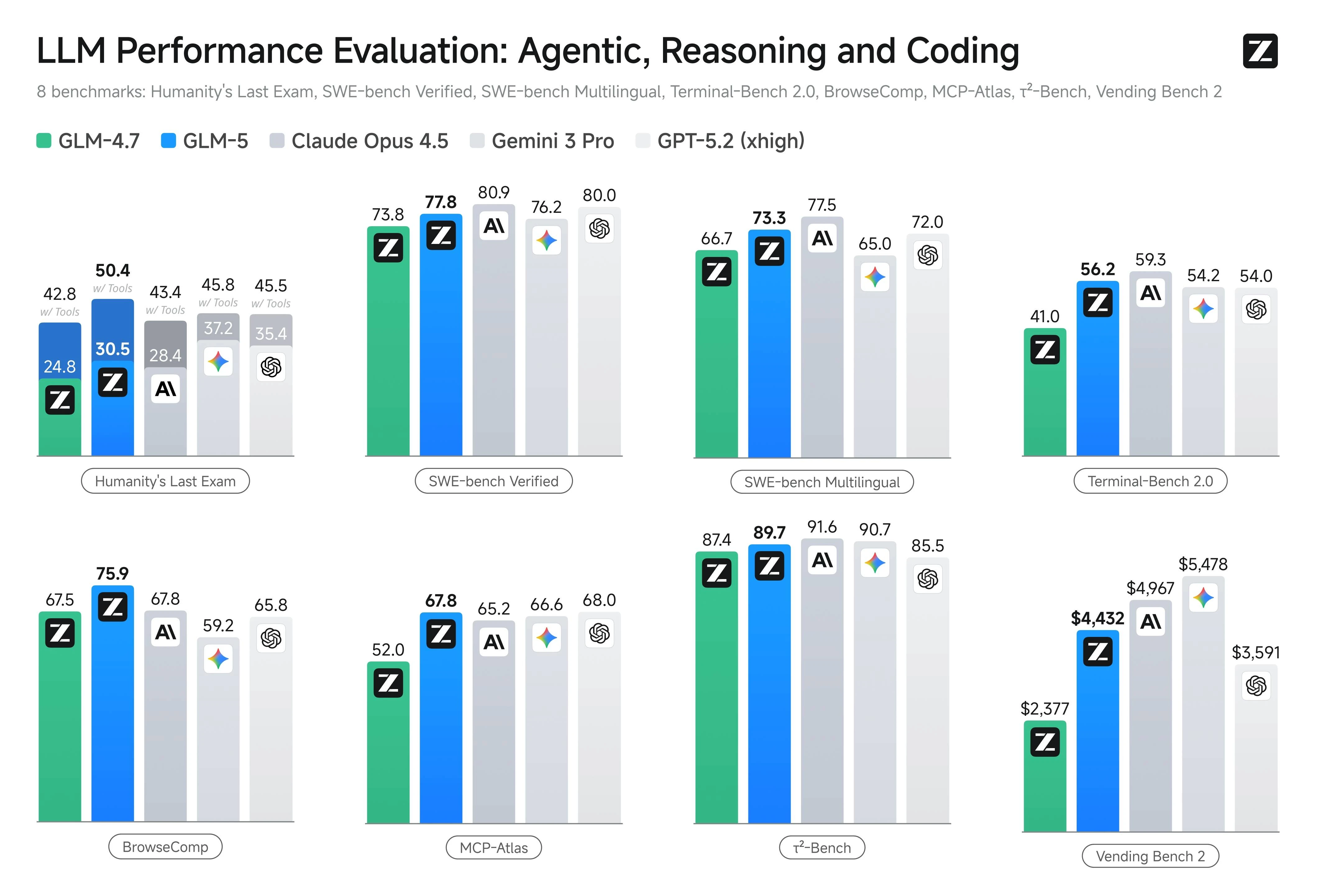
That is why GLM-5.2’s open-weight release lands in a different policy category than a routine model update. Z.ai says the model carries an MIT open-source license with no regional limits, a design choice that can widen access quickly for security researchers and ordinary developers, but also for offensive actors if the model’s cyber capabilities hold up outside controlled tests. The strategic issue for Washington is not whether China can produce another capable coding model, but how fast open models with large context windows, low prices and broad availability can shift from benchmark headlines into operational use. Benchmark tables can measure one slice of performance; they cannot measure the speed with which that performance spreads.
Sources
- [1]theverge.com
- [2]z.ai
- [3]docs.z.ai
- [4]openrouter.ai
- [5]red.anthropic.com
- [6]anthropic.com
- [7]cnbc.com
- [8]nytimes.com
- [9]axios.com