Technology
Chinese AI model GLM-5.2 narrows gap with OpenAI, Anthropic
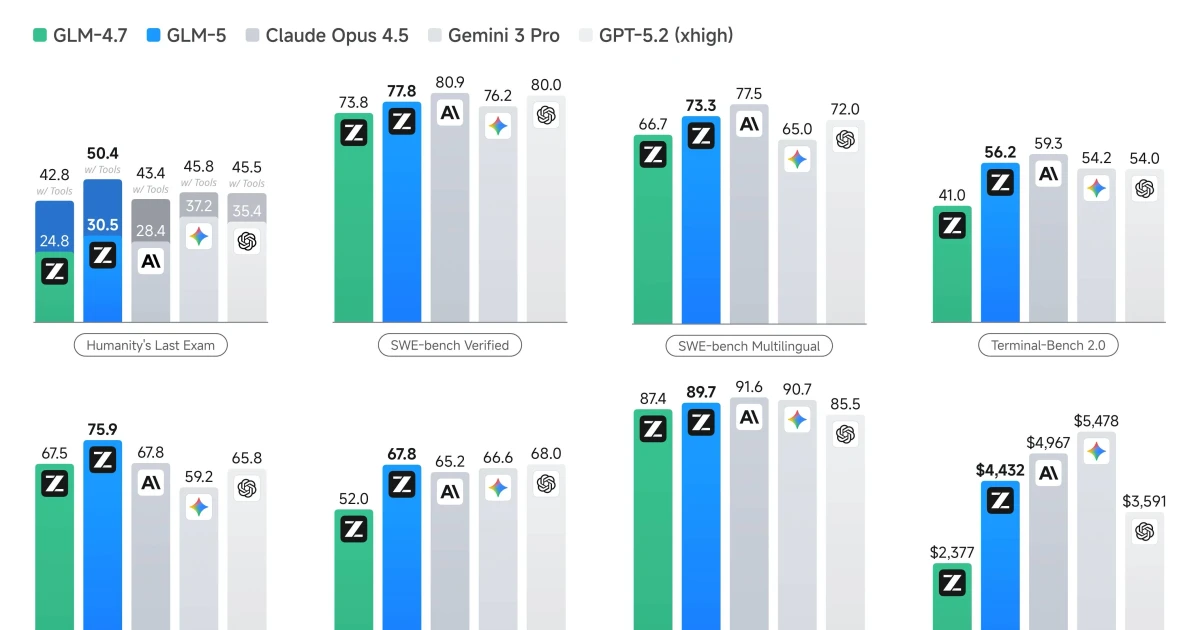
Chinese startup Z.ai has launched a model that is forcing a harder comparison between price and performance in the global AI race. GLM-5.2, released last month from Beijing, has climbed fast enough to sit ahead of several Anthropic models on OpenRouter’s weekly usage rankings, a sign that developers are testing whether a lower-cost Chinese system is now good enough for serious work.
OpenRouter’s live snapshot put GLM 5.2 at No. 6 by weekly usage, with 2.38 trillion tokens and a 32% weekly usage share. Reuters said the model has drawn attention in Silicon Valley for coding and agentic capabilities, meaning it can handle complex tasks with relatively little prompting. That combination has prompted some industry watchers to call it a “mini DeepSeek moment,” a reference to the earlier shock when a cheaper Chinese model began reshaping expectations around frontier AI pricing.
Z.ai’s own documentation positions GLM-5.2 as more than a chatbot. The company says it is built for long-horizon tasks, carries a 1 million-token context window and uses an MIT open-source license. Z.ai also says it is the company’s strongest open-source model on standard coding benchmarks, citing scores of 81.0 on Terminal-Bench 2.1 and 62.1 on SWE-bench Pro, both well above GLM-5.1. The company says the model supports Thinking Mode, function calling, structured output and MCP integrations, features that make it more useful for agent-style workflows.

The market signal has been reinforced by public comparisons. CNBC reported on June 26 that GLM-5.2 landed within a percentage point of Anthropic’s Opus 4.8 on a key agentic benchmark at roughly a fifth of the cost. Reuters also said U.S. AI czar David Sacks described it as as good as currently available models from OpenAI and Anthropic. That kind of language matters because it suggests the model is not being treated as a niche open-source curiosity, but as a serious competitor on technical merit and economics.
The policy stakes are rising alongside the product race. Reuters said Brian Tse of Concordia AI warned that relying solely on proprietary U.S.-based API models carries significant risk. Washington recently lifted curbs on Anthropic’s Fable and Mythos models, while CNBC reported that Anthropic had to pull its Fable Mythos-class model after a Trump administration order and that OpenAI limited access to GPT 5.6 after a government request. For developers and enterprises weighing vendor lock-in, those episodes make open-weight systems from China look less like an ideological choice and more like a practical hedge.
Sources
- [1]money.usnews.com
- [2]z.ai
- [3]docs.z.ai
- [4]openrouter.ai
- [5]cnbc.com