Business
Chip Selloff Sends Nasdaq to Steepest Drop of Year
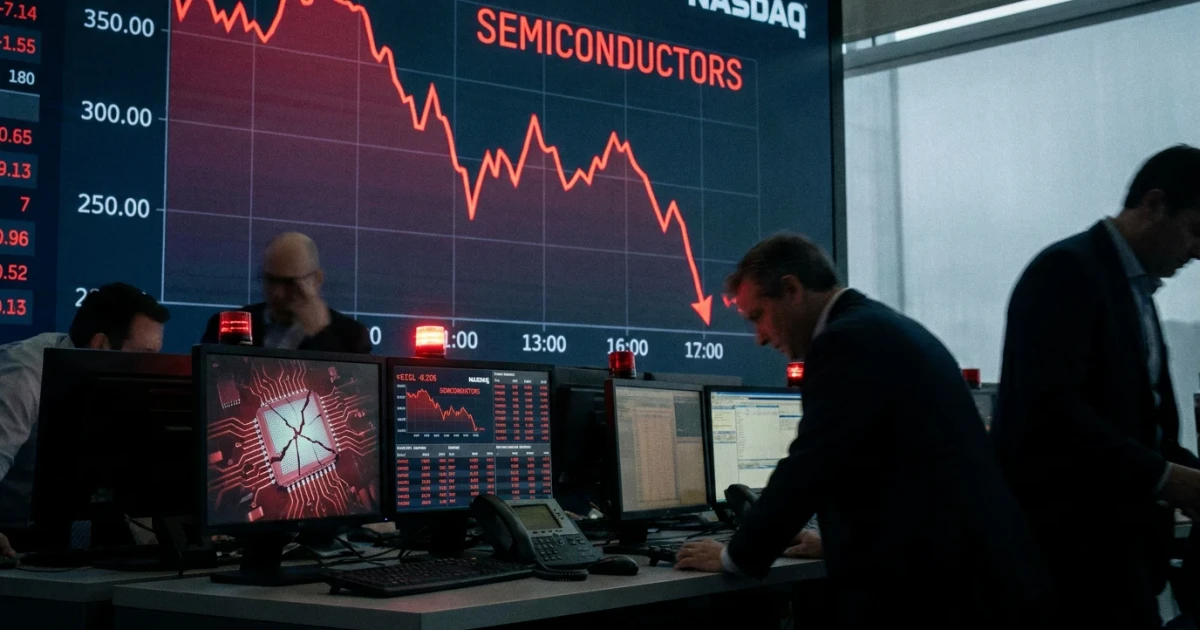
The Nasdaq Composite Index suffered its sharpest decline of the year on Thursday, falling 4.2% as a broad selloff in semiconductor stocks rippled across the market. The dramatic retreat erased billions in market value and underscored growing investor anxiety over the prospects for AI-linked companies and the potential for higher interest rates in the near term.
Semiconductor Stocks Lead Steep Declines
Semiconductor shares, often viewed as the bellwether for tech sector momentum, were at the epicenter of the downturn. Axios reported that the session was described as a “bloodbath” for the chip sector, with leading companies such as Nvidia, AMD, and Intel posting outsized losses. The Nasdaq Composite's 4.2% drop was mirrored by similar pain in the S&P 500, which also logged its worst single-day performance of the year.
- This marked the largest one-day loss for the Nasdaq since 2026 began, according to Investing.com’s historical data.
- The selloff was particularly acute in AI hardware makers, with several large-cap chip stocks falling by mid-to-high single digits.
- Other tech sectors, including software and cloud computing, also saw declines, but none as pronounced as the chip industry.
Data from SEMI’s semiconductor market statistics confirms that the chip sector has driven much of the market’s rally earlier in the year, making Thursday’s reversal especially notable for investors tracking the AI and semiconductor space.
AI Stocks and Rate-Hike Jitters
The downturn was not isolated to hardware. Axios and other outlets noted that stocks tied to artificial intelligence—many of which had soared to record highs in the first half of 2026—tumbled sharply as well. This broad retreat in AI exposed the sector’s vulnerability to shifting market sentiment and macroeconomic uncertainty.
Underlying much of Thursday’s volatility was mounting speculation that the Federal Reserve may opt for another interest rate increase sooner than previously anticipated. Recent data and commentary from central bank officials have fueled concerns that inflation remains stubborn, raising the odds of hawkish moves at upcoming meetings. The official Federal Reserve FOMC calendar provides the latest statements and meeting information that investors are parsing for clues on future policy direction.
- Higher interest rates tend to weigh on growth stocks, especially those in technology and AI, as they reduce the present value of future earnings and can dampen investment in R&D-heavy sectors.
- Volatility in chip and AI stocks often ripples across the broader market, magnifying swings in major indices like the Nasdaq and S&P 500.
Wider Market Impact and Investor Takeaways
Thursday’s selloff was not confined to tech. The S&P 500 also suffered its worst day of the year, reflecting the outsized influence that large-cap chip and AI stocks now exert on the broader market. According to S&P 500 index data, these sectors comprise a significant portion of overall index weighting—so their swings have an amplified effect.
- The Nasdaq’s 4.2% plunge stands out in a year that has otherwise seen relative tech sector strength.
- Investors are increasingly sensitive to both company earnings and macroeconomic data, with quarterly filings available through SEC EDGAR providing deeper insight into risk factors for chip makers and tech giants.
While some analysts caution that such sharp declines can occasionally present buying opportunities for long-term investors, the day’s rout highlights the risks inherent in sectors that have led the market’s gains. The rapid growth of AI and semiconductors has fueled both optimism and periodic bouts of volatility, making the timing of Federal Reserve decisions and sector earnings reports critical catalysts for the market going forward.
Looking Ahead
With the Federal Reserve’s next policy meeting approaching, all eyes will be on upcoming inflation data and any shifts in the central bank’s messaging. For now, Thursday’s selloff serves as a stark reminder of how quickly sentiment can turn in high-growth sectors—especially when macroeconomic uncertainty meets high valuations.