Entertainment
Chris Fallows shares the stories behind iconic wildlife images
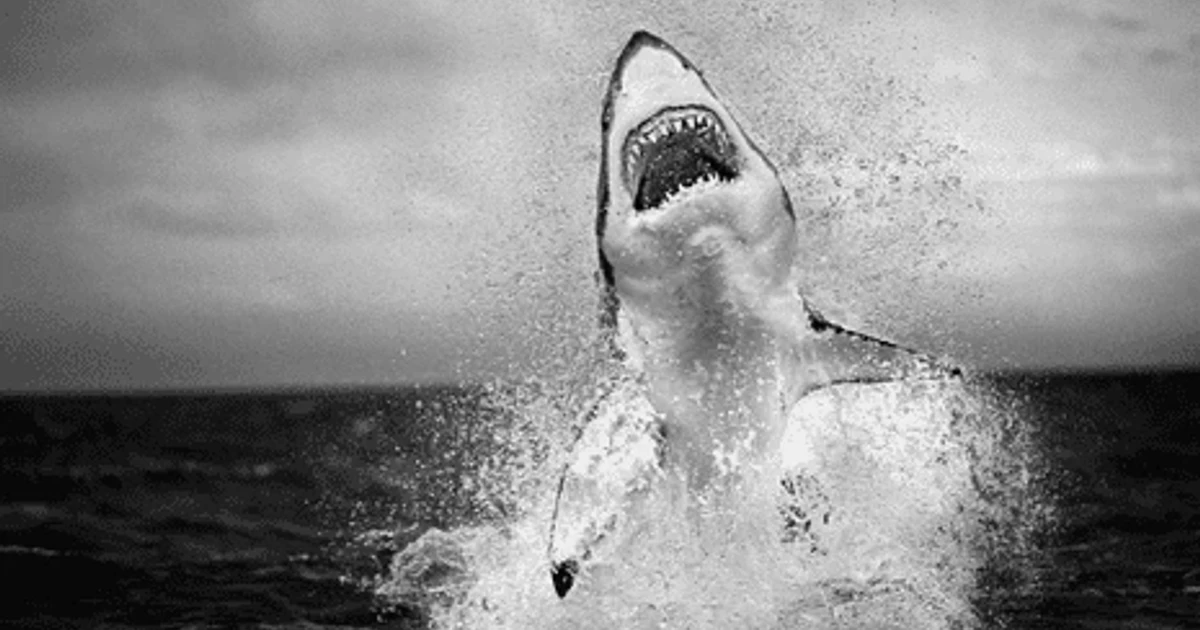
Chris Fallows built his reputation on pictures that look like spectacle, but the deeper story is ecological. The great white sharks that launched him into global view near Cape Town also became the lens through which he has documented a changing marine world, from seal attacks in False Bay to the disappearance of white sharks from a former stronghold. His work shows why wildlife photography matters: it can make animal behavior legible at mass scale, even as it exposes the limits of imagery in the face of ecosystem collapse.
From safari child to shark chronicler
Fallows was born in South Africa in 1972, and he says his first African safari came when he was only two years old. That early exposure to wild places turned into a career defined by patient observation, fieldwork and a growing obsession with how animals move through their environments. In 1996, he says, he became the first person to discover and photograph the now-famous breaching great white sharks of South Africa at Seal Island in False Bay.
That single discovery changed the arc of his career. It shifted him from wildlife naturalist to dedicated photographer and, over time, made him a world-renowned authority on great white sharks. Nearly three decades later, the same instinct that drew him to those breaches still shapes his work: track behavior closely enough that a picture becomes a record, not just a dramatic frame.
Why the images traveled so far
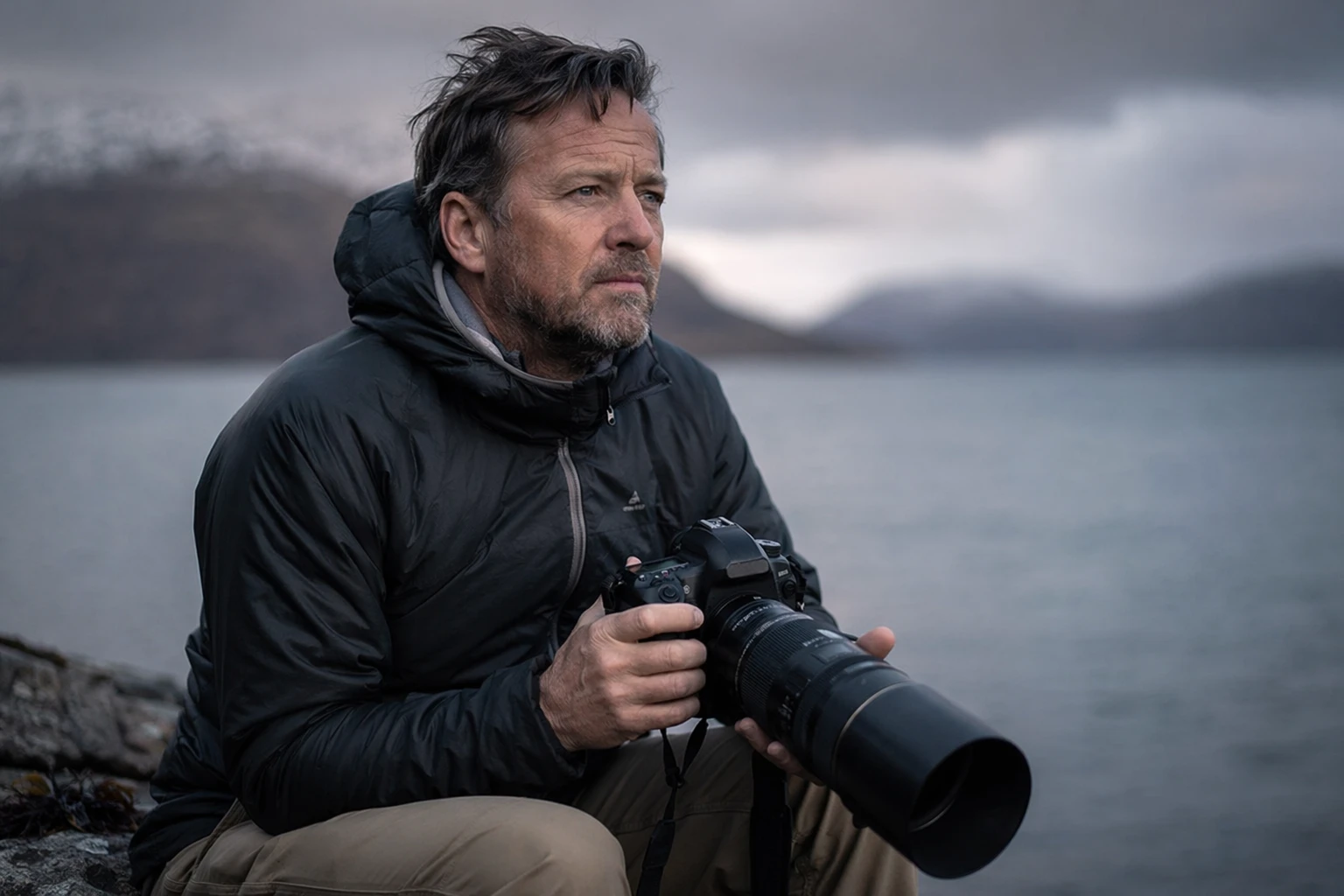
The reach of Fallows’s photography has always depended on more than aesthetics. He has used imagery and documentary work with BBC, National Geographic and Discovery Channel to draw attention to threats facing biodiversity and to argue for coexistence and conservation. His own shorthand for that scope is simple: his work spans Ocean, Air and Earth.
That breadth matters because it explains why his pictures resonate beyond shark fans. A breaching great white is a visceral image, but a cheetah scan of the horizon, an elephant moving through fragile habitat or a humpback whale surfacing in a vast group all communicate a larger idea: wild systems are dynamic, interconnected and vulnerable. Fallows and his wife, Monique, have worked together in the field since they met in 1999, and his website says they have spent the past 25 years facilitating great white shark documentaries. The partnership has helped turn field observation into a long-running visual archive.
False Bay as a living dataset
The most important context for Fallows’s shark images is that the place that made him famous has changed profoundly. A long-term study at Seal Island, spanning 2000 to 2018, recorded 6,333 shark sightings and 8,076 attacks on seals. It also documented declines in white shark abundance and attack rates between 2015 and 2018, with unusually low numbers in 2017 and 2018.
Just as striking was what appeared as white sharks faded. The study documented 120 sevengill shark sightings and a live seal attack by a sevengill shark in the absence of white sharks. That pattern suggests more than a simple species shift. It points to a food-web reordering in which one apex predator’s retreat opens space for another, while the rest of the system adjusts around it.
A 2025 Frontiers in Marine Science report co-authored by Fallows pushed that conclusion further, arguing that the loss of white sharks from False Bay produced a trophic cascade. In that account, seals and sevengill sharks increased in relative abundance while smaller fish and smaller sharks declined. For readers looking at his photographs, the message is sobering: a single image may capture the power of a predator, but repeated images across years can capture the erosion of an ecosystem.
• The shark photographs are not just iconic because of their drama. • They are valuable because they show behavior in a place where the ecosystem itself has shifted. • They also reveal a hard truth: visibility does not guarantee protection.
The emotional cost of disappearance
Fallows has said the white shark disappearance deeply affected him, and that loss became a catalyst for renewed determination to document and protect the natural world. That reaction is central to understanding his work. He is not only photographing animals for their visual force; he is also recording what changes when a top predator vanishes from a region that once defined its presence.
That perspective gives his images unusual weight. A shark breach can make viewers feel awe, but the longer arc of his career asks for something more demanding: attention to absence. In False Bay, the disappearance of a species became as important a story as its arrival, and Fallows’s photographs now sit alongside scientific monitoring as part of the evidence trail.
From sharks to whale super-groups
Fallows’s recent work shows that his range extends far beyond the frame that made him famous. In December 2025, he and Monique Fallows captured 304 individual humpback whales in a single group, a feat his site describes as a world record for the number of individual baleen whales seen in one group. A separate account says they also observed and photographed 472 whales together, underscoring how often his camera has encountered rare scale as well as rare behavior.
Those whale records matter for the same reason the shark images do. They translate abundance into something countable, and countability into public attention. When a single group contains hundreds of whales, the photograph becomes more than a beautiful scene. It becomes evidence of concentration, movement and the sheer complexity of marine life that still survives, even as other parts of the system weaken.
In 2020, Fallows released his life’s work, The 11th Hour, at Saatchi Gallery in London, a fitting title for an artist whose images repeatedly return to urgency. His career now reads like a long visual ledger of South African wildlife, from the iconic breaching sharks of Seal Island to whale gatherings that stretch the limits of expectation.
Fallows’s legacy is strongest where art and science meet. His photographs have made predators famous, but they have also done something harder: they have helped show how a coastline changes when those predators are gone. That is the enduring power of his work, and also its limit. A camera can reveal a vanishing world with remarkable clarity, but only sustained attention can keep that world from disappearing entirely.