Politics
CIA officer tied to China spy program faces fraud, gold cache case

A CIA officer who worked on a highly classified China spying program with Stephen A. Feinberg, now the Pentagon’s deputy secretary of defense, is facing a fraud case that has exposed 303 gold bars, about $2 million in cash and more than 30 luxury watches at his Virginia home. The arrest has pushed beyond one man’s alleged deception and into a harder question: how a veteran intelligence officer could move inside sensitive programs while, prosecutors say, hiding a vast cache of wealth and inventing credentials.
David Rush served in the CIA’s Directorate of Science and Technology and appears to have first come into contact with Feinberg during Donald Trump’s first term on the President’s Intelligence Advisory Board. Current and former U.S. officials say the two men do not appear to have worked closely overall, but the overlap is drawing added scrutiny because Feinberg now sits near the top of the Defense Department as the deputy secretary.
Rush was arrested in May 2026 after investigators allegedly found the gold, valued at roughly $40 million, along with the cash and watches at his Virginia home. Prosecutors say he is charged with theft of public money and fraudulently claiming about $70,000 in military leave compensation. Court filings allege that Rush lied about degrees from Clemson University and Rensselaer Polytechnic Institute and falsely represented himself as a former Navy pilot and as having service in the U.S. Navy Reserves.
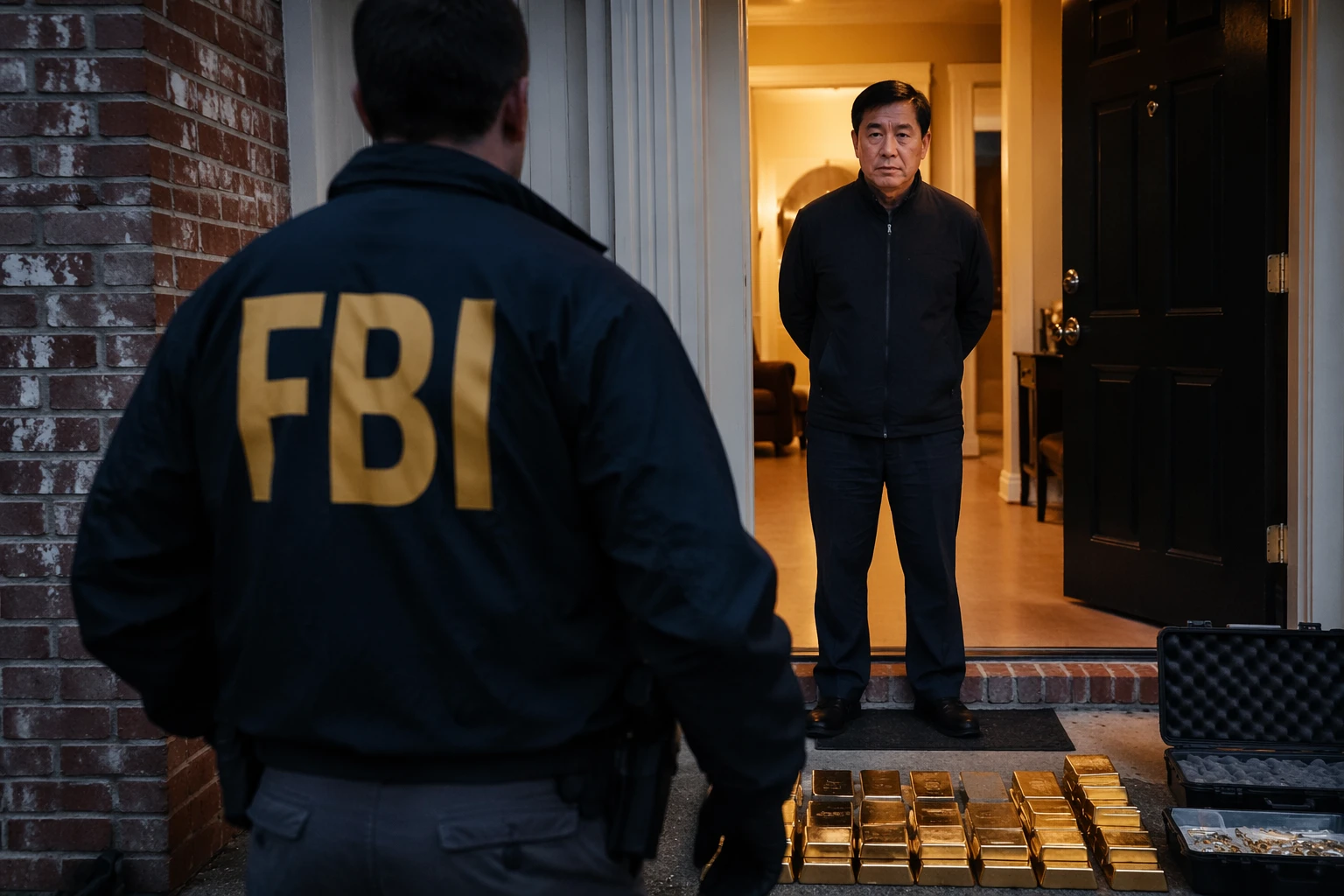
On June 5, 2026, a magistrate judge ordered Rush held in pretrial detention, finding him to be a flight risk and pointing to his professional experience. Prosecutors described him in open court as a “master manipulator.” Rush’s defense attorney called the gold bars a “non-issue,” argued that Rush had told FBI agents about them and provided the safe codes, and said he should have been released with an ankle monitor rather than jailed.
The case has widened still further because investigators believe Rush may have fabricated a fake top secret special access program tied to continuity-of-government operations to persuade colleagues to move government funds. CIA Director John Ratcliffe referred the matter to the Federal Bureau of Investigation after an internal CIA investigation uncovered potential violations. For an agency that depends on strict clearance rules, credential checks and compartmented oversight, the allegations raise a blunt institutional test: whether the machinery meant to guard the country’s most sensitive China programs can detect deceit before it reaches the vault.
Sources
- [1]nytimes.com
- [2]politico.com
- [3]abcnews.go.com
- [4]cbsnews.com
- [5]upi.com