Technology
Clemson Expands Commitment to Human-Centered AI Research
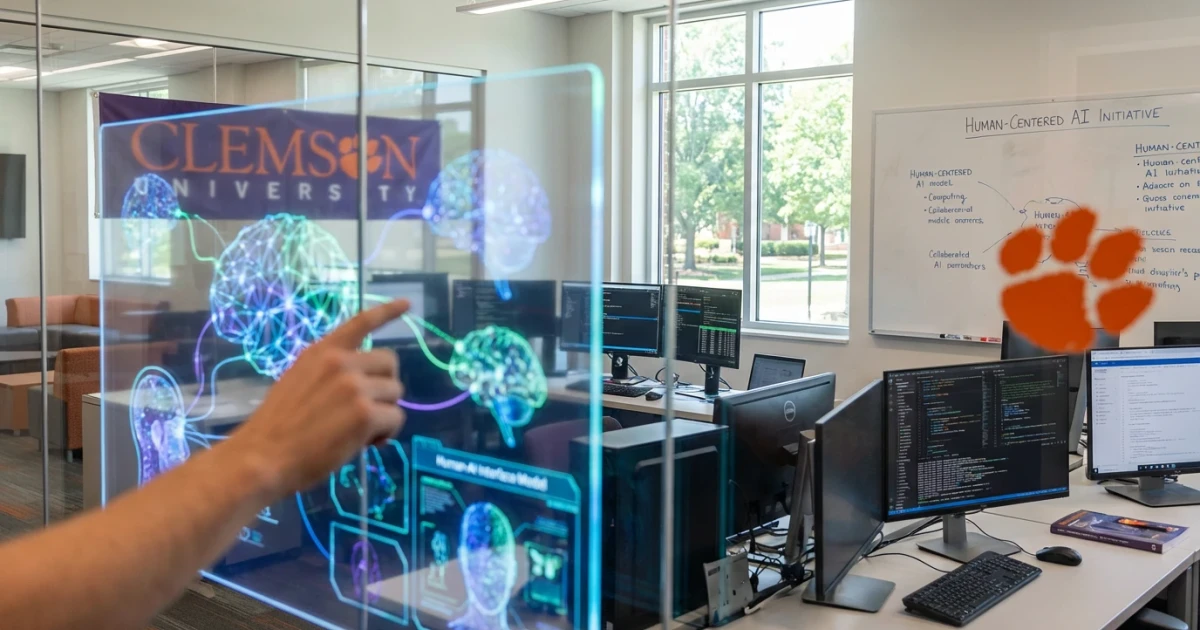
Clemson University is intensifying its pursuit of human-centered artificial intelligence (AI), leveraging new initiatives, research centers, and national partnerships to ensure technology serves societal needs. The university’s strategies are shaping the future of AI, emphasizing responsible innovation and broad educational outreach.
Building the Human-Centered AI Foundation
Recent developments at Clemson highlight a multi-faceted approach to human-centered AI. According to Clemson News, the university has steadily expanded programs that explore the intersection of human behavior, ethics, and advanced machine learning. This strategy aligns with national guidance for trustworthy and explainable AI, echoing best practices outlined in the NIST Artificial Intelligence Risk Management Framework.
Clemson’s commitment is demonstrated through significant investments and cross-disciplinary research. The Clemson Artificial Intelligence Research Institute for Science and Engineering (AIRISE) was established to foster collaboration between computer scientists, engineers, social scientists, and humanities scholars. AIRISE supports projects that integrate technical innovation with strong consideration for ethical, legal, and societal impacts.
Federal Support and Research Expansion
Clemson’s human-centered AI efforts have attracted federal backing. The university was awarded funding by the National Science Foundation (NSF) to advance foundational research in AI that prioritizes human well-being and transparency. This support has enabled Clemson to strengthen its research infrastructure, attract top faculty, and launch pilot projects that test new approaches to AI design and deployment.
- Interdisciplinary teams are developing algorithms that explain their decisions, supporting accountability in critical applications such as healthcare, education, and public policy.
- Researchers focus on projects and publications that address bias, fairness, and accessibility, reflecting national priorities for ethical AI.
Education and Workforce Preparation
Alongside research, Clemson is preparing students for the evolving demands of the AI workforce. New curricula combine computer science with ethics, social sciences, and human-computer interaction. According to the National Academies Press report, such interdisciplinary training is crucial for producing AI professionals who can anticipate and address real-world challenges.
By embedding human-centered design principles into undergraduate and graduate programs, Clemson aims to graduate professionals equipped to build trustworthy AI systems that serve diverse populations.
National Impact and Looking Ahead
Clemson’s leadership in human-centered AI extends beyond campus. Through collaboration with federal agencies, industry partners, and other universities, Clemson researchers contribute to national conversations on AI policy, risk management, and public trust. Their work supports the development of standards and guidelines that influence how AI is adopted across sectors.
As Clemson continues to refine its approach, stakeholders expect the university’s efforts will inform both policy and practice, ensuring AI technologies are developed and deployed with a firm commitment to ethical and societal considerations.
For more details on Clemson’s research and ongoing initiatives, readers can explore the university’s AI project database and the official NSF HERD Survey for an overview of research and development expenditures. As artificial intelligence continues to advance, Clemson’s human-centered philosophy is poised to shape the technology’s trajectory for years to come.