Politics
Climate skeptic to lead U.S. government’s next climate report

Matthew M. Wielicki now heads the U.S. Global Change Research Program, placing a critic of mainstream climate science at the helm of the office that produces the National Climate Assessment. That report is Congress-mandated under the Global Change Research Act of 1990 and serves as the federal government’s main climate risk review.
The National Climate Assessment is not a side project. The fifth edition, published in 2023, spans climate trends, water, human health, coastal effects, economics, transportation, agriculture, adaptation and regional impacts across the country. Federal climate officials describe it as the U.S. government’s preeminent report on climate change impacts, risks and responses, and its findings feed into decisions on infrastructure spending, planning and risk mitigation.
Wielicki has made his own views plain. He calls himself an “Earth science professor-in-exile,” says he left higher education because of DEI initiatives, and has argued that a “significant portion” of climate science literature is like “stamp collecting.” He was formerly an assistant professor in the Department of Geological Sciences at the University of Alabama and a postdoctoral research scientist at UCLA.
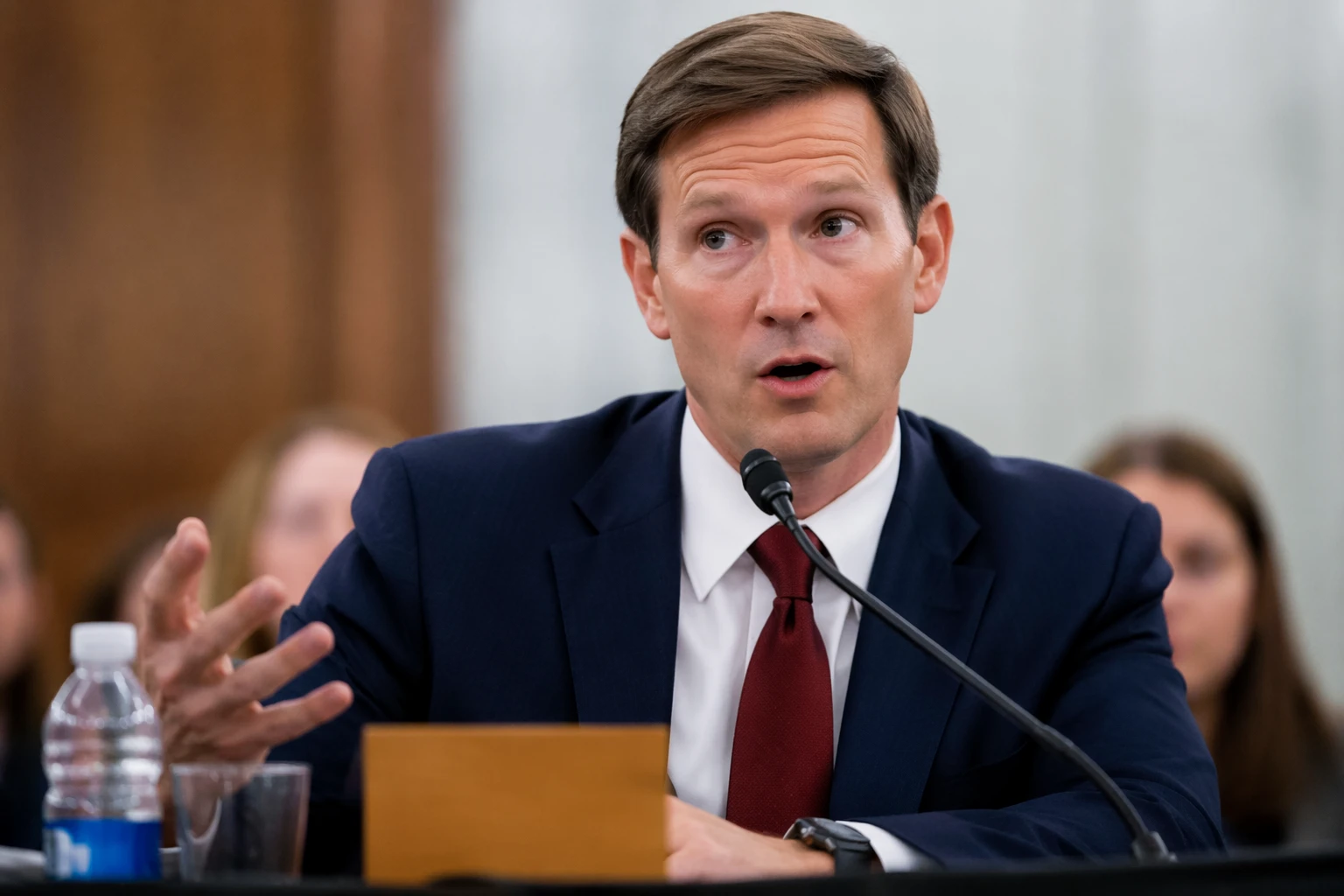
The leadership change carries immediate policy stakes because the program’s future has already been thrown into question. In 2025, the Trump administration canceled funding supporting the U.S. Global Change Research Program, a move that put the next assessment, due by 2027, in jeopardy. The White House later reconstituted the office in 2026 and said it wanted to “restore” the program’s legal mandate after what it described as years of use for political agendas rather than sound science.
The fight over the office is also a fight over the data pipeline that helps state governments, utilities, insurers and local planners judge climate exposure. NOAA said the United States suffered 28 separate billion-dollar weather and climate disaster events in 2023, with damage costs of at least $92.9 billion, while the annual average temperature in the contiguous U.S. ran 2.4 degrees Fahrenheit above average. Those are the conditions the assessment is supposed to translate into federal guidance, and they are why critics say placing a climate skeptic in charge could shape not just the report’s tone, but the credibility of one of Washington’s most important climate science tools.
Sources
- [1]nytimes.com
- [2]politico.com
- [3]toolkit.climate.gov
- [4]noaa.gov
- [5]matthewwielicki.com