Politics
Cold War-Era Documents Spark Debate Over India-US Trade
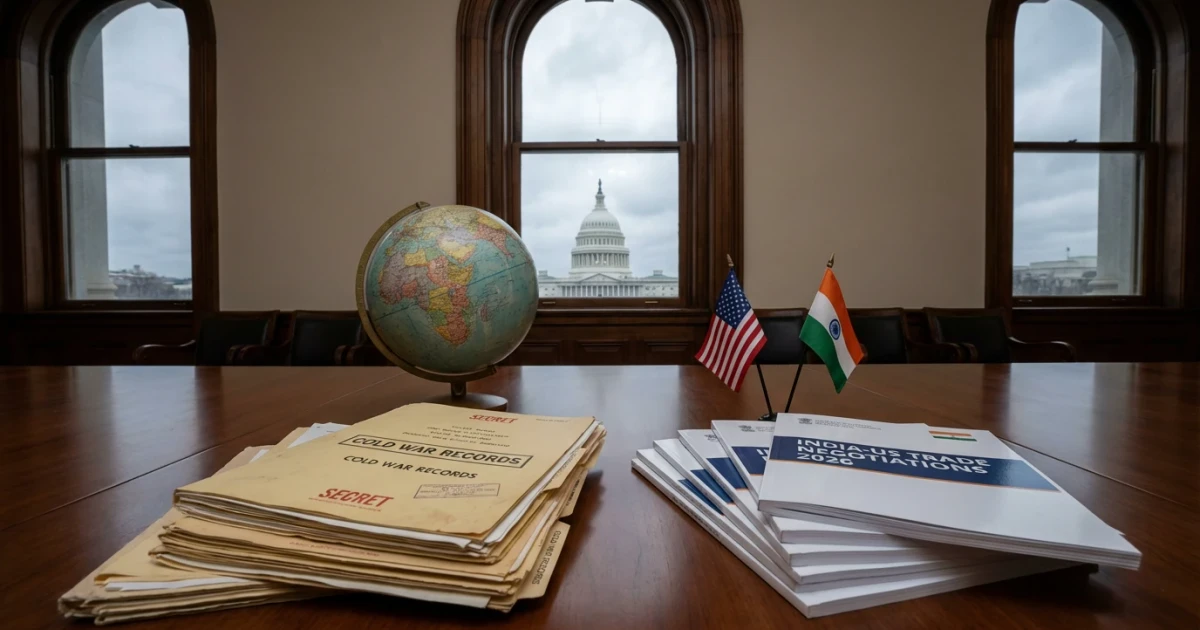
Cold War-era documents from the Indian National Congress have returned to center stage in the ongoing debate over India-US trade relations, fueling political tensions and prompting renewed discussion of both historical and current policy approaches.
Historic Context Shapes Current Trade Dialogue
The resurfacing of Congress’s archival records—dating back to the Cold War period—has injected fresh controversy into the India-US trade negotiations. According to News18, these documents detail past diplomatic strategies and trade stances during a time when India, under Congress leadership, often pursued non-alignment amid global superpower rivalry. The legacy of these choices is now under scrutiny as policymakers weigh their impact on today’s economic ties.
Recent years have seen substantial growth in bilateral trade volumes, but disputes over tariffs, market access, and regulatory standards persist. The controversy highlights how historical allegiances and diplomatic maneuvering from the Cold War era continue to influence contemporary negotiations and political narratives.
Political Fallout and Modern Implications
The revived spotlight on Congress’s Cold War-era policies has triggered sharp exchanges among India’s political parties. Critics argue that past decisions left India at an economic disadvantage and shaped the current framework of trade with the United States. Supporters counter that the non-alignment strategy preserved India’s sovereignty and allowed for independent economic development.
As the Ministry of Commerce & Industry notes, India-US trade has become more robust in recent decades, with significant increases in both goods and services exchanged. However, unresolved friction points—such as US tariffs on Indian steel and agricultural products, and India’s digital taxation policies—have roots in historic patterns of negotiation and mistrust.
Public Reaction and Policy Analysis
- Key stakeholders, including business leaders and trade analysts, are divided on how much weight historic records should carry in present-day policymaking.
- Some experts, as cited in the Brookings analysis, emphasize the need to focus on forward-looking trade frameworks rather than old grievances.
- Others point to ongoing disputes at the World Trade Organization as evidence that unresolved issues from the past can have real consequences for today’s economy.
Public discourse has also been energized by the debate, with many calling for transparency and a comprehensive review of both historical and current trade policies. The controversy has underscored the complexity of navigating relationships with major economies like the US, especially when history and politics intertwine.
Looking Ahead: Navigating History and Progress
As discussions around the India-US trade deal continue, the role of historical documents and Cold War legacies is likely to remain a contentious issue. Policymakers face the challenge of balancing lessons from the past with the demands of a rapidly changing global economy. With both nations seeking greater economic cooperation while managing strategic and political differences, the debate sparked by Congress’s Cold War-era records is set to influence trade negotiations and public opinion in the near future.
For readers interested in a deeper dive into the history and evolution of US-India relations during the Cold War, extensive archival material is available, providing valuable context for the current political storm.