Science
Collisions with Wolf-Rayet Stars Linked to Rare Blue Explosions
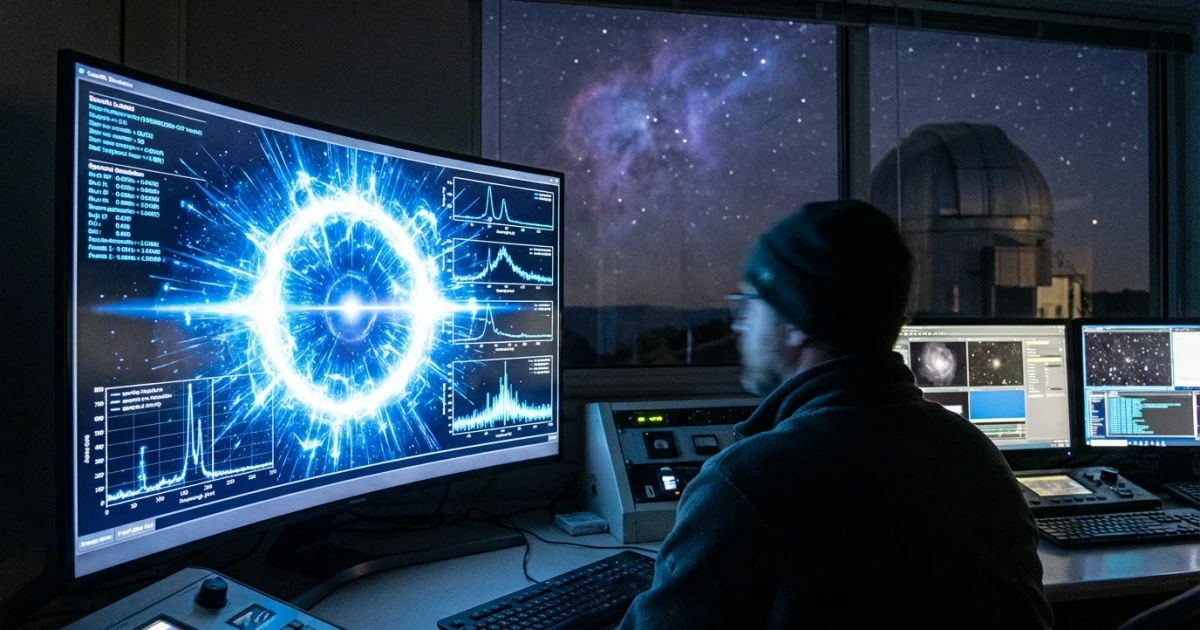
Astrophysicists are shedding new light on a rare and dramatic class of stellar explosions, proposing that these intense events may originate when a compact dead star—such as a neutron star or black hole—collides with a massive Wolf-Rayet star. This emerging theory could help explain the genesis of some of the universe’s most luminous blue explosions, which have long puzzled astronomers due to their rarity and exceptional brightness.
Understanding Wolf-Rayet Stars
Wolf-Rayet stars are among the most massive and hottest stars known, distinguished by their fierce stellar winds and high rates of mass loss. According to the comprehensive Galactic Wolf-Rayet Stars Catalog, these stars are rare, with only a few hundred identified in our galaxy. Despite their scarcity, they play a crucial role in the lifecycle of massive stars and the chemical evolution of galaxies.
- Wolf-Rayet stars typically have masses greater than 20 times that of the Sun
- They lose significant amounts of mass through fast stellar winds
- They are considered a late evolutionary stage of massive stars before undergoing supernova explosions
Because of their short lifespans and energetic nature, Wolf-Rayet stars are often found in regions of active star formation and are critical contributors to the enrichment of the interstellar medium.
The Role of Compact Dead Stars
Compact dead stars—including neutron stars and black holes—are the remnants left behind after massive stars exhaust their nuclear fuel and undergo supernova explosions. These objects have incredibly strong gravitational fields and, under the right circumstances, can interact with nearby stars in binary systems.
Occasionally, a compact object may spiral in toward a companion Wolf-Rayet star, eventually colliding with it. This scenario, as highlighted by researchers cited in Phys.org, is now being considered as a plausible explanation for some of the most luminous and short-lived blue transients observed in the universe.
Blazing Blue Explosions: A Collision Course
Recent observations have revealed a class of extraordinarily bright blue stellar explosions—sometimes referred to as fast blue optical transients—that do not fit neatly into classical supernova categories. Theorists now suggest these could be the result of a compact star slamming into a Wolf-Rayet star, releasing a burst of energy as the two objects merge or as the compact star disrupts the Wolf-Rayet’s outer layers.
Phys.org reports that this mechanism could explain both the color and intensity of these explosions. The high temperatures generated—and the presence of stripped, hydrogen-poor material—are consistent with what astronomers see in these rare events.
- Data from the HEASARC Wolf-Rayet Star Catalog supports the rarity of such progenitor systems
- Population synthesis studies, such as those summarized in the Astrophysical Journal, indicate that these collisions should be infrequent but highly energetic
These energetic collisions could produce optical signatures distinct from ordinary supernovae—shorter-lived, bluer, and more luminous—matching the properties of the observed transients.
Implications for Supernova Science
The discovery and study of these events have important implications for our understanding of stellar evolution and the fate of massive stars. By linking these rare blue explosions to collisions involving Wolf-Rayet stars, scientists can refine their models of how massive binary systems evolve and end their lives. Furthermore, the ESA Gaia Data Release 3 provides astronomers with better tools to identify candidate systems and track their evolutionary paths.
Current supernova statistics suggest that while traditional core-collapse supernovae dominate, these unique blue explosions represent a small but significant fraction of observed cosmic transients. Their study may reveal new pathways for the formation of compact binaries and even gravitational wave sources.
Looking Ahead
Ongoing and future sky surveys are expected to uncover more of these spectacular blue explosions, allowing astronomers to test the collision hypothesis with a larger sample size. As telescopes become more sensitive and data archives more comprehensive, the connection between Wolf-Rayet stars, compact objects, and these rare cosmic blasts will become clearer, deepening our understanding of the most energetic phenomena in the universe.