World
Colombia elects far-right outsider Abelardo de la Espriella as president

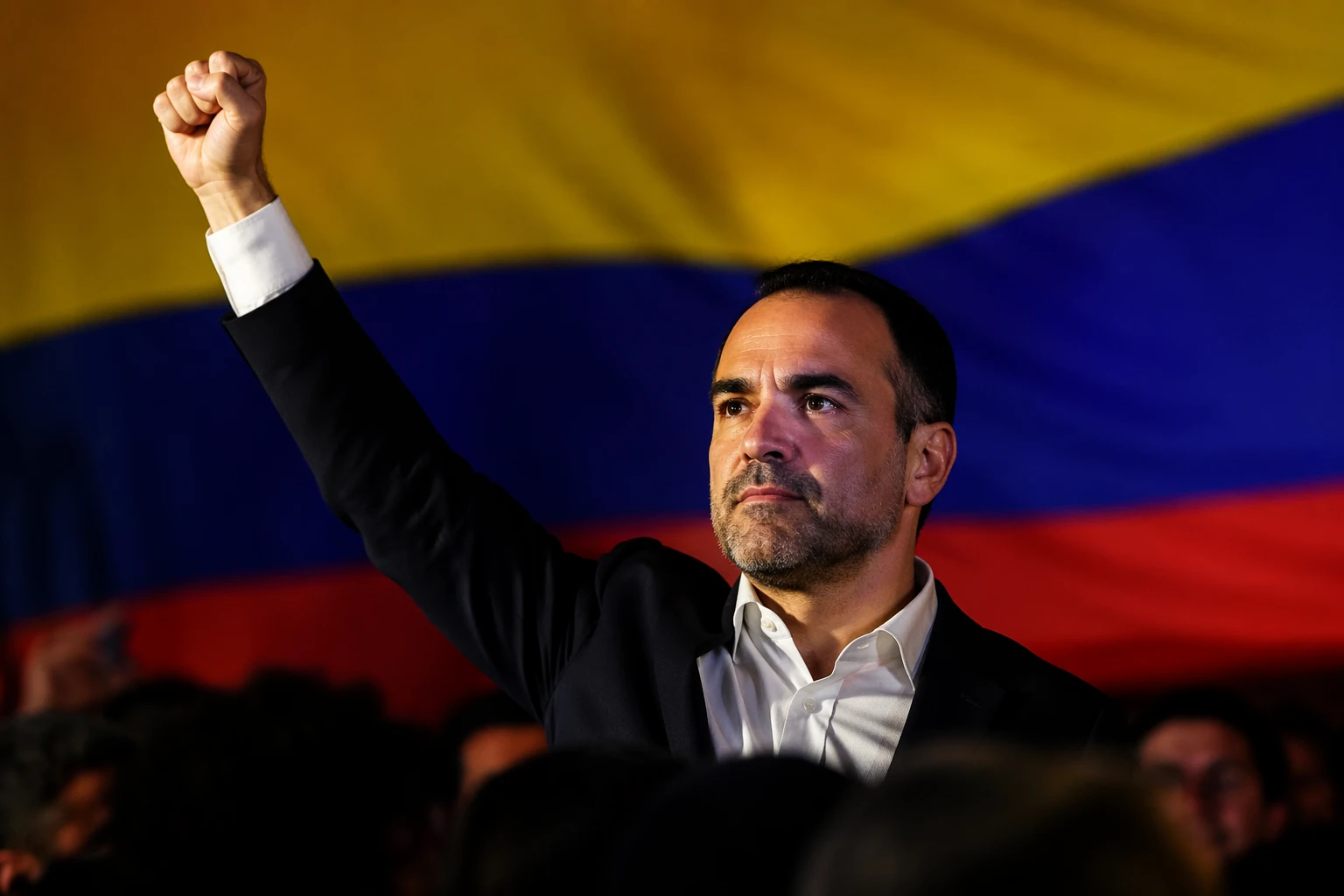
Colombia’s runoff has pushed one of Latin America’s most polarizing right-wing populists to the brink of power, with preliminary results showing Abelardo de la Espriella ahead by 49.7% to Iván Cepeda’s 48.7% with more than 99% counted. The final tally was still pending, with a manual count expected over the following days, but the result already signals a broader regional test: whether campaign rhetoric built on hardline security, resource extraction and a closer embrace of Washington can survive the restraints of a divided electorate and a legislature with no clear governing majority.
Security dominated the race from the start. A security report cited by analysts showed armed groups in Colombia nearly doubling from about 13,000 members in 2022 to 25,000 in the first half of 2026, even as homicides and robberies fell in most major cities and extortion rose in at least one urban area. De la Espriella turned that anxiety into his main argument, warning that he would launch a military offensive against guerrillas, bomb camps holding “narco-terrorists,” shoot down cocaine-smuggling aircraft, sink boats used for trafficking and build ten “mega prisons.” Cepeda campaigned on negotiations and a more measured approach to violence, trying to extend Gustavo Petro’s peace-centered agenda.
The first round on May 31 set up the knife-edge finish. De la Espriella, a criminal defense lawyer and millionaire businessman known as “El Tigre,” finished first with 43.7% to 44% of the vote, ahead of Cepeda’s 40.9% to 41%. Election authorities certified that result on June 4, and Cepeda formally accepted it on June 7 after initially disputing aspects of the count. International observers described the first-round vote as transparent, orderly and fluid, rejecting Petro’s fraud allegations. The runoff itself came after a campaign in which Petro’s “total peace” strategy, built around ceasefires with illegal armed groups, faced rising public doubt.
The next president will inherit more than a security crisis. The United States remains Colombia’s top economic partner and a major source of security and humanitarian support, and Washington has already reduced aid and added conditions over concerns about Petro’s policies and his de-emphasis of coca eradication, which coincided with record cocaine production. De la Espriella has promised to open the countryside to fracking and reverse Petro’s moratorium on new hydrocarbon and mining contracts, raising immediate stakes for investors, labor groups and environmentalists. His victory also follows legislative elections on March 8 that left Historic Pact with the largest blocs in both chambers, 25 of 103 Senate seats and 43 of 183 House seats, forcing any president to bargain.
De la Espriella’s support stretched beyond Colombia’s borders. In South Florida, an estimated 90% of expat voters backed him in the first round, reflecting frustration with insecurity and failed peace efforts. His legal work for Alex Saab, the Colombian businessman tied to Nicolás Maduro, has further sharpened criticism of his ties and temperament. Even with a lead in hand, he faces the hard limits of governing a country split between demands for order, fears of democratic erosion and doubts over how much of a campaign can actually become state policy.
Sources
- [1]news.google.com
- [2]ualrpublicradio.org
- [3]congress.gov
- [4]klcc.org
- [5]usnews.com
- [6]as-coa.org
- [7]wlrn.org