Sports
Colombia impresses, Argentina surges, Panama struggles in World Cup group stage
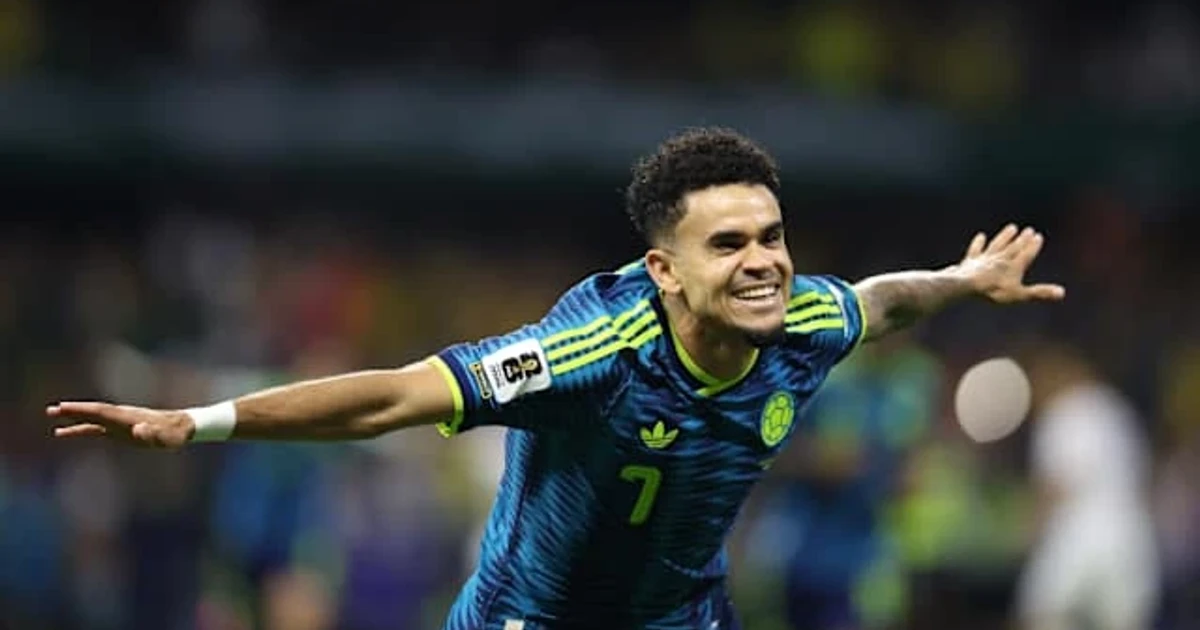
The first round of World Cup group play has already produced 75 goals at an average of 3.13 per game, but the sharper test is not who advanced, it is who repeated the same qualities under pressure. Colombia and Argentina are offering early evidence of a title run built on structure and end-product; Panama is showing how quickly narrow margins can turn into elimination.
Colombia’s form looks portable, not accidental
Colombia’s 3-1 opening win over Uzbekistan gave the clearest sign that its attack can survive beyond the opener. Luis Díaz delivered the kind of all-action performance that changes a group, setting up Daniel Muñoz’s first-half goal before scoring himself in the 65th minute, and Jaminton Campaz sealed it with a 99th-minute header. FIFA’s match report said Colombia had taken early control of Group K and that Díaz was the fulcrum of the win, not just a scorer who happened to find space.
That matters because Colombia’s next test against Portugal in Miami Stadium on 27 June came with genuine knockout-stage consequences. FIFA labeled it one of the group stage’s most anticipated matchups and a final that could decide the shape of the bracket, with the winner of Group K moving to Kansas City on 3 July and the runner-up heading to Toronto on 2 July. In a tournament where the first 24 matches already produced a flood of goals, Colombia’s value is less about flash than about whether this front line can keep forcing the same problems on better opponents.
That is why the Portugal match is the right measuring stick. FIFA’s preview said Colombia arrived with a high-flying attack capable of unsettling defenders, and the team had already shown it could lean on Díaz in different ways, as creator, finisher and tempo-setter. Teams that merely escape the group can be carried by one hot night; teams built for a run can repeat the pattern, and Colombia’s opening two performances suggested a system that can create chances in open play, in transition and in late-game pressure.
Argentina’s edge is consistency under stress
Argentina’s case for being built for the long haul is even cleaner. It opened with a 3-0 win over Algeria, where Lionel Messi scored a hat-trick and FIFA marked the performance as arriving exactly 20 years after his World Cup debut in Germany 2006. The result was not just stylish, it was structural: Argentina controlled the match, reduced Algeria to a supporting role and got decisive end product from its captain in the 17th, 60th and 76th minutes.
The follow-up against Austria reinforced that the first performance was not a one-off. Messi missed an early penalty, then recovered to score twice in a 2-0 win and become the World Cup’s all-time leading scorer with 18 goals, passing Miroslav Klose’s 16. FIFA also noted that Argentina moved into the Round of 32 from Group J, which is the key distinction between merely advancing and advancing with authority: the defending champions did not need a perfect opening to keep their shape or their control.
The deeper signal is how Argentina responded to friction. Missing the penalty could have scrambled the match, but instead Messi’s brace restored order and the team stayed on script. FIFA’s reporting pointed out that Messi has scored in six consecutive World Cup matches, a run that speaks less to luck than to repeatable pressure, especially in a tournament where form can vanish as quickly as it appears. That kind of consistency is why Argentina looks less like a team riding a moment and more like one carrying habits that survive into knockout football.
Panama is finding out how thin the margins are
Panama’s group stage has been the opposite: competitive for spells, but still not producing the results needed to turn effort into leverage. Against England on 27 June at New York New Jersey Stadium, Thomas Christiansen’s side frustrated the opposition through much of the first half before Jude Bellingham and Harry Kane broke the match open with second-half goals in the 62nd and 67th minutes. FIFA said Panama even had a late Jose Fajardo effort ruled offside, a small detail that fits the larger picture of a team living on the edge of a result without ever quite getting one.
The loss to England followed a 1-0 defeat to Ghana decided by Caleb Yirenkyi’s 95th-minute goal in Toronto. Put together, the two matches show the problem clearly: Panama has been close enough to make the games uncomfortable, but not close enough to leave with points, and FIFA noted that it would head home without a point or a goal despite reaching double figures in attempts against England. That is the difference between resistance and resilience, and it is exactly the kind of gap that becomes fatal when groups tighten and the knockout path depends on one or two moments.
What the knockout stage will punish
The group stage has already sorted the teams into two practical categories. Colombia and Argentina have both shown repeatable traits, Colombia through Díaz-driven attacking pressure and late-game persistence, Argentina through Messi’s ability to absorb mistakes and still impose control. Panama has shown fight, but not enough finishing or defensive control to turn close games into leverage. In a tournament running at 3.13 goals per match so far, that difference is not cosmetic, it is the line between a title profile and a short stay.
Sources
- [1]telemundo.com
- [2]fifa.com