World
Colombia’s DC-3 still carries passengers to remote jungle communities
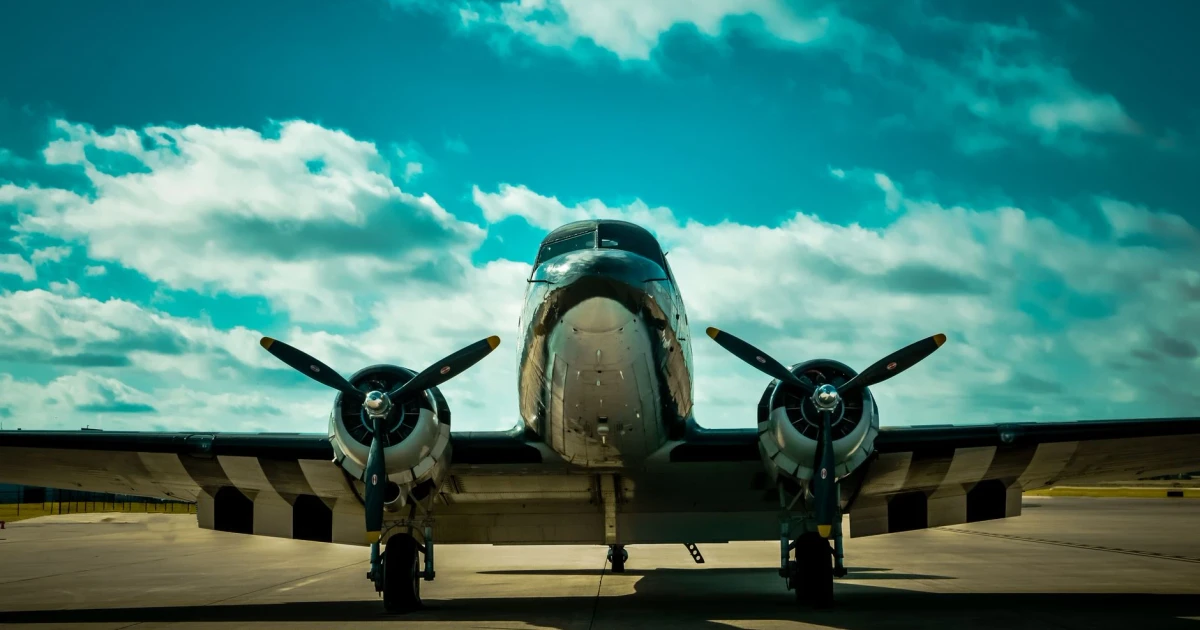
A Douglas DC-3 built for another era still lands passengers in Colombia’s jungle because the country’s far interior remains hard to reach any other way. In the Amazon basin and the eastern lowlands, the aircraft is not a museum piece but a working link to Villavicencio, Leticia, and isolated settlements where roads are limited or absent.
A wartime airliner that outlived its era
The DC-3 first flew in 1935 and quickly became one of aviation’s most influential airliners. During World War II it was mass-produced and served as a backbone transport, with series production ending in 1946 after roughly 15,000 units had been built across all variants, according to a 2010 Forecast International report. The Aeronautical Society later put the total even higher, saying more than 16,000 DC-3s had been built and that the type was still flying in commercial service 85 years after its first flight.
That scale explains why the aircraft never vanished entirely from operations in places that still value durability over speed. By 2020, the DC-3 airframes used in Colombia were dated to the 1940s and were already about 80 years old, yet they remained part of a transport system that newer aircraft have not fully replaced. The age is striking, but the economics are plain: an old aircraft can still be the best fit when the route is short, the runway is rough, and the destination is cut off from roads.
Villavicencio became the country’s DC-3 hub
Colombia’s DC-3 network has long revolved around Villavicencio, which became known as the country’s DC-3 capital. A May 21, 2020 feature on jungle flying described the city as a launch point for freight and goods bound for remote rainforest areas, a reminder that these aircraft move far more than passengers. They serve a logistics chain built around the Colombian interior, where air service often connects communities to markets, clinics, and government services that are difficult to reach by land.
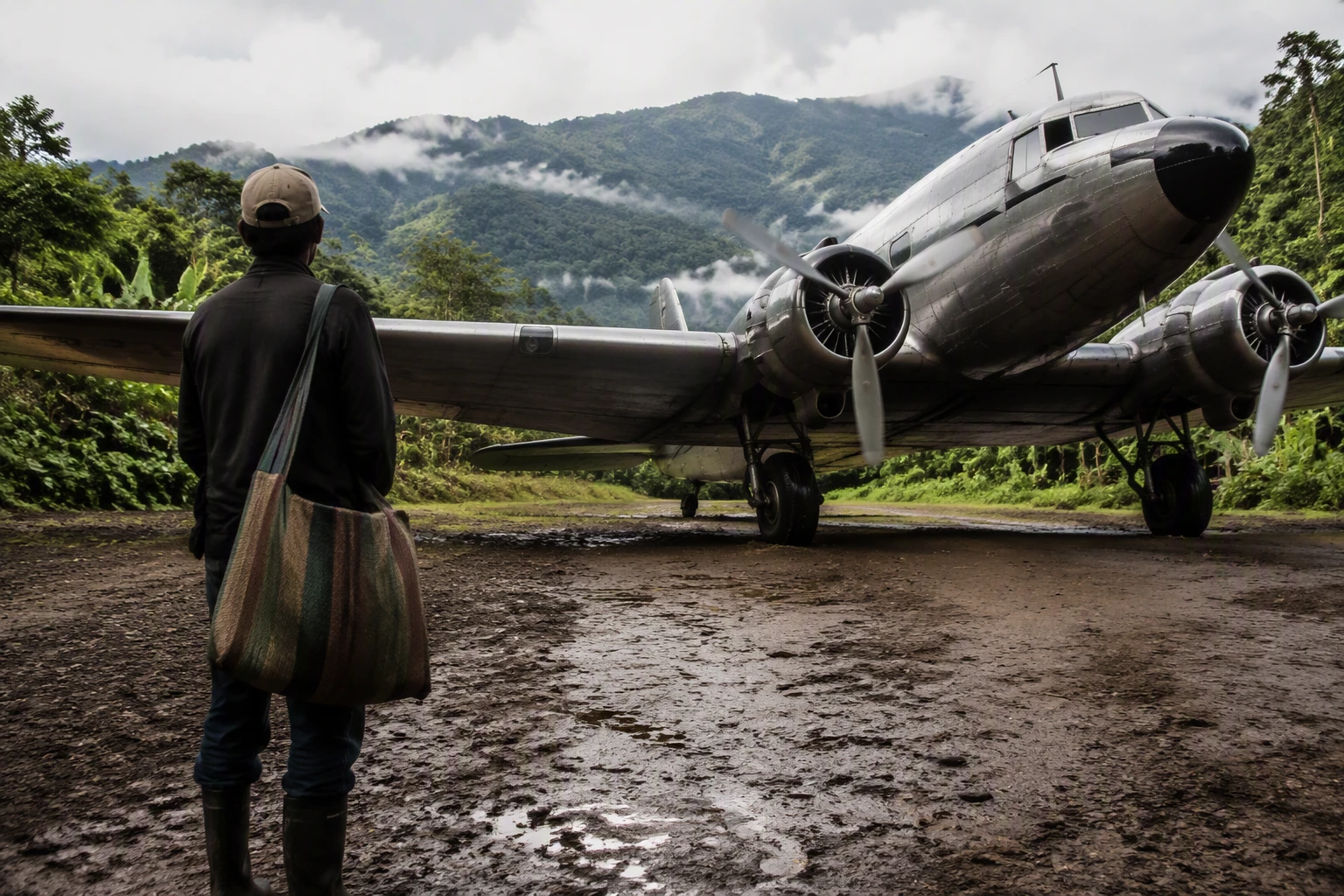
One route frequently associated with the aircraft runs from Villavicencio to Leticia, with the plane spending the night in Leticia before returning the next day. That pattern matters because it shows the DC-3 functioning as a scheduled working machine, not an occasional novelty flight. In Colombia, the aircraft also carries essentials such as medicine, food, vaccines, fuel, and generators to Indigenous and rural communities deep in the Amazon, where a dependable cargo lift can be as important as a passenger seat.
Why roads and newer aircraft have not made it redundant
The DC-3 survives in Colombia because geography still overrides technology. The interior and Amazon basin are vast, and in many places roads are limited or nonexistent, so air transport remains the fastest practical connection to the rest of the country. In that setting, the aircraft’s ability to operate in remote rainforest conditions keeps it relevant long after its design life would seem to have ended.
That is why the plane’s persistence is better understood as infrastructure than nostalgia. Classic aircraft and travel operators have continued to frame DC-3 flights as a rare way to reach the jungle, and the appeal is not just scenic. It is the combination of thin ground transport networks, dispersed settlements, and a plane rugged enough to keep flying where modern systems struggle to reach.
The fleet is small, old, and under scrutiny
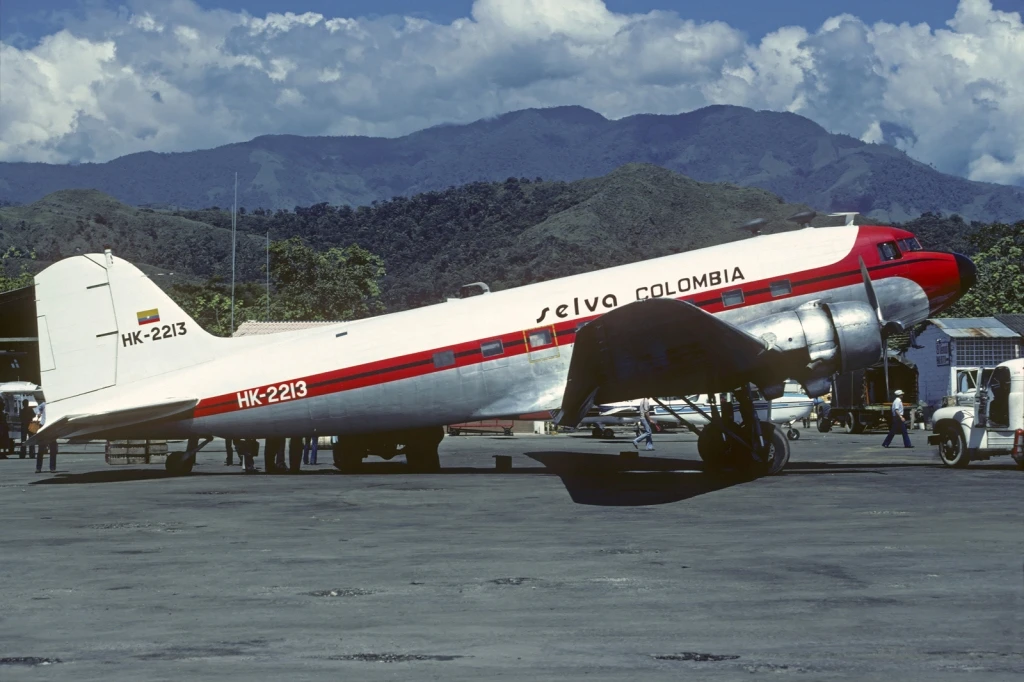
The DC-3’s role has not come without risk. In 2019, one account put the number of DC-3s still flying worldwide at roughly 800, a fraction of the aircraft built during the type’s long production run. That same year, a crash in Colombia cast doubt on the future of these classic planes, and a more recent crash again drew attention to the safety burden that comes with operating aging workhorses in difficult terrain.
Even so, the fleet has not disappeared. By March 2026, one aircraft, HK1315 of Allas Colombia Airlines, was identified as the oldest commercial aircraft in operation in the world, a sign that some examples remain active at a remarkable age. The symbolism is powerful, but the operating reality is sharper: every extra year of service on a DC-3 in Colombia depends on maintenance, parts, and the willingness to keep a very old machine aligned with a very real transport need.
What the DC-3 reveals about Colombia’s infrastructure gap
The aircraft’s endurance exposes a larger economic truth about remote transport in Colombia. Where paved roads, river links, and modern regional aircraft are missing or costly to sustain, a 1930s design can still fit the market better than newer alternatives. That does not make the DC-3 romantic; it makes it useful, especially in places where travel time, cargo reliability, and access to essentials matter more than fleet age.
Its survival reflects preservation in some cases, but it also reflects neglect in the broader transport network and a practical solution in the air. As long as Villavicencio remains a staging point, Leticia remains reachable by plane, and isolated jungle communities need medicines, fuel, and food, the DC-3 will keep showing what modern infrastructure has not yet solved.
Sources
- [1]nytimes.com
- [2]key.aero
- [3]aerosociety.com
- [4]colombiacorners.com
- [5]thebogotapost.com
- [6]thecitypaperbogota.com
- [7]npr.org
- [8]forecastinternational.com
- [9]spotterguide.net