Science
Comet 3I/ATLAS Captivates Astronomers During Rare Sun-Earth Alignment
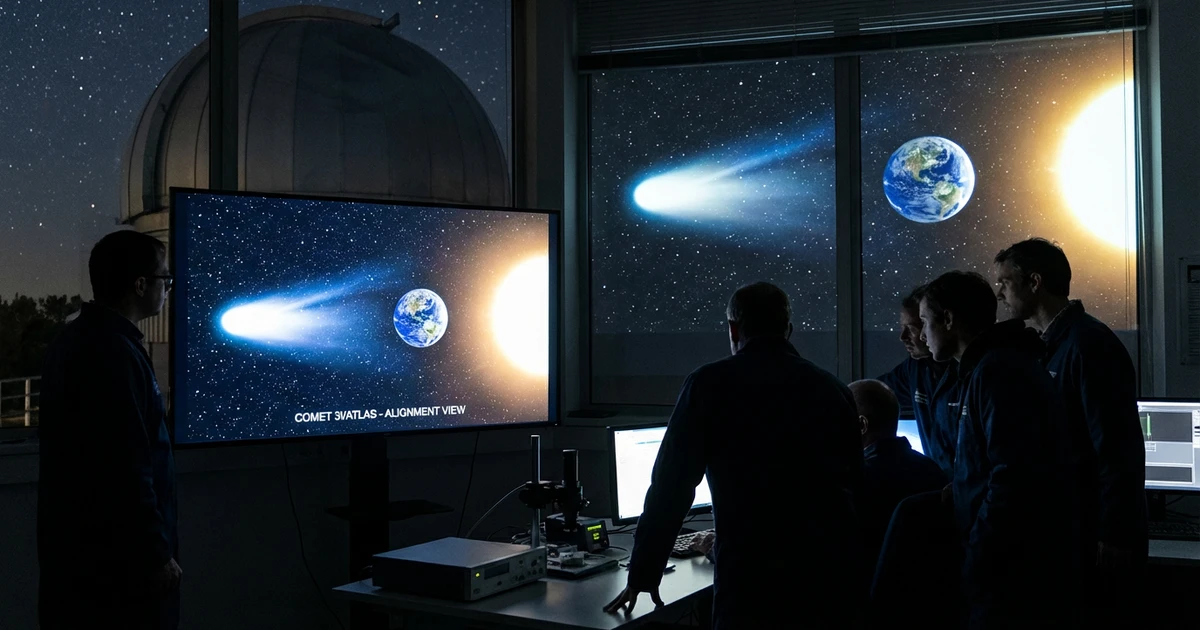
Comet 3I/ATLAS stole the spotlight among astronomers and skywatchers alike on January 22, 2026, as it achieved a rare and scientifically significant alignment with the Sun-Earth axis. Captured in striking detail by the Hubble Space Telescope, the event provided unprecedented views and a live online window into the comet’s journey toward interstellar space.
The Science Behind the Alignment
Such alignments are exceptionally rare, offering scientists a unique opportunity to observe a comet's behavior and structure as it is illuminated from a distinctive angle. For 3I/ATLAS, this event is especially noteworthy because it is only the third known interstellar comet observed passing through our solar system, following the discoveries of 1I/'Oumuamua and 2I/Borisov.
Hubble's Unprecedented Imagery
During the alignment, Hubble’s high-resolution cameras captured detailed images of the comet. These images are invaluable for researchers aiming to analyze the comet’s:
- Coma structure (the cloud of gas and dust surrounding its nucleus)
- Tail morphology (how the tail forms and interacts with the solar wind)
- Brightening and outgassing behavior as it approaches the Sun-Earth axis
The clarity of these images allows scientists to study the composition and evolution of interstellar comets, deepening our understanding of material originating from beyond our solar system.
Journey Toward Interstellar Space
Comet 3I/ATLAS is not native to our solar system. After its brief visit, it will continue its high-velocity journey out of the Sun’s gravitational grasp and back into the depths of interstellar space. This makes the current observations all the more critical, as opportunities to study such objects are exceedingly limited.
Live Viewing Opportunity
To engage the public and the astronomical community, a free livestream was made available, allowing anyone with internet access to witness the comet's flight and the Hubble team’s work in near real-time. This initiative not only fostered greater public interest in astronomy but also highlighted the collaborative nature of modern space science.
Why This Matters
- Interstellar comets like 3I/ATLAS offer clues about the conditions in other star systems and the broader galaxy.
- Rare alignments provide unique observational geometry, revealing features not seen in other configurations.
- Public engagement through livestreams helps inspire future generations of scientists and space enthusiasts.
Looking Forward
As 3I/ATLAS races away from the Sun and Earth, astronomers will continue to analyze the data and images collected during this alignment. Each observation of an interstellar visitor enhances our understanding of the cosmos and our place within it.