Business
Commencement Speakers Face Rising Student Pushback
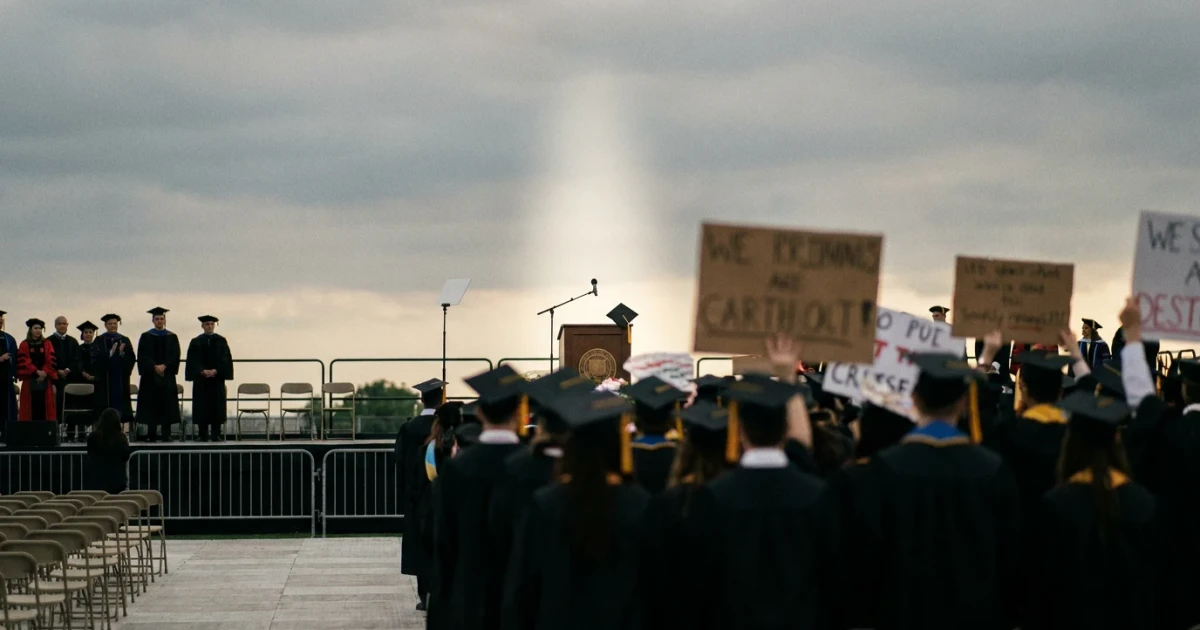
College commencement ceremonies this spring have been marked by a growing trend: students are vocally expressing their dissatisfaction with invited speakers, often through booing, protests, and even explicit chants. This phenomenon, highlighted in recent coverage by Gizmodo and USA Today, underscores deeper frustrations among students about the selection and content of graduation speeches.
Student Discontent Comes to the Fore
According to Gizmodo, the tradition of booing at commencement events has become more prominent this year, with students using ceremonies as platforms to voice their opinions. The article notes that many graduates are dissatisfied not only with the speakers themselves but also with the perceived disconnect between speeches and the realities faced by students entering the workforce and society.
- Booing and protests have been reported at multiple colleges across the country.
- Some students have used explicit language and disruptive tactics to express their frustration.
- The dissatisfaction is often directed at speakers perceived as out of touch or controversial.
Underlying Causes of the Backlash
USA Today has documented various reasons behind the student reactions, including disappointment with speaker choices, political disagreements, and concerns about the relevance of commencement messages. The article suggests that students expect speeches to address pressing social and economic issues, rather than offering generic platitudes.
Many graduates feel that their unique experiences—particularly those shaped by pandemic disruptions, rising tuition costs, and uncertainty about post-graduation employment—are not adequately acknowledged in these high-profile events.
Speaker Selection Under Scrutiny
Both sources highlight that controversy often starts with the choice of speaker. In some cases, speakers have political or corporate backgrounds that clash with student values, leading to heightened tensions. The lack of diversity and representation among speakers is also a recurring complaint.
- Speakers from political or business backgrounds have faced particularly strong backlash.
- Students call for more inclusive and relevant voices at their graduation ceremonies.
The Impact on Campus Culture
These incidents reflect broader debates about free speech and academic freedom on college campuses. While commencement ceremonies are traditionally celebratory, they are increasingly becoming arenas for activism and protest. The vocal pushback this year signals that students are eager for institutions to listen more closely to their concerns and values.
As Gizmodo succinctly puts it, "The booing will continue until commencement speeches improve." This sentiment captures the growing demand among students for commencement events that reflect their lived experiences and aspirations, rather than merely serving as public relations opportunities for universities.
Looking Forward: Will Commencement Speeches Change?
It remains to be seen whether colleges will respond by revising their speaker selection processes or encouraging more substantive and relevant speeches. The current wave of protests is likely to spur conversations among administrators, faculty, and student leaders about how to make commencement ceremonies more meaningful.
While the tradition of honoring graduates remains, the message is clear: students want their voices heard, and they expect their final moments on campus to reflect the realities they face beyond the university gates.