US News
Common HVAC mistakes can quietly raise home energy bills
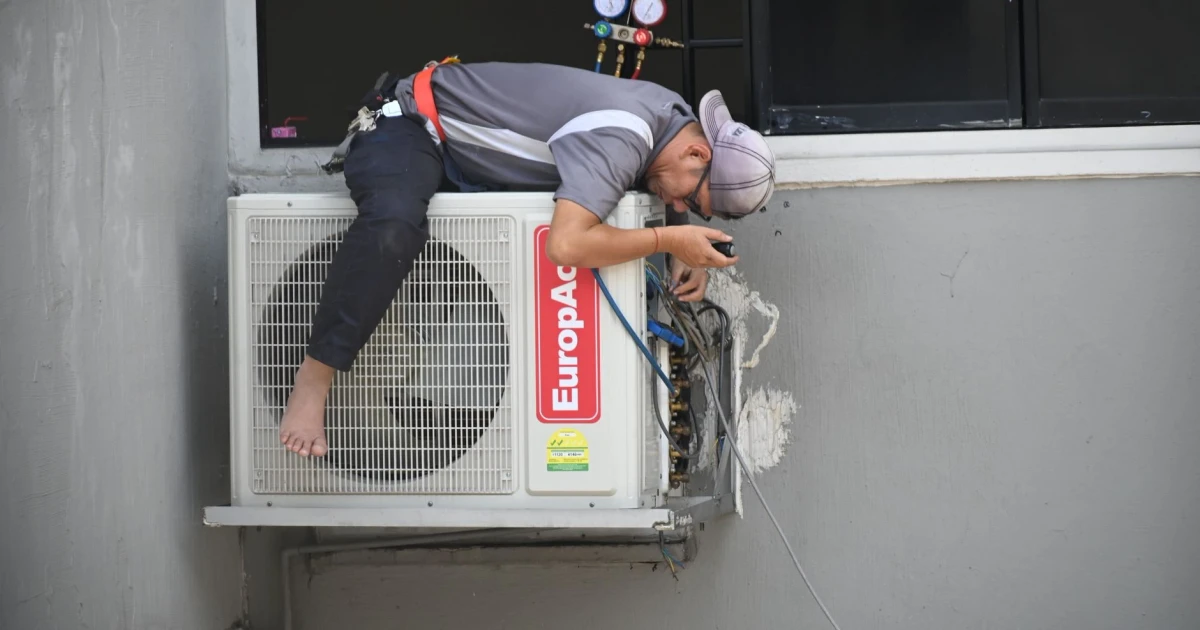
Clogged filters and leaking ducts can drain a heating and cooling budget long before a homeowner notices anything wrong. ENERGY STAR puts the average household’s annual energy bill at more than $2,200, with nearly half going to heating and cooling.
The mistakes that hit bills first
The most expensive habits are also the easiest to overlook: neglecting air filters, ignoring duct leaks, and using thermostat settings inefficiently. Each one forces equipment to work harder for the same result, which raises energy use, adds wear, and can shorten the life of the system. The damage shows up twice, first in comfort and then in the bill.
EPA estimates the average home can lose 15% to 30% of conditioned air through leaks and poor connections in ductwork, and ENERGY STAR puts the efficiency hit from leaky ducts at as much as 20 percent. Contractor guidance citing EPA material puts typical air-duct networks at losses of 25% to 40% of energy through leaks, holes, and loose connections.
Low-cost habits that pay back quickly
The cheapest fixes are the ones you can build into routine maintenance. Routine filter replacement or cleaning can lower cooling-system energy consumption by up to 15 percent, according to ENERGY STAR, making filter care one of the fastest ways to slow waste without calling a technician.
• Check and replace or clean filters on schedule, especially during heavy cooling use.
• Treat thermostat settings as a budget control, not a set-it-and-forget-it device.
• Watch for rooms that never feel right, since uneven temperatures often point to airflow or duct problems.
Official U.S. government guidance for heating and cooling upkeep includes ENERGY STAR’s maintenance checklist alongside other energy-saving steps.
When ducts become a hidden utility bill
Ductwork is where a lot of energy slips away without fanfare. Official city guidance in Edmond, Oklahoma identifies poorly sealed or insulated ducts as likely contributors to higher energy bills.
Unlike a filter change, duct sealing usually requires a professional. Air sealing and duct system maintenance are standard efficiency measures, and leaks in attics, crawl spaces, and other hidden runs can waste a large share of the air your system already paid to heat or cool. If rooms stay uneven even when the thermostat is set correctly, duct leaks deserve attention.
Connected thermostats help, but the savings claims are not uniform
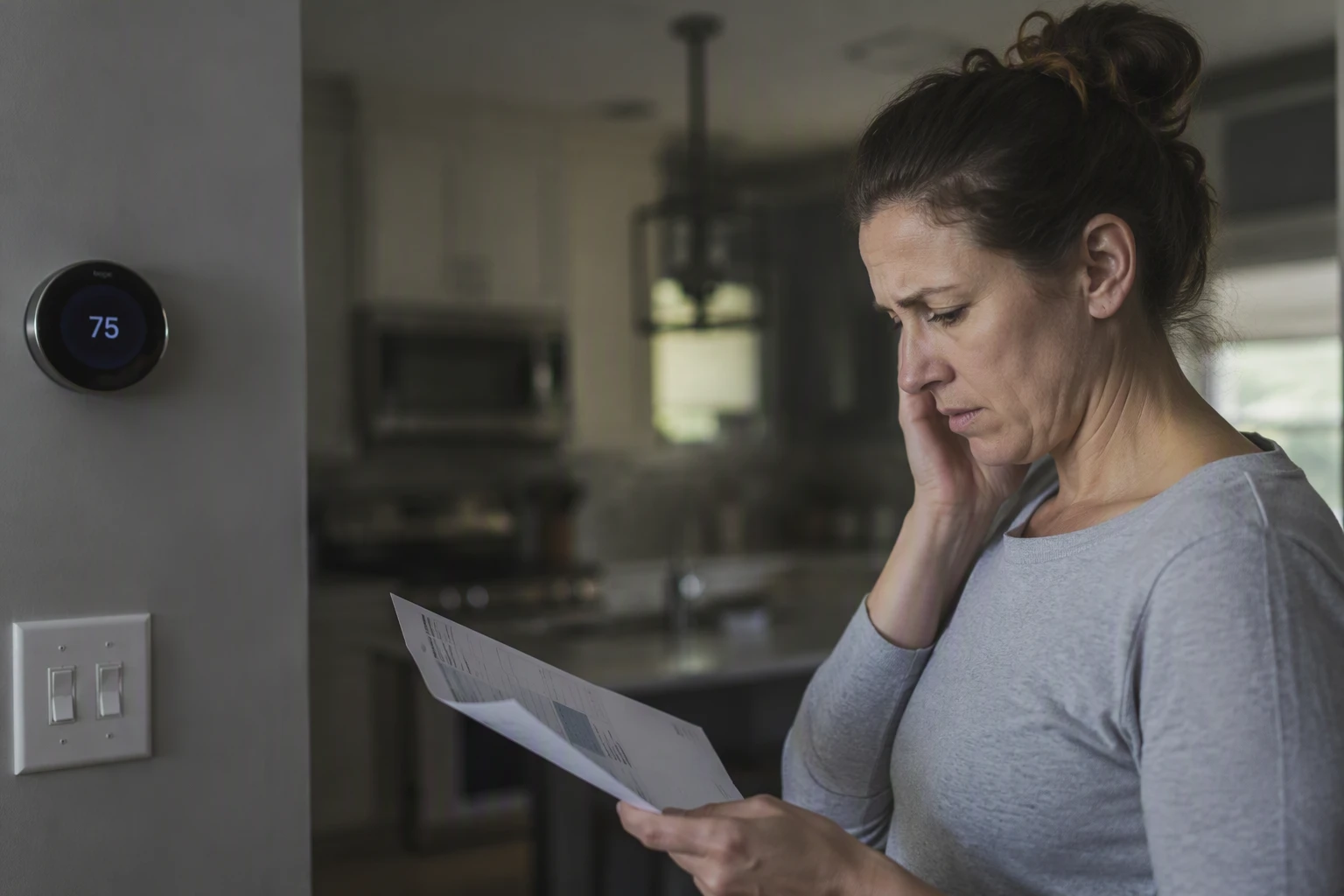
Thermostat controls can also shape the size of the bill, especially when they reduce unnecessary runtime. A 2016 American Council for an Energy-Efficient Economy paper estimated connected thermostats were managing HVAC systems in more than four million homes, and thermostat vendors have claimed savings of up to 20 percent. The paper also found there is no accepted procedure to evaluate the effectiveness of those strategies, which means advertised savings should not be treated as guaranteed.
The device is only as useful as the settings and schedules behind it, and a smart thermostat cannot fix leaky ducts or a clogged filter on its own.
When repair gives way to replacement
Sometimes the bill problem is not a maintenance lapse but an aging system that has fallen behind modern efficiency standards. The U.S. Department of Energy estimates upgrading from SEER 9 to SEER 14 can reduce energy consumption by more than 35 percent, a difference that can be large enough to change the economics of a repair decision. If the system is old enough to operate well below current standards, the energy penalty can overwhelm the cost of another fix.
The U.S. Department of Energy requires all residential air conditioners sold in the United States since January 2006 to have a SEER of at least 13, and ENERGY STAR qualified central air conditioners must have a SEER of at least 14.
Sources
- [1]cbsnews.com
- [2]energystar.gov
- [3]energystar.my.site.com
- [4]basnettplumbing.com
- [5]atyourservicepros.us
- [6]energy.gov
- [7]aceee.org
- [8]edmondok.gov
- [9]energyright.com