Politics
Congress Advances Closer Integration of US and Israeli Militaries
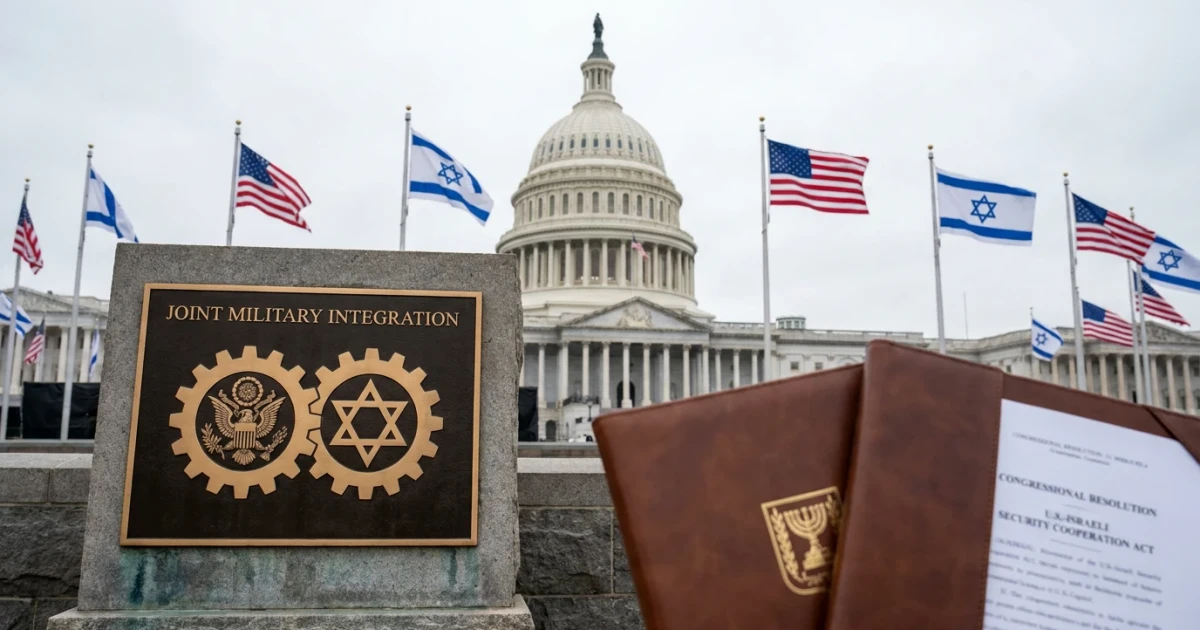
Congress is advancing legislation that would bring the US and Israeli militaries into closer operational alignment, with little public debate but potentially far-reaching implications for American defense policy and Middle East security cooperation.
The Legislative Push for Integration
Recent provisions included in the National Defense Authorization Act for Fiscal Year 2024 (NDAA) quietly direct the Pentagon to expand joint military planning and operations with Israel. According to analysis by Responsible Statecraft, these measures go beyond routine joint exercises and security assistance, and instead aim to establish formal mechanisms for operational coordination between US and Israeli forces.
The NDAA’s language, as detailed in the official House Report 118-125, outlines a framework for integrating missile defense systems, sharing intelligence, and conducting joint operational planning. These steps, while not unprecedented, mark a significant escalation in the depth and scope of US-Israel military ties.
Background: A History of Close Security Cooperation
US support for Israel’s security is longstanding and multifaceted, encompassing extensive foreign military aid, joint research and development initiatives, and regular military exercises. The US Department of State notes that Israel is the single largest cumulative recipient of US foreign assistance since World War II, much of it in the form of military aid and missile defense cooperation.
- Joint US-Israeli missile defense programs, such as Iron Dome and David’s Sling, have received billions in US funding, as documented by the Congressional Research Service.
- Annual Foreign Military Sales data shows Israel consistently ranks among the top recipients of American advanced weapons and defense technology.
- Regular joint military exercises and intelligence sharing are already staples of the bilateral relationship, as summarized by the State Department.
What the New Measures Would Change
While the US and Israel have a history of close cooperation, the new NDAA provisions are designed to make such collaboration more seamless and institutionalized. Responsible Statecraft reports that the legislation encourages the Pentagon to:
- Formally integrate US and Israeli command structures for certain operational scenarios
- Expand joint contingency planning and the sharing of real-time operational intelligence
- Increase the interoperability of US and Israeli air and missile defense systems
These steps would move the relationship from cooperation toward something closer to operational integration, with US and Israeli forces potentially coordinating in real time during crises or conflicts.
Potential Implications and Debates
Proponents of deeper integration argue that formalizing US-Israeli military ties enhances deterrence against common adversaries, especially in the context of missile threats from Iran and its proxies. They contend that joint planning and interoperability improve the effectiveness of both countries’ defenses and signal unity to potential adversaries.
However, critics warn that increased integration could draw the US into regional conflicts or limit American flexibility in responding to evolving security challenges. Responsible Statecraft highlights concerns that the move might effectively commit the US to participate in future Israeli military actions or complicate efforts to de-escalate tensions in the Middle East.
There are also questions about transparency and oversight. Unlike some previous high-profile US-Israel initiatives, these new provisions were advanced with relatively little public debate, raising issues about democratic accountability in matters of war and peace.
Looking Forward
As the NDAA moves through Congress, the full scope and impact of these integration measures remain to be seen. The final implementation will depend on Pentagon policies and ongoing negotiations with Israeli counterparts. Nevertheless, the legislative momentum signals a significant turning point in US-Israel military relations—one that could reshape Washington’s role in Middle Eastern security for years to come.
For readers interested in the legislative details and official language, the full text of the NDAA for Fiscal Year 2024 and the accompanying House Report provide deeper context on the evolving US-Israel military partnership.