Politics
Congress Challenges Government Over Women's Reservation Progress
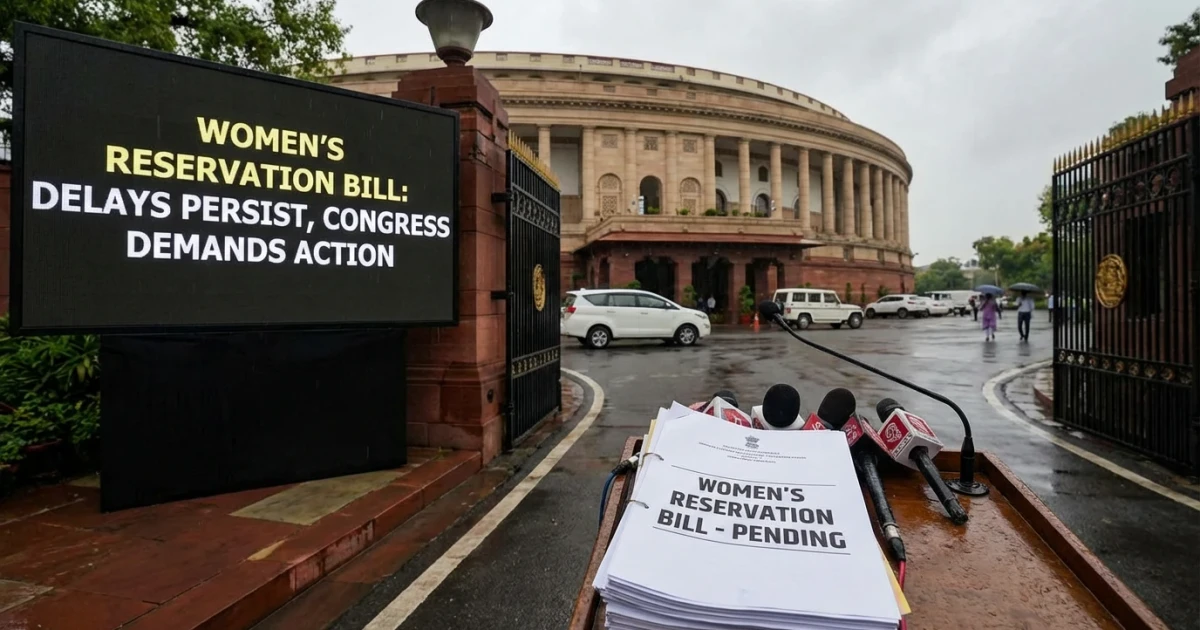
Congress has renewed its criticism of the Modi government's stance on women's political representation, spotlighting ongoing delays in the implementation of the Women's Reservation Bill. The debate underscores persistent tensions in Indian politics over gender equality in legislative bodies.
Background: The Women's Reservation Bill
The Women's Reservation Bill, formally known as The Constitution (One Hundred and Twenty-Eighth Amendment) Bill, 2023, was designed to reserve one-third of seats in the Lok Sabha and state legislative assemblies for women. The bill, passed in Parliament with cross-party support, was widely hailed as a step toward improving women's representation in Indian politics. However, its implementation is contingent upon the completion of the nationwide delimitation process, which has yet to begin.
Congress Criticizes Delays and Seeks Clarity
Congress leaders have accused the Modi government of "dragging its feet" on operationalizing the bill, pointing out that women currently make up only a small fraction of elected representatives in Parliament and state assemblies. Official statistics show that women currently occupy less than 15% of Lok Sabha seats and even fewer in many state legislatures, a figure that has seen only gradual improvement over recent decades.
- The 2024 Lok Sabha elections saw 78 women elected out of 543 seats, about 14% of the total.
- State assemblies show even lower participation, with several states having less than 10% women legislators.
- According to global rankings, India trails many countries in the proportion of women in national parliaments.
Congress spokespersons have argued that the delay in delimitation—the redrawing of constituency boundaries—could postpone the bill's impact for years. This concern has been echoed by women's rights groups, who point to the bill's requirement that reservation take effect only after delimitation based on the next decennial census.
Government Position and Broader Context
While the Modi government has touted the passage of the Women's Reservation Bill as a landmark achievement, it maintains that the sequence of census and delimitation is constitutionally necessary. Government officials have emphasized steps taken to increase women's participation at the grassroots level, particularly through local body reservations, where women already hold up to 50% of seats in some panchayats and municipalities. However, critics argue that similar progress is needed at the national and state levels.
Analysis: The Path Forward for Women's Representation
Data from Lok Sabha records and independent research consistently highlight the underrepresentation of women in higher legislative offices. Multiple parties, including Congress, have called for a time-bound roadmap to implement the Women's Reservation Bill, warning that further delays could undermine the bill's intent and erode public trust.
With the next census and delimitation process yet to be scheduled, the timeline for increased women's representation remains uncertain. The ongoing debate reflects wider questions about the pace of reform and the challenges of translating legislative intent into meaningful change on the ground.
Conclusion
As Congress continues to press the Modi government for action, the future of the Women's Reservation Bill stands as a litmus test for India's commitment to gender equality in politics. Stakeholders across the spectrum agree that boosting women's representation is essential, but the path to achieving this goal remains entangled in procedural and political complexities.