Politics
Congress Faces Standoff Over ICE Restrictions as Another Government Shutdown Looms
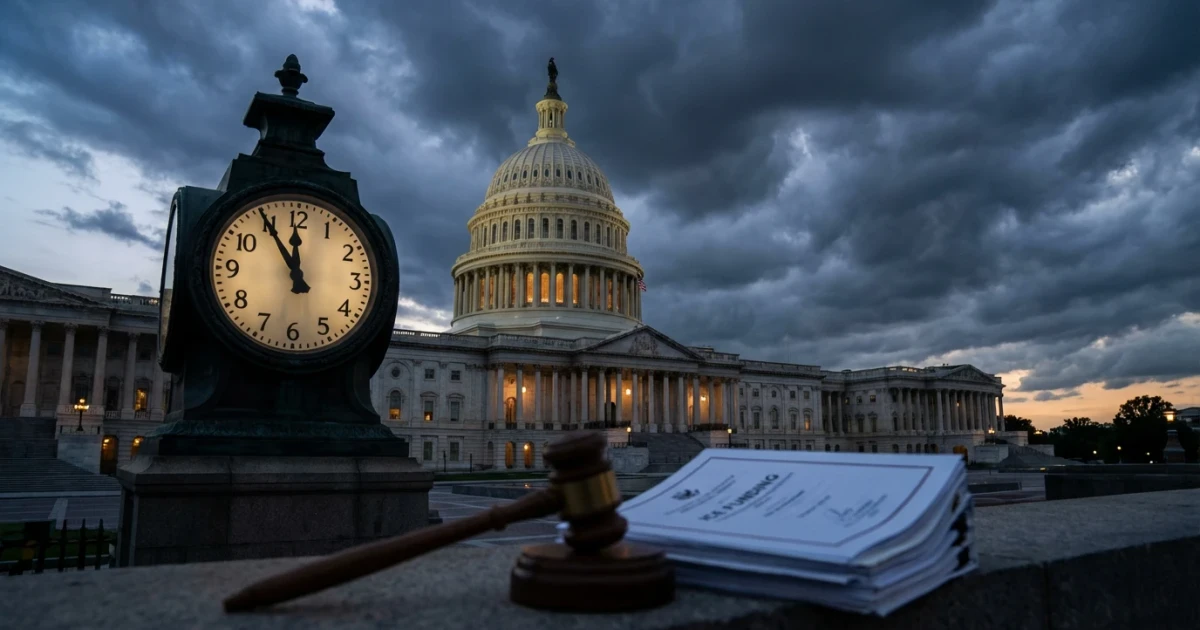
As Congress grapples with deep divisions over immigration enforcement policy, lawmakers are once again racing against the clock to prevent a partial government shutdown. The ongoing fight centers on proposed restrictions for U.S. Immigration and Customs Enforcement (ICE), with significant implications for federal operations and millions of Americans.
Key Issues: ICE Restrictions at the Center
At the heart of the current impasse are proposed restrictions on ICE activities, which have become a flashpoint in ongoing budget negotiations. According to multiple reports, some lawmakers are seeking to limit how ICE detains and processes undocumented immigrants, reflecting broader debates on U.S. immigration policy. These proposals have drawn sharp lines between Democrats, who generally support more oversight and limits, and Republicans, who argue that such restrictions would undermine border security.
What’s at Stake in the Shutdown Battle
- Federal agencies could face another partial shutdown if Congress cannot reach a budget agreement that satisfies both parties’ positions on ICE funding and operational limits.
- Essential services, including some law enforcement and border operations, would continue, but many non-essential government functions could halt.
- Hundreds of thousands of federal employees could be furloughed or required to work without pay during the shutdown period.
As The New York Times and ABC News both highlight, the consequences of a shutdown ripple far beyond Washington, impacting everything from federal benefits to national parks and public safety operations.
Background: Why This Fight Matters
The debate over ICE funding is not new, but it comes at a time of heightened political polarization. In recent years, immigration enforcement has been a contentious issue, with the agency’s role and practices under scrutiny from both sides of the aisle. Proposed restrictions could affect ICE’s ability to detain migrants and carry out deportations, a core concern for many lawmakers.
Shutdown Timeline and Next Steps
- The deadline for a new federal funding agreement is rapidly approaching.
- Without a resolution, a partial shutdown could begin immediately after the deadline passes, as happened in previous years.
- While negotiations continue, both parties remain far apart on ICE-related provisions.
Potential Outcomes
Several scenarios are possible as negotiations proceed:
- Compromise: Lawmakers could agree to a short-term funding extension (continuing resolution), giving more time to resolve the ICE dispute.
- Shutdown: If no agreement is reached, a partial government shutdown could occur, with the potential for prolonged disruption.
- Legislative Maneuvering: Congress may seek alternate paths, such as stripping controversial ICE provisions or attaching them to separate bills.
Impact on Americans
The direct effect of a shutdown would be felt by federal workers, government contractors, and Americans relying on government services. Key programs could see delays or disruptions, and economic uncertainty could grow as the impasse drags on.
Looking Ahead
With the deadline approaching, all eyes are on Congress to see if lawmakers can bridge their divides or if the government will once again partially close its doors. The outcome of the ICE restrictions debate will not only shape immigration policy but also set the tone for future budget battles in an increasingly divided Washington.
Sources
- [1]ABC News
- [2]The New York Times