Technology
Congress Hosts Roundtable on AI and Economic Prosperity
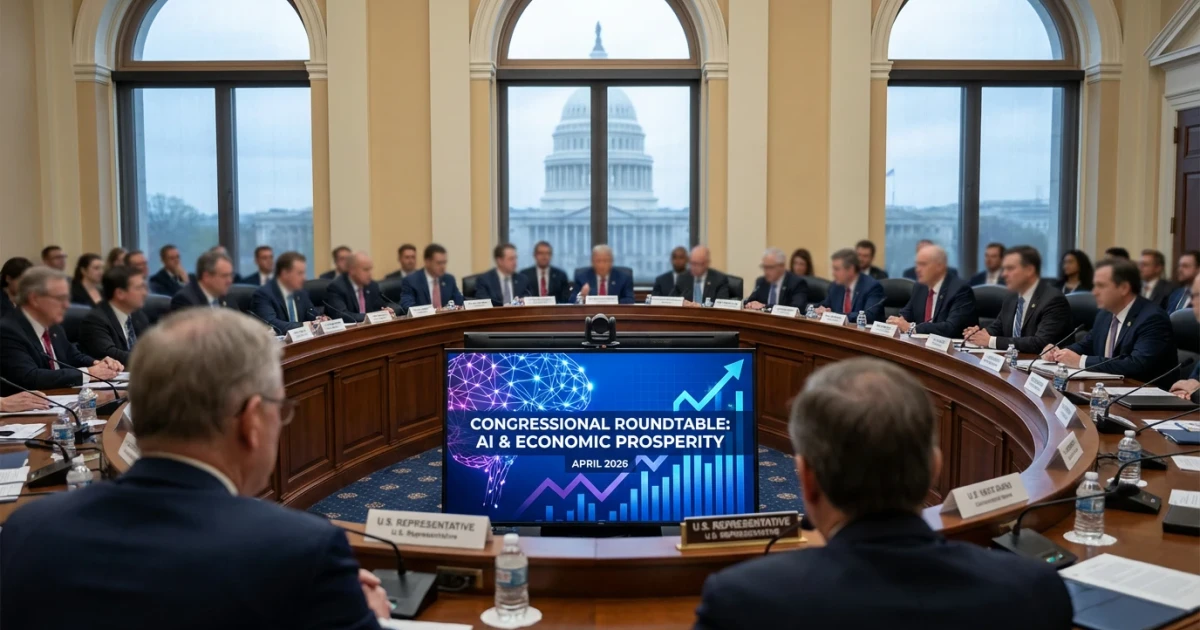
Lawmakers and industry leaders gathered on Capitol Hill to discuss the growing impact of artificial intelligence (AI) on the U.S. economy at a roundtable session opened by Representative Eric Burlison. The event centered on AI's potential to drive economic prosperity, workforce challenges, and the need for effective policy frameworks.
Focus on Economic Growth and Workforce Impacts
The House roundtable, as reported by House.gov, brought together policymakers, researchers, and business representatives to share perspectives on how AI technologies are reshaping American industry. The discussion highlighted AI's potential to boost productivity and spur innovation across sectors. According to recent analysis by McKinsey & Company, generative AI could add up to $4.4 trillion in global economic value annually, with the U.S. positioned to benefit significantly due to its robust tech sector and research ecosystem.
Participants also addressed workforce changes prompted by AI adoption. Data from the U.S. Bureau of Labor Statistics reveal that computer and information technology occupations are projected to grow much faster than average, with over 377,000 new jobs expected between 2022 and 2032. However, speakers noted the importance of preparing workers for evolving job requirements and ensuring equitable access to retraining opportunities.
Policy and Risk Management Strategies
Another major theme was the role of government in setting guidelines for responsible AI development. Attendees referenced foundational frameworks such as the Blueprint for an AI Bill of Rights from the White House Office of Science and Technology Policy, which outlines principles for privacy, transparency, and fairness in AI systems. Additionally, the NIST AI Risk Management Framework was cited as a critical resource for managing technical, ethical, and societal risks associated with advanced AI.
- The AI Bill of Rights emphasizes protections against algorithmic bias and calls for clear explanations of automated decisions.
- The NIST framework provides guidance to both private and public sector organizations on risk identification, mitigation, and accountability.
Lawmakers at the roundtable discussed how these frameworks could inform future legislation or regulation, aiming to balance innovation with public trust and safety.
Global Competitiveness and Innovation
The roundtable also addressed America's position in the international AI landscape. Experts referenced OECD statistics showing that the U.S. leads in both AI research output and investment, but faces growing competition from China and the European Union. Policymakers voiced support for continued investment in AI research and education to maintain the country's technological edge.
Key Takeaways and Next Steps
- AI offers significant potential to enhance American prosperity, but its benefits must be widely shared.
- Safeguarding against risks—such as bias, job displacement, and cybersecurity threats—remains a priority.
- Collaboration between government, academia, and industry will be essential for responsible AI development and deployment.
As the roundtable concluded, participants reaffirmed the importance of ongoing dialogue and evidence-based policymaking. The session set the stage for future hearings and legislative proposals focused on harnessing AI for the public good while addressing possible challenges.
For more details and official transcripts of the event, readers can explore the Congressional roundtable record.