Politics
Congress stumbles on budget process, public programs could be at risk
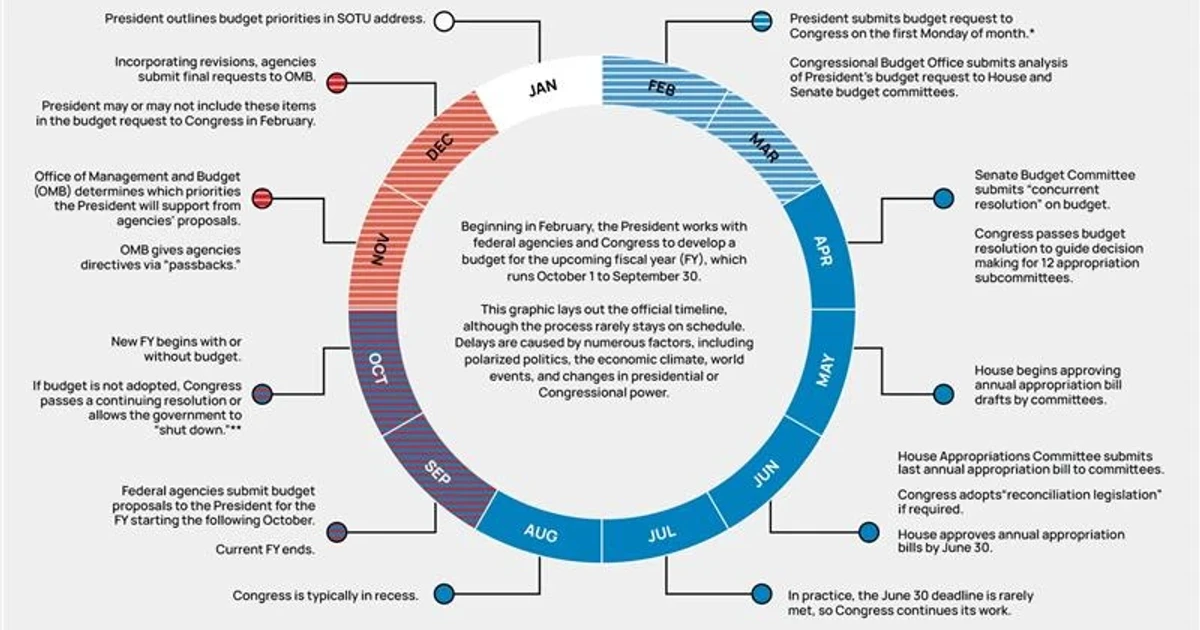
When Congress failed to enact a regular appropriations bill by the start of fiscal 2026, agencies funded through all 12 bills were pushed into a partial shutdown and only reopened after lawmakers approved P.L. 119-37 on Nov. 12, 2025. The episode exposed a basic governing failure: the annual budget process is supposed to keep federal operations steady, yet repeated lapses now force last-minute deals that put public services, local projects and shutdown-sensitive agencies at risk.
That breakdown matters because appropriations control roughly one-third of federal spending, the part lawmakers decide each year through 12 regular bills covering government operations from Oct. 1 through Sept. 30. When those bills are late, Congress turns to continuing resolutions, or CRs, to buy time with temporary funding. In FY2026, none of the regular bills had been enacted at the start of the fiscal year, and the lapse immediately showed how much of the government depends on timely action rather than emergency patchwork.
The stakes are especially visible in the Labor-HHS-Education bill, which reaches far beyond Cabinet departments. It covers Labor, Health and Human Services and Education, along with AmeriCorps, which the bill renamed the America First Corps, the Corporation for Public Broadcasting, the Institute of Museum and Library Services, and several labor and public-health boards. Public broadcasting was already hit hard: the Congressional Research Service says Congress defunded the Corporation for Public Broadcasting in July 2025 after rescissions were enacted in the Rescissions Act of 2025. That kind of cut reaches local stations, educational programming and the civic infrastructure many communities rely on.
Even the legislative branch bill showed how split the process had become. The House Appropriations Committee reported its FY2026 Legislative Branch bill on June 26, 2025, by a 34-28 vote, while the Senate Appropriations Committee advanced its version on July 10 by 26-1. The FY2026 budget appendix for the legislative branch, submitted May 30, 2025, requested $7.950 billion, 17.9 percent above the FY2025 enacted level, underscoring the size of the decisions still left unresolved as Congress struggled to fund itself.
The history is no better. The Congressional Research Service says that from FY1977 through FY2016, over half of regular appropriations bills were enacted on time only once, in FY1978, and in 14 of those 40 years none were enacted before Oct. 1. That record explains why shutdown threats and temporary funding patches keep recurring on Capitol Hill, and why every missed deadline chips away at public trust in Congress’s ability to do the job it is required to do.