Politics
Congress Weighs Alliance Talks for Tamil Nadu Government
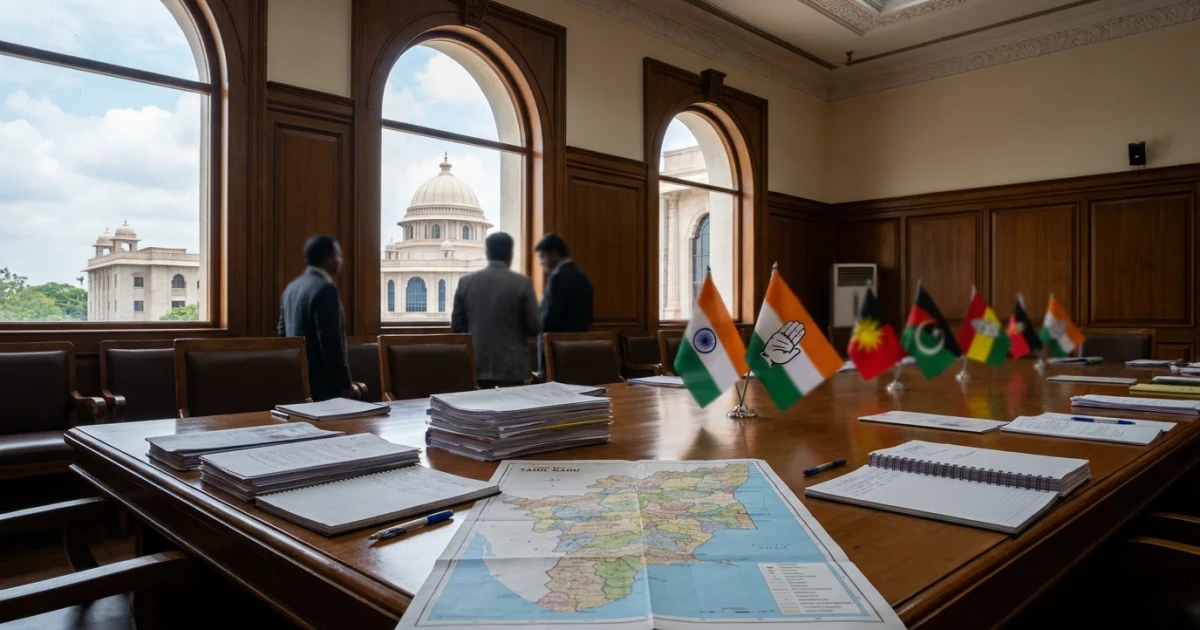
Congress is actively considering forming alliances to facilitate government formation in Tamil Nadu, according to recent reporting by Devdiscourse. This move comes amid ongoing negotiations and discussions among major political parties following the latest assembly elections, which have left the state's political landscape in flux.
Current Political Landscape
The Tamil Nadu legislative assembly elections have historically been characterized by intense rivalry between major regional parties and the Congress. Recent results, available from the Election Commission of India, indicate a fragmented mandate, with no single party securing a clear majority. This has necessitated coalition-building, as parties seek to secure the numbers required for government formation.
- The Congress has emerged as a key player, holding a significant number of seats but falling short of an outright majority.
- Potential partners include regional parties with compatible policy priorities, reflecting the state's history of coalition governance.
- Party-wise seat distribution and voter turnout statistics can be explored in detail through the Lok Dhaba election database.
Strategic Calculations Behind Alliances
Congress’s consideration of alliances is informed by both electoral arithmetic and policy objectives. According to Devdiscourse, party leaders are engaged in talks with potential allies, weighing the benefits of partnership against the need to maintain political independence. The state's demographic diversity and long-standing coalitional traditions add complexity to the negotiations.
Analysts note that alliances in Tamil Nadu often hinge on common regional interests, caste dynamics, and shared policy agendas. The Census of India data offers insights into the population distribution and social composition that frequently influence party alliances.
Implications for Governance and Policy
Should Congress successfully form an alliance, the resulting government is likely to prioritize issues that resonate across coalition partners, including economic development, social welfare, and infrastructure. The state budget, as analyzed in the PRS Legislative Research Tamil Nadu Budget Analysis, highlights sector-wise allocations and fiscal challenges that any incoming government will face.
- Key policy areas include education, healthcare, and rural development.
- Coalition partners may seek to influence budget priorities, reflecting their electoral promises.
- Fiscal indicators and expenditure patterns are central to coalition negotiations.
Looking Forward
As Congress deliberates potential alliances, the outcome will shape Tamil Nadu’s governance for the coming years. The state’s electoral politics, as explored in Economic & Political Weekly research, suggest that coalition governments often bring both opportunities and challenges, requiring compromise and consensus-building across party lines.
While the specifics of any alliance remain under discussion, observers expect a period of intense negotiation as parties aim to secure their interests and align on policy priorities. The final shape of Tamil Nadu’s government will depend on these ongoing talks and the willingness of parties to collaborate for broader stability.