Business
Consumer spending stays strong in May as inflation accelerates

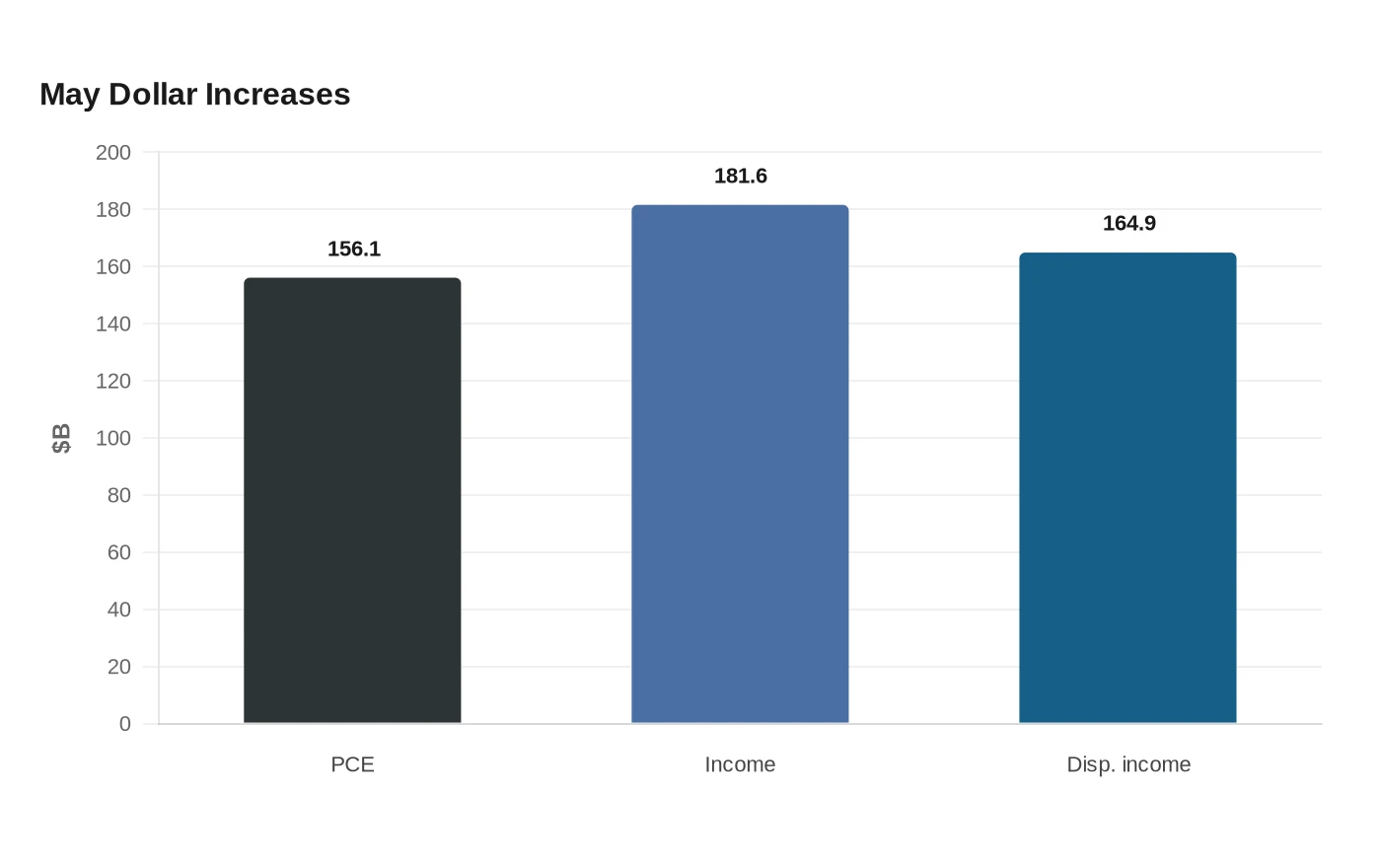
Consumers kept spending in May even as prices accelerated, and the latest federal data showed how much of that momentum came from higher costs rather than stronger buying power. The Commerce Department’s Bureau of Economic Analysis said personal consumption expenditures rose $156.1 billion, or 0.7%, while personal income climbed $181.6 billion, also 0.7%, and disposable personal income increased $164.9 billion, or 0.7%.
The real measure of spending rose more slowly. Real personal consumption expenditures advanced 0.3% from April, while the personal saving rate held at 3.0%, signaling that households were still spending at a solid clip but not building much cushion. Services accounted for $94.3 billion of the monthly increase and goods for $61.8 billion, a split that suggests demand remained broad even as inflation reshaped what shoppers paid at the register.

The inflation backdrop was the contradiction inside the report. The PCE price index rose 4.1% from a year earlier in May, the fastest annual increase since April 2023, and core PCE, which strips out food and energy, rose 3.4%. That combination left consumers spending more dollars while getting only a modest boost in actual volume. Consumer spending makes up more than two-thirds of U.S. economic activity, so even a strong nominal increase can mask a weaker underlying pace when prices are rising quickly.
Retail data pointed in the same direction. U.S. retail sales rose 0.9% in May after a revised 0.4% gain in April, and inflation-adjusted retail sales climbed 0.4%. KPMG said core retail sales were solid, with vehicle sales up 1.2% and gas station receipts rising 3.4%, but it also flagged affordability as a persistent concern. That tension helps explain the current pattern: spending is still flowing, but a larger share is going to essentials and higher-priced purchases rather than signaling a broad surge in confidence.
Economists have said households have been helped by larger tax refunds this year and stock market gains, which have offset some of the pain from higher gasoline prices. Higher-income consumers, with stronger access to credit and rising net worth, have been carrying much of the resilience. Still, the renewed inflation surge tied to energy prices has kept pressure on the Federal Reserve, with analysts warning that services inflation may prove stickier and leave rate increases on the table.
Sources
- [1]washingtonpost.com
- [2]bea.gov
- [3]cbsnews.com
- [4]kpmg.com
- [5]finance.yahoo.com
- [6]msn.com
- [7]apnews.com